
Most American refrigerators rely on defrost cycles to keep appliances running smoothly, yet over 60 percent of appliance failures stem from unnoticed frost buildup. For homeowners in Orange and Los Angeles Counties, frost creeping into your refrigerator can mean unexpected food spoilage and costly repairs. Understanding how your refrigerator’s defrost cycle works could help you spot warning signs before minor issues turn into major breakdowns, empowering you to take smart action and keep your kitchen in top shape.
Table of Contents
- What Is The Refrigerator Defrost Cycle?
- Types Of Defrost Cycles In Modern Refrigerators
- How The Defrost Cycle Operates Step By Step
- Common Defrost Cycle Issues And Warning Signs
- Impact On Refrigerator Lifespan And Food Safety
Key Takeaways
| Point | Details |
|---|---|
| Importance of Defrost Cycle | The defrost cycle prevents frost buildup, ensuring optimal refrigerator performance and energy efficiency. |
| Types of Defrost Systems | Various defrost methods, including time-controlled and intelligent systems, enhance efficiency and maintain consistent cooling. |
| Common Issues | Symptoms like excessive ice buildup or temperature fluctuations signal potential defrost system malfunctions that require prompt attention. |
| Impact on Lifespan and Safety | Efficient defrost cycles prolong refrigerator life and ensure food safety by maintaining stable internal temperatures. |
What Is the Refrigerator Defrost Cycle?
The refrigerator defrost cycle is a critical maintenance process designed to prevent frost buildup on cooling components, ensuring optimal appliance performance. Refrigeration systems naturally accumulate moisture) that can transform into ice layers on internal cooling elements, potentially reducing the unit’s efficiency and storage capacity.
In modern refrigerators, the defrost cycle operates automatically through sophisticated mechanisms that periodically melt accumulated frost. When water vapor enters the refrigerator and contacts cold surfaces below freezing temperatures, it condenses and freezes, creating layers of ice on the evaporator coils. Without intervention, these frost deposits can significantly impair heat transfer and restrict airflow, forcing the appliance to work harder and consume more energy.
Automatic defrost systems typically incorporate three primary components to manage this process: a defrost timer, a heating element, and a temperature sensor. The defrost timer triggers the cycle at regular intervals, usually every 6-12 hours, temporarily shutting down the cooling function. During this brief period, the heating element activates and gently warms the evaporator coils, melting any accumulated frost. The system then returns to normal cooling operations, with water drainage mechanisms directing moisture away from critical components.
Pro tip: Check your refrigerator’s defrost cycle performance annually by monitoring temperature consistency and listening for unusual operational sounds that might indicate frost buildup issues.
Types of Defrost Cycles in Modern Refrigerators
Modern refrigerators employ several sophisticated defrost methods designed to efficiently manage frost accumulation and maintain optimal cooling performance. Automatic defrosting techniques have evolved significantly to address the persistent challenge of ice buildup on cooling components.
The primary types of defrost cycles include time-controlled, temperature-controlled, and intelligent defrost systems. Time-controlled defrosting operates on a predetermined schedule, typically activating a heating element every 6-12 hours regardless of actual frost accumulation. Temperature-controlled systems use advanced sensors to detect ice formation, triggering the defrost cycle only when necessary. Hot gas defrost represents a more advanced technique, which redirects hot refrigerant directly to the evaporator, rapidly melting frost with minimal energy consumption.
Some cutting-edge refrigerators now incorporate intelligent defrost strategies that combine multiple detection methods. These systems analyze multiple factors including compressor runtime, door opening frequency, humidity levels, and ambient temperature to optimize defrost cycle frequency and duration. By dynamically adjusting defrost intervals, these intelligent systems minimize energy waste while ensuring consistent cooling performance and preventing excessive frost buildup.
Pro tip: Consider investing in a refrigerator with intelligent defrost technology to maximize energy efficiency and reduce long-term maintenance requirements.
Here’s a comparison of modern refrigerator defrost cycle types:
| Defrost Type | Trigger Method | Energy Efficiency | Typical Applications |
|---|---|---|---|
| Time-Controlled | Pre-set intervals | Moderate | Basic home refrigerators |
| Temperature-Controlled | Ice sensor activation | High | Advanced models, variable climates |
| Hot Gas Defrost | Redirects refrigerant | Very high | Commercial and industrial units |
| Intelligent Systems | Multiple data analysis | Maximum | Premium smart refrigerators |
How the Defrost Cycle Operates Step by Step
The defrost cycle is a precisely engineered process that systematically prevents frost accumulation in refrigerators. Each step is carefully designed to maintain optimal cooling performance, ensuring the appliance operates efficiently and prevents ice buildup that could compromise its functionality.
The typical defrost cycle involves four critical stages. First, the cooling system deactivation occurs, where the compressor and fans stop running to interrupt frost formation. Second, a heating element activation takes place, typically located near the evaporator coils. This embedded heater warms up to temperatures above freezing, gradually melting accumulated ice layers. During this phase, temperatures rise to approximately 32°F, transforming frost into water droplets that can be safely drained away from critical components.
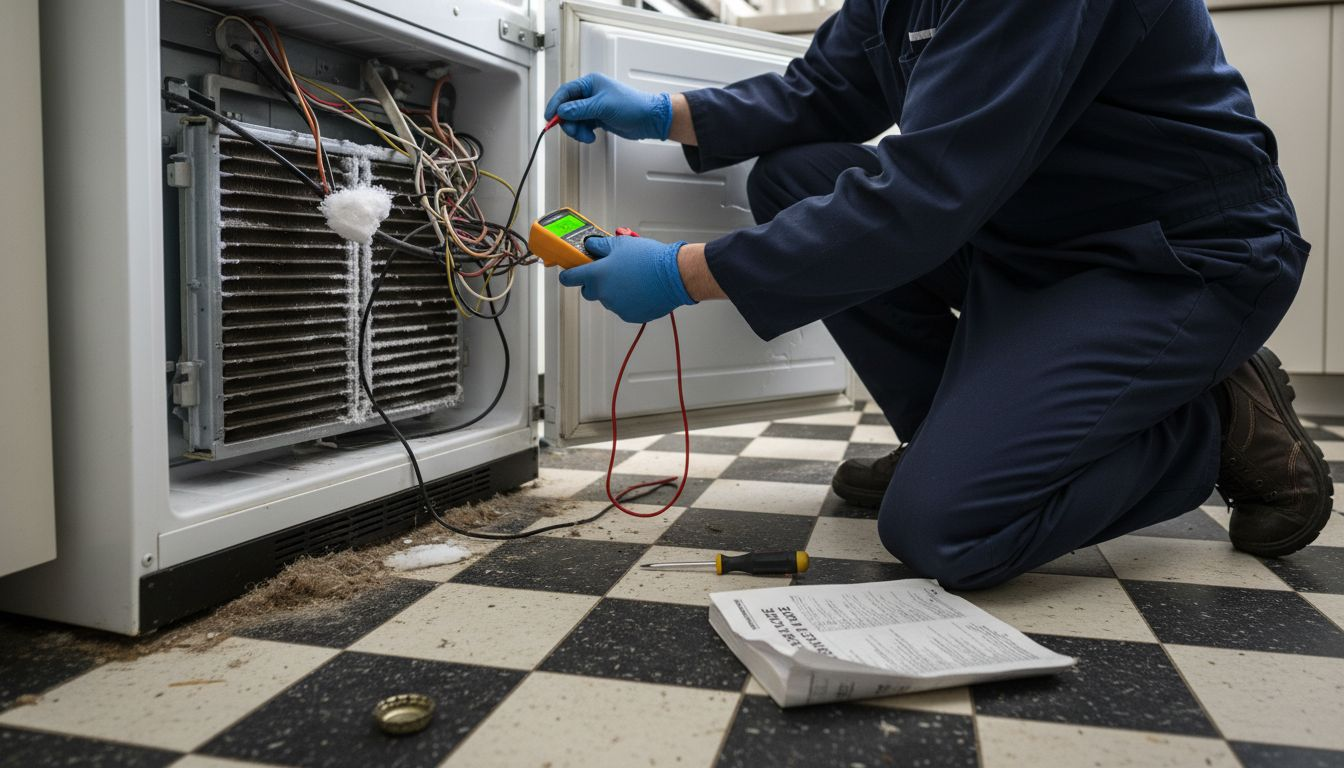
The defrost operation progresses through precise temperature-controlled periods, including warm-up, melting, and cooling stages. A defrost thermostat monitors the temperature, ensuring the heater turns off once frost has completely melted. In the final stage, the refrigerator returns to normal cooling operations, with the compressor restarting and fans resuming their standard airflow patterns. This entire process typically takes between 10-20 minutes and occurs every 6-12 hours, depending on the refrigerator’s design and usage patterns.
Pro tip: Listen for subtle changes in refrigerator sounds during defrost cycles to ensure your appliance is operating normally and efficiently.
Common Defrost Cycle Issues and Warning Signs
Refrigerator defrost systems can experience multiple performance challenges that compromise their efficiency and long-term functionality. Homeowners should remain vigilant about recognizing early warning signs that indicate potential defrost cycle malfunctions, as these issues can escalate quickly and lead to more significant appliance damage.
The most common defrost cycle problems typically manifest through several distinct symptoms. Excessive ice buildup is a primary indicator of system failure, suggesting that the heating element or defrost timer is not functioning correctly. This accumulation prevents proper heat transfer and reduces storage capacity. Other critical warning signs include inconsistent internal temperatures, unusual energy consumption, and water pooling around the refrigerator base. Prolonged defrost system failures can cause compressors to work harder, potentially leading to premature equipment breakdown and substantially higher electricity bills.
Technical components most likely to fail during the defrost cycle include the defrost timer, heating element, thermostat, and temperature sensors. A malfunctioning defrost timer might prevent the system from initiating the melting process, while a faulty heating element could fail to generate sufficient warmth to eliminate frost. Temperature sensors that provide incorrect readings can disrupt the entire defrost mechanism, causing unpredictable cooling performance and potential food spoilage. These issues often require professional diagnostic testing to identify and resolve accurately.
Key symptoms, likely causes, and solutions for defrost cycle issues are shown below:
| Symptom | Likely Cause | Recommended Solution |
|---|---|---|
| Excessive ice buildup | Faulty heater or timer | Replace malfunctioning parts |
| Water pooling at base | Clogged drain tube | Clear drain; verify defrost cycle |
| Temperature fluctuates | Defective thermostat | Calibrate or replace sensor |
| Increased energy use | Constant compressor operation | Inspect timer, heater, and seals |
Pro tip: Schedule annual preventative maintenance to catch defrost cycle issues early and prevent costly refrigerator repairs.
Impact on Refrigerator Lifespan and Food Safety
The defrost cycle plays a critical role in maintaining both refrigerator performance and food preservation standards. Proper defrost mechanisms directly influence food safety and storage conditions, protecting consumers from potential health risks associated with temperature fluctuations.
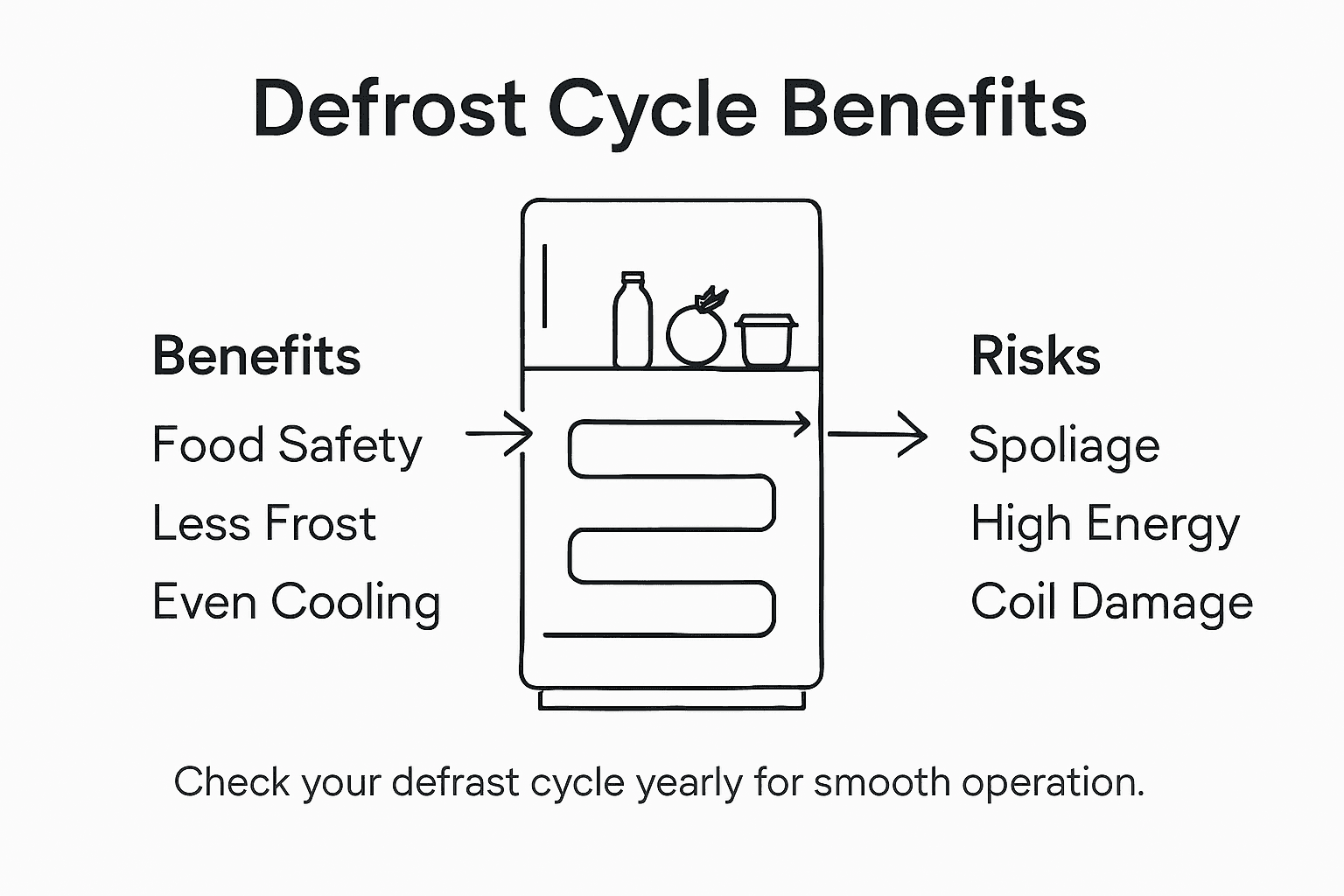
Inefficient defrost cycles can dramatically reduce a refrigerator’s operational lifespan by causing excessive strain on critical components. When frost accumulates, the compressor must work significantly harder to maintain internal temperatures, leading to increased energy consumption and accelerated mechanical wear. This additional stress can cause premature failure of expensive components like the compressor, potentially shortening the appliance’s functional life by several years and necessitating costly replacements.
From a food safety perspective, consistent and reliable defrost cycles are essential for preventing bacterial growth. Temperature stability is paramount, with refrigerator interiors needing to remain consistently below 40°F to inhibit microbial proliferation. Malfunctioning defrost systems can create temperature variations that allow dangerous pathogens to multiply rapidly, increasing the risk of foodborne illnesses. These temperature fluctuations can compromise the quality and safety of stored perishables, potentially exposing families to significant health hazards.
Pro tip: Invest in a refrigerator thermometer to monitor internal temperatures and verify your defrost cycle is maintaining safe, consistent cooling conditions.
Keep Your Refrigerator Running Smoothly with Expert Defrost Cycle Repair
Understanding the critical role of the refrigerator defrost cycle highlights how frost buildup can quietly damage your appliance while risking food safety. If you notice excessive ice, unusual temperature swings, or water pooling around your unit, these warning signs point to a malfunctioning defrost system that needs immediate professional attention. At Appliances Repair MD Tech, our licensed technicians in Orange County and Los Angeles County specialize in diagnosing and repairing defrost cycle issues quickly to protect your refrigerator’s performance and your family’s health.
Don’t let a faulty defrost cycle shorten your refrigerator’s lifespan or compromise food safety. Take action now by booking a service with our experienced team. Visit Appliance Repair Services to schedule your repair promptly and keep your refrigerator operating efficiently all year long.
Frequently Asked Questions
What is the refrigerator defrost cycle and why is it important?
The refrigerator defrost cycle is a maintenance process that prevents frost buildup on cooling components, ensuring optimal appliance performance and energy efficiency. It automatically melts accumulated frost to improve cooling efficiency and maintain food safety.
How often does the defrost cycle occur in modern refrigerators?
The defrost cycle typically occurs every 6-12 hours, depending on the refrigerator’s design and usage patterns. This interval helps prevent excessive frost buildup while maintaining consistent cooling.
What are the common issues associated with defrost cycles in refrigerators?
Common issues include excessive ice buildup, water pooling at the base, fluctuating internal temperatures, and increased energy consumption. These problems often stem from faulty components like the defrost timer, heating element, or thermostat.
How does the defrost cycle impact food safety?
An efficient defrost cycle maintains consistent internal temperatures below 40°F, which prevents bacterial growth and ensures food safety. Malfunctioning defrost systems can lead to temperature fluctuations that may compromise food quality and increase health risks.