
Replace your water heater’s anode rod when more than 6 inches of the steel core wire shows, or when the rod has thinned to less than half an inch across. Most manufacturers say to inspect it every one to three years. Hiring a plumber typically runs about $200 to $300, while the parts for a do-it-yourself swap are much less. Below you will find the inspection schedule, the steps, the cost and the situations where we recommend calling a licensed technician.
TL;DR
- The anode rod is a sacrificial metal rod that corrodes so your steel tank does not. Once it is used up, the tank itself starts to rust.
- Inspect it at least every 1 to 3 years, and every year if you use a water softener or have aggressive water.
- Replace it when more than 6 inches of core wire is exposed or the rod is thinner than 1/2 inch.
- A plumber typically charges about $200 to $300. Parts alone for a DIY swap are far less, but a stuck rod can turn a one-hour job into a long one.
- If the rod will not budge, the heater is leaking or you are unsure about gas or electric safety, book a licensed pro.
Table of Contents
- What an anode rod does inside your water heater
- How often to replace an anode rod
- How to tell your anode rod is used up
- Can you replace it yourself?
- What anode rod replacement costs
- Is the rod worth replacing, or is it time for a new heater?
- Our perspective
- Let a licensed technician handle it
- Keeping the rest of the system healthy
- FAQ
- Sources
What an anode rod does inside your water heater
Your tank is steel with a glass lining. Glass linings develop tiny gaps over time, and hot water attacks any exposed steel. The anode rod is the cheap part that takes that attack instead. According to Bob Vila, it is a long rod, generally magnesium or aluminum, that attracts iron, limestone and other minerals that would otherwise rust the tank. It usually sits on top of the heater, though some models mount it on the side.
A. O. Smith describes the same idea: the sacrificial rod draws damaging elements in the water and is consumed to protect the tank. When the rod is gone, nothing protects the steel. That is why a rod that costs a few dozen dollars can decide whether your heater lasts its full service life or leaks years early.
Why the warranty cares about it
Manufacturers treat the rod as a maintenance item. GE Appliances states that running the heater with the rod removed shortens the life of the glass-lined tank and voids warranty coverage. It also says the replacement rod and the inspection for consumption are not covered by the warranty, and that failing to replace a consumed rod voids the tank warranty. A. O. Smith and State Water Heaters manuals likewise say that removing the rod permanently voids any warranties.
In practice: keep a note of each inspection date and what you found. If you ever file a tank claim, that record matters.
How often to replace an anode rod
There is no single lifespan, because the rod wears at the speed your water dictates. Manufacturers give inspection intervals rather than a fixed replacement date:
| Source | Inspection or replacement guidance |
|---|---|
| A. O. Smith / State Water Heaters manuals | Remove the rod for inspection every 3 years; every year if the water is artificially softened |
| GE Appliances | Inspect annually; replace when more than 6 inches (15.2 cm) of core wire is exposed at either end |
| Bosch (electric mini-tank models) | Check at least once a year and replace every two years; more often with aggressive water |
The pattern is clear. Three years is the outer limit for an inspection, and many households should look sooner. If your home has a salt-based softener, plan on yearly checks. The A. O. Smith manual notes that artificially softened water is more corrosive and speeds up depletion.
Rod type and tank size change the answer
A larger tank usually holds a longer rod with more metal to give up. A magnesium rod and an aluminum rod also wear differently, and your heater’s manual or label tells you which fits. Use the rod length and thread size your model calls for, not whichever one is on the shelf.
How to tell your anode rod is used up
The only reliable way is to look at the rod itself. This Old House reports that replacement is typically needed when more than 6 inches of the internal steel core wire is visible, or when the rod has thinned to less than 1/2 inch in diameter.
A few things you may notice at home before you inspect:
- Rotten-egg smell from hot water. This can point to bacteria reacting with the rod, and it is a common reason people check theirs.
- Popping or rumbling from the tank. Sediment is building up on the bottom. Our water heater maintenance guide covers flushing.
- Rusty or discolored hot water. Rust in hot water only, not cold, suggests trouble inside the tank.
None of these proves the rod is gone, but each is a good reason to schedule an inspection now rather than at year three.
Can you replace it yourself?
Yes, many homeowners do. Bob Vila says a DIYer with at least beginner plumbing experience can finish in about 60 minutes, with an estimated parts cost of $30 to $90. That said, GE’s documentation warns that because of shock hazard and the risk of accidental leaks, the inspection should be done by a qualified servicer or plumber. We agree that is the safe default, especially on gas models and in tight closets, garages and utility spaces common in Southern California homes.
Tools and materials
Per this step-by-step guide, you need:
- A 1-1/16-inch socket and a ratchet
- A 24-inch cheater bar or pipe
- A flat-blade screwdriver
- Teflon tape or pipe dope
- The correct replacement rod for your model
Have a hose and bucket nearby too, in case you decide to drain more than a couple of gallons.
Step by step
- Cut the energy. For an electric heater, turn off the circuit breaker. For gas, turn off the gas or set the control to vacation, as Bob Vila describes.
- Shut off the cold water inlet to the tank.
- Open a hot water faucet nearby and drain a few gallons from the tank so the water level drops below the top fitting. The guides above range from about 1 to 2 gallons.
- Remove the cap and insulation to expose the rod’s hex head.
- Loosen the old rod counterclockwise with the socket and ratchet. Pull it up and out and compare it to the 6-inch and 1/2-inch rules above.
- Wrap the new rod’s threads with Teflon tape or apply pipe dope, then thread it in and tighten.
- Refill. Turn the cold water back on and leave the hot faucet open for about a minute, until air is purged and water runs steadily.
- Check for leaks at the fitting, close the faucet, then restore the breaker or gas.
Never turn an electric heater back on before the tank is full. Heating elements running dry can burn out quickly.
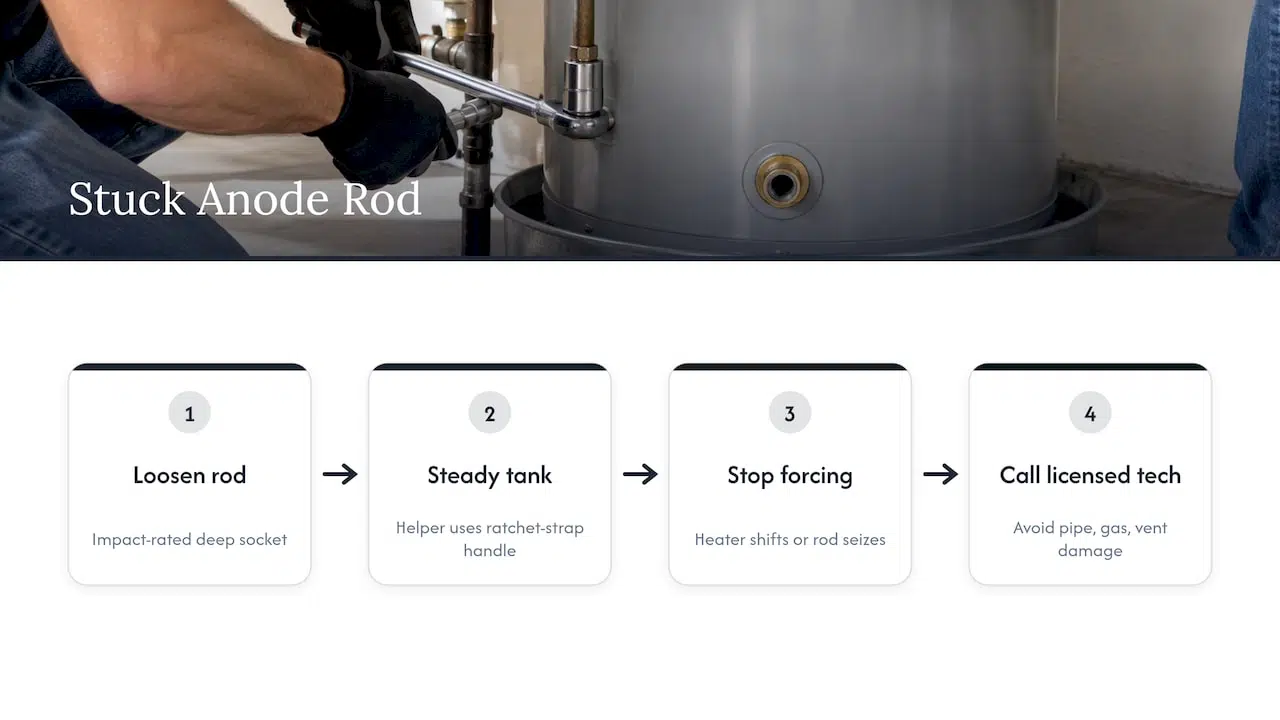
When the rod will not move
Factory-tightened rods are often stuck. This Old House suggests an impact wrench with an impact-rated, 6-point, deep 1-1/16-inch socket, plus a second person holding the tank steady with a ratchet strap used as a handle.
There is a real reason for the helper. Richard Trethewey of This Old House warns that the harder you force the rod, the more the whole heater can shift, which risks bent pipes, a damaged gas connection or even the vent. A damaged gas line or vent is a safety issue, not just a repair bill. If the rod is seized, stop and call a licensed technician rather than adding force.
Low headroom
Many heaters sit under a shelf, in a closet or in a garage corner, where there is not enough clearance above to lift a full-length rod. Flexible rods exist for this, and a technician will know which type suits your space. Measure the clearance above the tank before you buy anything.
What anode rod replacement costs
Two numbers matter: the part, and the labor.
- DIY: Bob Vila estimates $30 to $90 in parts and supplies.
- Hiring a plumber: the same source says to expect about $200 to $300, and that DIYers can save between $150 and $250.
Final pricing depends on the rod type, tank size, how accessible the heater is, whether the old rod fights back and any fittings that need replacing. Local labor rates in Orange County and Los Angeles County can run above national averages, so treat the figures above as a national reference point.
A savings number looks different once you factor in the risks. A stripped fitting, a bent line or a leak from a poorly sealed rod can easily cost more than the service call you were avoiding. Many homeowners decide that a one-time visit, with the rod, the inspection and the safety checks handled together, is the better value.
Is the rod worth replacing, or is it time for a new heater?
A fresh anode rod protects the tank, but it cannot repair corrosion that has already happened. A heater with a rod that has been consumed for years may already have pinhole leaks forming. Signs to take seriously include moisture around the base, rusty water and visible rust at the fittings.
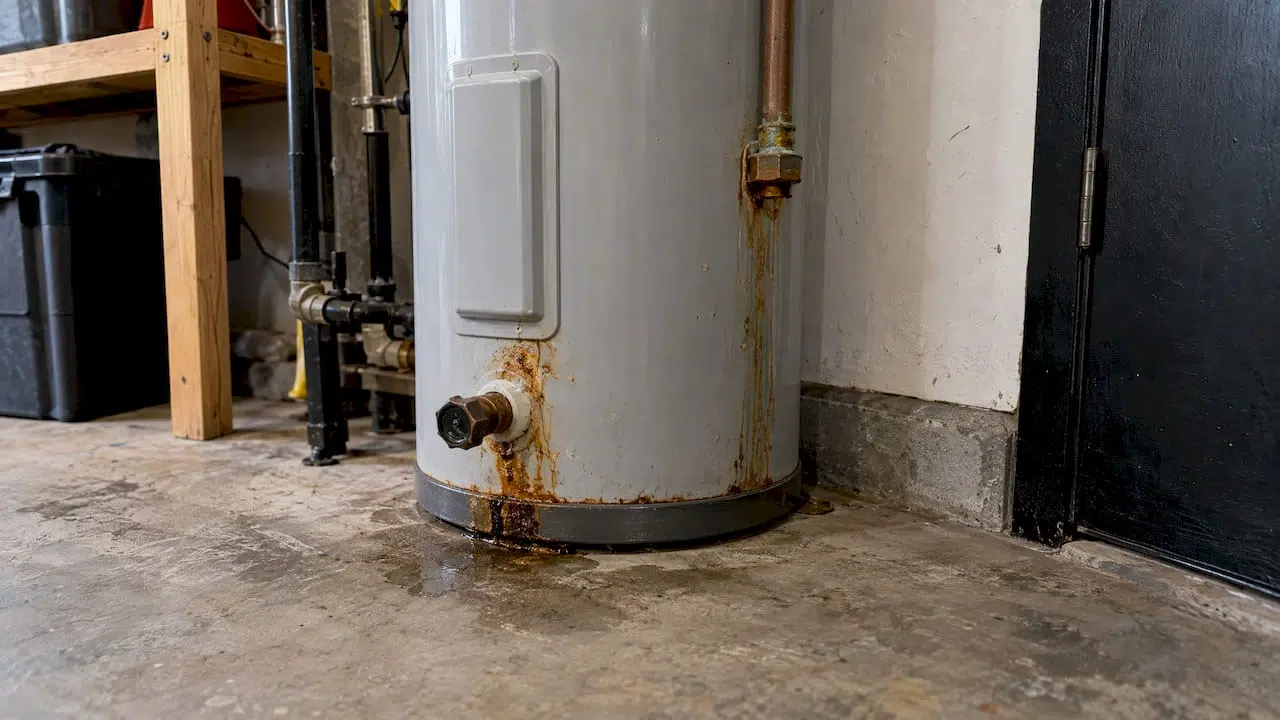
If you see water pooling, read what to do first when your water heater is leaking. If the heater is well past mid-life and has had other problems, our repair vs. replacement guide lays out how to weigh the two, and our water heater installation cost page helps you plan a swap if that is the better path. A technician can also tell you on the spot which situation you are in when they pull the rod.
Our perspective
Most of the tank failures we are called to could have been headed off with a rod inspection. People tend to learn about the anode rod after the heater has started to leak, when the cheap part has already done its job and nothing is left to protect the steel.
We treat the rod as part of regular water heater care, not an extra. When our licensed technicians look at a heater, they check the rod’s condition, the age of the tank, the water conditions in the home and the surrounding gas, electrical and venting connections. That last part is why we like to do the work ourselves for customers: the rod is simple, but what it sits next to is not.
If you have a softener, hard water or a heater you have never opened, book an inspection before the next season turns. If you prefer to do the swap yourself, follow the safety steps above and call us the moment something does not feel right.
MDTECH
Let a licensed technician handle it
If you would rather not wrestle with a stuck rod near a gas line, we can inspect and replace your anode rod and check the rest of your water heater at the same visit. We serve homeowners and property managers across Orange County and Los Angeles County, and you can book online. See our appliance repair and plumbing services or our page on a plumber for water heater repair in Orange County.

Before your appointment, note the heater’s age, fuel type (gas or electric), the model label and whether you use a water softener. It speeds up the visit and helps us bring the right rod.
Keeping the rest of the system healthy
The rod is one piece of a larger routine. Flushing the tank removes sediment that insulates the water from the burner or elements. Checking the temperature and pressure relief valve and watching for small drips at the fittings catches problems early. Our water heater repair guide and the overview of common water heater problems explain what each symptom usually means, so you know whether you are looking at a quick fix or a service call.
A simple schedule many households can follow:
- Every year: inspect the rod, check for leaks around the base, and test the relief valve.
- Every year or two: drain a few gallons from the tank to clear sediment.
- Whenever water changes: if you add a softener or notice smell or discoloration, check the rod sooner.
FAQ
How often should you replace an anode rod?
There is no fixed date. Manufacturers give inspection intervals of one to three years, depending on the brand and your water. Replace it when more than 6 inches of core wire shows, or sooner if it is badly thinned.
How long does an anode rod last?
It depends on water quality, rod material and tank size. Softened or aggressive water uses it up faster, which is why some makers call for annual inspection. Inspecting it is the only way to know how much metal is left.
How much does a plumber charge to change an anode rod?
Bob Vila reports about $200 to $300 for a plumber, with the rod itself a small part of that. Your price will vary with the rod type, how reachable your heater is and local labor rates. We can confirm what applies to your home when you book.
Can I replace an anode rod myself?
Yes, with a 1-1/16-inch socket, a breaker bar and some plumbing experience, though GE advises that a qualified servicer or plumber should do the inspection. Stop and call a pro if the rod is stuck, the heater is gas-fired in a tight space, or you see any leak.
Sources
- Anode Rod Replacement: Extend the Life of Your Water Heater (Bob Vila)
- How to Replace an Anode Rod on a Water Heater (This Old House)
- Water Heater Maintenance Guide (A. O. Smith)
- Water Heater: Anode Rod Maintenance and Service (GE Appliances)
- Anode Rod Inspection, Draining (A. O. Smith manual)
- How to Maintain the Anode Rod in Your Electric Mini-Tank Water Heater (Bosch)
- How to Replace an Anode Rod (step-by-step PDF)