
An earthquake gas shut-off valve is a mechanical device on your home’s gas line, just past the meter, that closes by itself when strong shaking hits. It stops gas from flowing into the house if a pipe, appliance or connector has been damaged. In California, a licensed professional should install it, and a qualified professional or your gas utility should reopen it after it trips. This guide covers how the valve works, how to tell whether you have one, what the rules say, and what to do in the minutes and days after a quake.
TL;DR
- A seismic valve closes on strong ground motion and needs a manual reset. An excess-flow valve closes when it senses a sudden surge of flow, such as a ruptured line.
- Your manual shut-off is at the gas meter. An automatic valve is usually outside, above ground, on your house piping just past the meter.
- Installation belongs to a licensed professional, on your side of the meter, never on the utility’s equipment. Your local building department sets permit and inspection rules.
- After a quake, shut gas off by hand only if you smell gas, hear it escaping or suspect damage. Then have a qualified person restore service.
- Check your gas appliances after any valve closure before you relight anything.
Table of Contents
- What an earthquake gas shut-off valve does
- How to find your gas shut-offs
- Who installs it and what California requires
- What to expect after a valve closes
- If you smell gas after an earthquake
- After the quake: a gas appliance walk-through
- Questions to ask before you hire an installer
- Our perspective
- Book a gas appliance check
- FAQ
- Sources
What an earthquake gas shut-off valve does
The valve is a simple mechanical device. According to the Building America Solution Center, an earthquake-actuated valve is installed downstream of the gas meter. When it senses significant movement, an internal ball or float drops into place and blocks gas from entering the house. It needs no electricity and no phone signal.
The reason it matters is simple. Shaking can shift a water heater, crack a flexible connector or pull a dryer away from its line. Gas then escapes inside a structure where nobody may be able to respond quickly. Closing the supply at the source takes away that fuel.
Seismic valves versus excess-flow valves
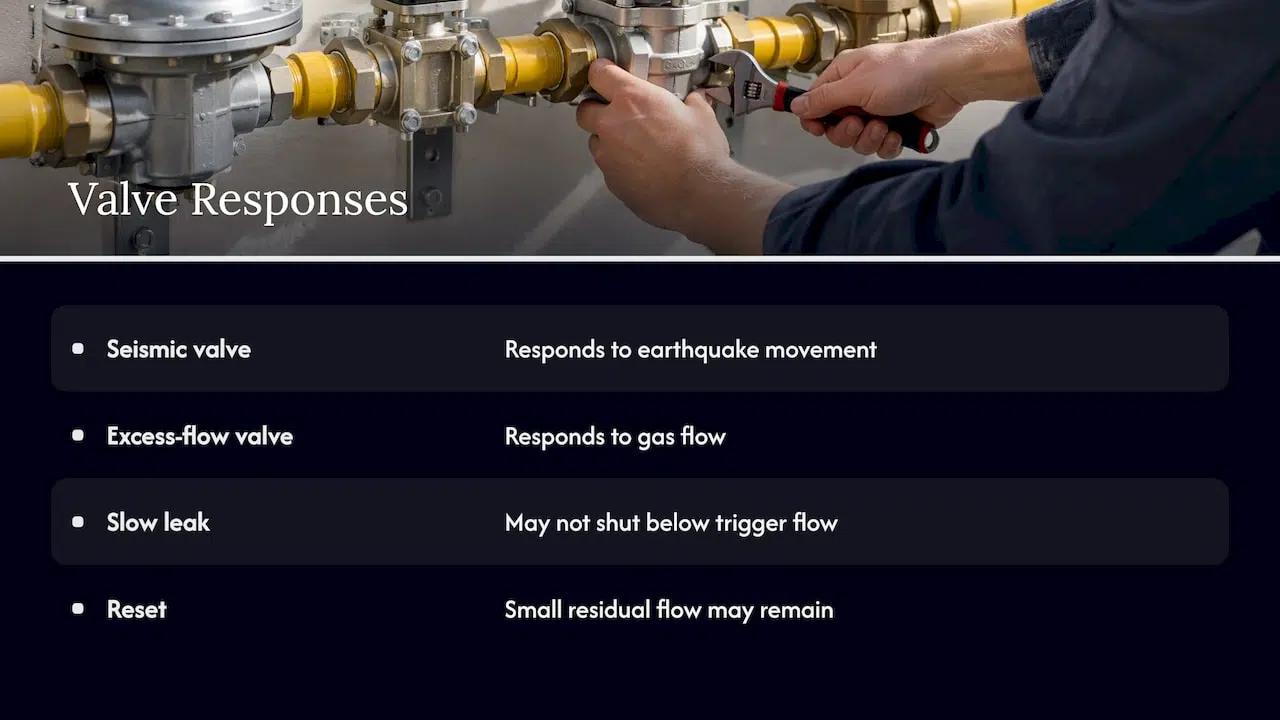
People search for “seismic gas shutoff valve” and “automatic gas shutoff valve” as if they were the same thing. They are related, but they sense different events. California’s Division of the State Architect (DSA) publishes a comparison of gas shut-off devices that sets out the difference:
| Seismic (earthquake) valve | Excess-flow valve | |
|---|---|---|
| What triggers it | Shaking above its design level | Flow above its design trigger, such as a ruptured line |
| Reset | Manual | May reset automatically once the downstream leak is eliminated |
| Typical strength | Closes even if the pipes are intact | Responds to actual line damage |
Both are “automatic” in the sense that you do not have to be home. Which one suits a given house depends on the piping, the appliance load and local requirements, which is exactly what a licensed installer sizes and specifies.
What each type is designed to catch
A seismic valve responds to the earthquake itself. An excess-flow valve responds to what the gas is doing. The DSA notes that an excess-flow device may not shut off a slow leak below its design triggering flow, and that it may leave a small residual flow needed for reset. That is one reason a valve is a layer of protection and not a replacement for good habits: knowing your meter, keeping a wrench handy and having gas lines and appliances checked regularly.
How to find your gas shut-offs
There are two things to locate: the manual shut-off on the meter, and any automatic valve you may already have.
The manual shut-off at the meter
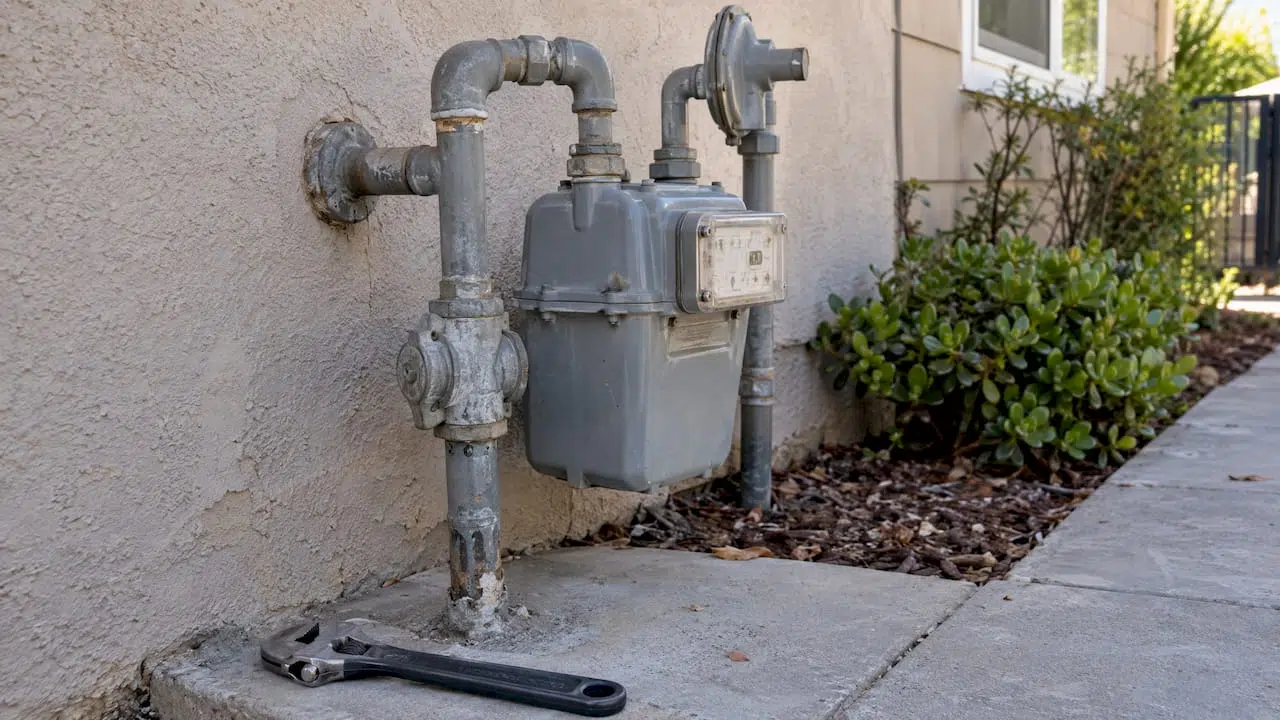
The Earthquake Country Alliance advises homeowners to find the outside gas meter, identify the manual shut-off, and keep a suitable wrench within reach. Do this on a calm day, not during an emergency. Show everyone in the household who is old enough to understand. Once you know where it is, you will not be looking for it in the dark.
Checking whether you already have an earthquake valve
A seismic valve is usually outside and above ground, on your own line downstream of the meter, according to the Building America Solution Center. The Federal Alliance for Safe Homes (FLASH) homeowner factsheet suggests locating the meter and looking for a labeled device attached to the gas line. If you cannot tell whether one is installed, it recommends contacting a licensed plumber.
A quick look-over:
- Stand at the meter and follow the pipe that leaves it toward the house.
- Look for a device on your side of the meter with a label or manufacturer marking.
- Note the make, size and any certification mark so an installer can confirm it.
- If nothing is there or you are unsure, ask a licensed professional to take a look during any routine gas visit.
Who installs it and what California requires
This is not a do-it-yourself job. California’s Seismic Safety Commission states that installing a downstream gas valve takes special expertise and should be done by a certified plumber, specialty contractor or other qualified person, not by the homeowner. The same report says the installer has to size the valve correctly for both existing and future appliance loads. If you plan to add a gas range, a tankless water heater or a gas dryer, tell the installer so the valve is sized for it.
Certification and local rules
The Division of the State Architect certifies residential emergency seismic valves and excess-flow valves against the current standards. Installation, permitting and inspection are controlled by your local building department. So before work starts, ask the city or county building department what applies where you live.
Stay on your side of the meter
SoCalGas says a qualified professional should install the valve on the house line, not on SoCalGas facilities or in a curb meter vault. Its facilities run through the last elbow or tee connecting to the house line, and it says unauthorized customer-owned installations on its facilities may be removed. It also advises checking with your local Department of Building and Safety for valve requirements.
PG&E, in northern California, takes a similar position in practice. According to a PG&E answer ranked in search results, the utility does not install earthquake valves, so the work is a private job on the customer’s piping.
What to expect after a valve closes
A closed valve means the device did its job. A little planning makes the next step less stressful.
Why a valve may close
A seismic valve closes from qualifying earthquake motion, aftershocks or other strong shaking, and an excess-flow valve closes on a sudden high-flow or pressure-loss condition, per the DSA comparison. The Seismic Safety Commission adds that a seismic valve can close even when your gas system is undamaged and can trip again during aftershocks, so you may need service restored more than once. It also notes that older valves could trip from heavy truck traffic or an accidental bump, while devices meeting current standards are not prone to that.
That is why choosing a currently certified valve, mounted rigidly and sized correctly, is worth getting right the first time.
Resetting the valve
Follow the manufacturer’s reset instructions for your specific model. SoCalGas recommends having a qualified professional or SoCalGas reset it, then checking appliances for leaks and relighting pilot lights before use. The Seismic Safety Commission likewise says qualified personnel should re-establish gas service after the valve has acted.
Two practical points from SoCalGas:
- After a major emergency, it can take many days or weeks for someone to reach you.
- SoCalGas charges a fee to reset and relight after a non-earthquake closure.
So save the number of a licensed local professional now, before you need it.
Do not shut gas off by habit
PG&E advises not shutting off gas after an emergency unless you smell gas, hear it escaping, see a broken line or suspect a leak. If service is shut off, PG&E or another qualified professional should restore it rather than the homeowner. The reason is practical: once gas is off, getting it back on safely takes a professional visit, and that can take a long time after a regional quake.
If you smell gas after an earthquake
Gas odor, a hissing sound or visible damage to a pipe, appliance, vent or flue are the signs to act on. The Earthquake Country Alliance says to shut gas off manually at the meter in those cases, and that utility personnel or qualified plumbers should inspect and restore service.
In practice:
- Do not use light switches, lighters, candles or anything that could spark.
- Open windows if you can do so quickly, and get everyone outside.
- Close the meter valve using your wrench, a quarter turn so the valve sits crosswise to the pipe.
- Call your gas utility or 911 from a safe distance.
- Do not relight any appliance or restore gas yourself.
After the quake: a gas appliance walk-through
Whether your valve closed or not, shaking can loosen connectors and shift appliances. Once the utility or a qualified professional has restored gas, go through the household’s gas equipment before regular use.
Look at these in particular:
- Ovens and ranges. Check that the unit has not slid and that the flexible connector is not kinked or stretched. If you notice a gas smell from the oven, our guide on safe checks after you smell gas from your oven walks through what to do.
- Gas dryers. Dryers shift easily. Make sure the gas connector and vent are intact. Our page on gas dryer installation requirements explains what a proper setup looks like.
- Water heaters and furnaces. Check straps, flue connections and pilot lights.
- Outdoor gas equipment. Fire pits, grills and patio heaters sit on gas lines too. This overview of gas fire pit safety is a good reminder of what to check on outdoor equipment.
For a more systematic approach, use our gas appliance safety checklist and the step-by-step gas line inspection. If a quake leaves you with a leaky valve or fitting, professional gas line repair is the right call, not a patch job.
Questions to ask before you hire an installer
A short list keeps the conversation focused and puts the right details in your hands.
- Is the valve currently certified? Ask for the make, model and certification information, which should line up with the state’s certification program.
- How is it sized? The installer should size it for your current appliances and any you plan to add.
- Where and how will it be mounted? Seismic devices are generally mounted rigidly, outside, on your house piping beyond the meter.
- What permits apply? Your local building department controls permits and inspection.
- How do I reset it? Get the manufacturer’s reset instructions in writing, and ask who to call if you cannot do it yourself.
- What will the job cost? Prices depend on pipe size, access and local permit fees. Our guide to gas line installation cost gives a sense of how gas work is priced.
Our perspective
We spend our days inside Orange County and Los Angeles County homes, and gas safety shows up in almost every kind of call: a range that smells off, a dryer that has been pulled out of position, a water heater with a loose connector. Earthquakes make all of those problems more likely at the same moment.
Our view is that protection works in layers. An automatic valve at the meter is one layer. The others are a known, accessible manual shut-off, appliances that are installed and connected correctly, and gas lines that have been looked at by a licensed technician before something goes wrong.
That is why we put so much weight on proper installation and honest inspection. Our licensed technicians handle appliance repair, appliance installation, plumbing repair and installation, HVAC and gas conversions across both counties. A connector that was installed correctly the first time is far less likely to become a problem when the ground moves.
Our advice to homeowners is to make the check before the quake, not after. Find the meter, keep the wrench where you can reach it, and book a gas appliance visit so you know where each line stands.
MDTECH
Book a gas appliance check
If you want your gas appliances and connections looked at by a licensed technician, we cover Orange County and Los Angeles County and you can book online. Our appliance repair and plumbing services cover ovens, dryers, water-side plumbing and gas conversions. If you are adding or moving an appliance, see our appliance installation services.
Tell us what you have, which appliances run on gas and when they were last serviced, and we will go from there.
FAQ
What is a seismic gas shut-off?
It is a mechanical valve on your house gas line, just past the meter, that closes when it senses strong shaking. An internal ball or float drops into place and blocks gas from entering the house. It generally needs to be reset by hand once it has closed.
Can a gas shut-off valve go bad?
Yes. Condition, correct sizing, proper support and current certification all affect how a valve performs, and corrosion, damage or poor mounting can compromise it. The official guidance we reviewed gives no single service-life interval, so ask a licensed professional to look at the valve whenever gas work is done on the property.
Where is the natural gas shut-off valve?
The manual shut-off is on the gas meter, usually outside the home. An automatic seismic valve, if you have one, is typically outside and above ground on your house piping just downstream of the meter. Keep a suitable wrench near the meter and know how to use it.
Can I install an earthquake shut-off valve myself?
No. California’s Seismic Safety Commission says installation takes special expertise and should be done by a certified plumber, specialty contractor or other qualified person. Your local building department sets permit and inspection requirements, so check with it before work begins.
Should I shut off my gas right after an earthquake?
Only if you smell gas, hear it escaping, see a broken line or suspect a leak. Otherwise leave it on, because restoring service afterward needs a qualified professional and can take time. If you do shut it off, do not turn it back on yourself.
Sources
- Automatic Gas Shutoff Valves, Building America Solution Center
- DSA gas shut-off devices comparison
- Gas Safety, Earthquake Country Alliance
- FLASH automatic gas shut-off valve factsheet
- Improving Natural Gas Safety in Earthquakes, Seismic Safety Commission
- Earthquake and Excess Flow Valves, SoCalGas
- Gas Safety, PG&E
- Gas Shutoff Valve Certification for Residential Structures, DSA
- Gas fire pit safety