
Most water heater problems fall into a handful of recognizable categories: no hot water, leaks, strange noises, temperature swings, and sediment buildup. Knowing which type you’re dealing with is half the battle. Here’s a quick look at what you’re likely to encounter:
- No hot water or inadequate heating — the most common water heater issue
- Water leaks — ranging from minor valve drips to critical tank failures
- Strange noises — popping, rumbling, or banging, usually tied to sediment
- Temperature problems — water too hot, too cold, or unpredictably inconsistent
- Sediment buildup — a slow-burn issue that quietly kills efficiency and lifespan
- Pilot light failure — specific to gas models, often misread as a bigger problem
- Error codes — on modern units, these point directly to the failing component
Each of these has distinct causes and a different repair path. The sections below break them down so you can diagnose what’s actually wrong before calling anyone.
Table of Contents
- 1. Why your water heater isn’t producing hot water
- 2. Where water heater leaks come from and what to do
- 3. What those strange noises actually mean
- 4. Temperature problems: too hot, too cold, or all over the place
- 5. How sediment buildup harms your water heater over time
- 6. Should you repair or replace your water heater?
- 7. When you need to call a professional technician
- 8. Pilot light failure on gas water heaters
- 9. Reading error codes on modern water heaters
- Appliancesrepairmdtech handles water heater repairs across Orange County and Los Angeles
- Key Takeaways
1. Why your water heater isn’t producing hot water
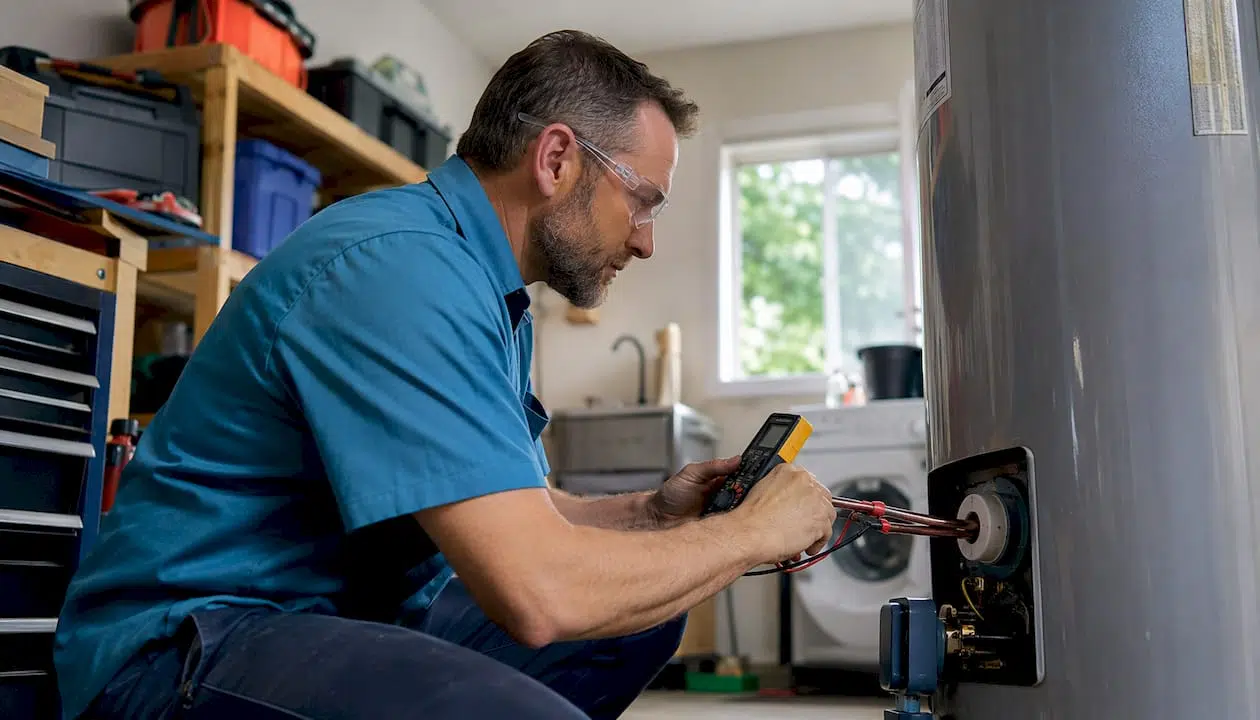
No hot water is the single most reported water heater complaint, and the cause almost always comes down to one of four things: a tripped circuit breaker, an extinguished pilot light, a failed heating element, or a broken thermostat. Electric and gas heaters fail differently here, so the first step is knowing which type you have.
For electric water heaters:
- Check the circuit breaker first. A tripped breaker cuts all power to the unit.
- If the breaker is fine, the upper heating element is the next suspect.
- A failed thermostat can also prevent the element from activating even when power is present.
For gas water heaters:
- An extinguished pilot light is the most common culprit.
- A faulty gas valve can prevent gas from reaching the burner entirely.
- Thermocouple failure will cause the pilot to go out repeatedly.
Safety warning: Never attempt to test or replace electrical components without shutting off the breaker first. For gas heaters, if you smell gas near the unit, leave the house immediately and call your gas utility. Do not attempt to relight the pilot until the gas smell is fully gone.
A water heater repair guide can walk you through the specific steps for each heater type, but anything involving internal wiring or gas connections should go to a licensed technician.
2. Where water heater leaks come from and what to do
Leaks affect roughly 10% of water heaters, and the severity depends entirely on where the water is coming from. A drip at a valve fitting is a very different problem than water pooling at the base of the tank.
Common leak sources:
- Pressure relief valve — designed to release pressure, but a dripping valve may need replacement
- Cold water inlet or hot water outlet connections — loose fittings at the top of the tank are often an easy fix
- Drain valve — can weep if it hasn’t been used in years
- Tank body — corrosion-driven leaks from the tank itself signal the end of the unit’s life
Tank corrosion leaks cannot be patched. Once water is seeping from the tank body, replacement is required. Valve and fitting leaks, on the other hand, are often repairable without replacing the whole unit.
If you find a leak, turn off the cold water supply to the heater immediately. For gas units, also shut off the gas. For electric units, cut power at the breaker. Then locate the source before deciding on next steps.
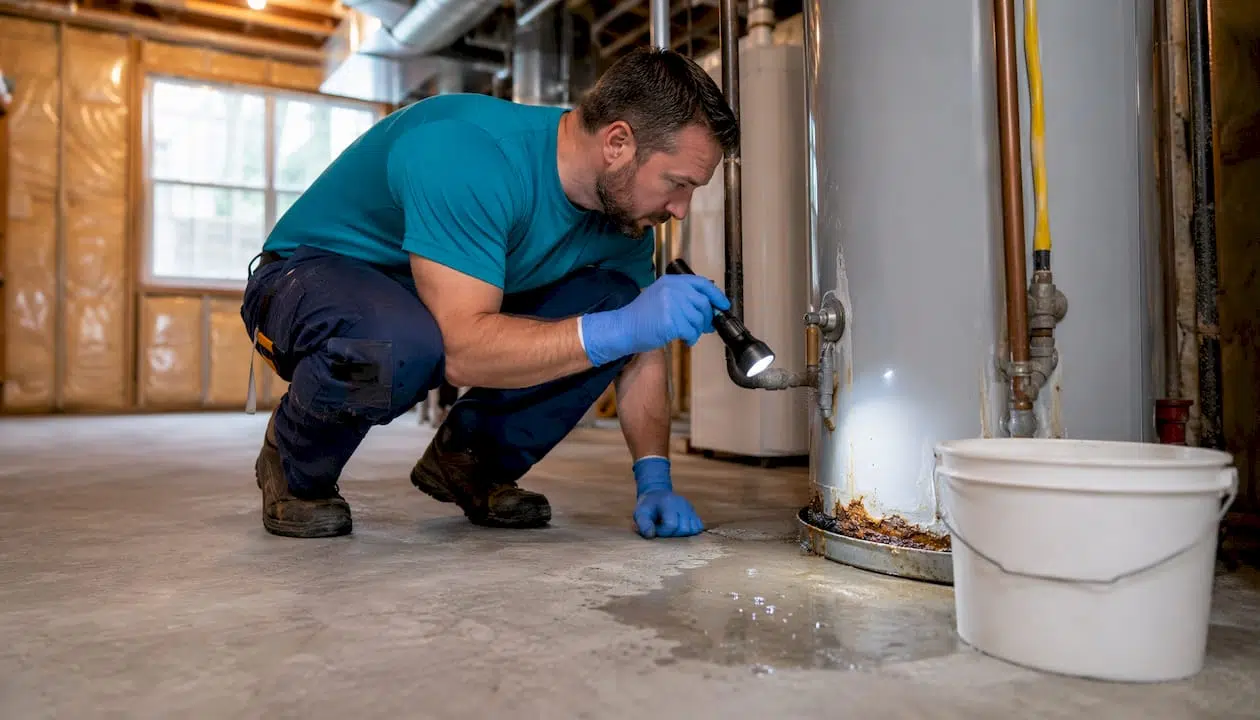
Pro Tip: Place a piece of dry paper towel under the heater and check it after 24 hours. The location of any wet spot tells you exactly where the leak originates, which saves time during diagnosis.
3. What those strange noises actually mean
Popping, rumbling, and banging from a water heater are almost always caused by sediment trapped at the tank bottom, where mineral deposits create pockets that boil under the heat. It sounds alarming, but it’s usually not a sign of immediate mechanical failure.
Noise types and their likely causes:
- Popping or rumbling — sediment buildup causing water to boil beneath mineral layers
- Banging or knocking — pipes expanding and contracting with temperature changes
- Whistling or hissing — a partially closed valve or a failing pressure relief valve
- High-pitched whine — scale buildup on an electric heating element
The fix for sediment noise is flushing the tank, which clears the mineral layer and usually quiets the unit within a cycle or two. However, if the rumbling returns quickly after flushing, that’s a different signal. Repeated noise after a flush can indicate the tank floor has weakened from prolonged sediment contact, which points toward replacement rather than another round of maintenance.
4. Temperature problems: too hot, too cold, or all over the place
Inconsistent water temperature is one of the more frustrating water heater issues because it can have several unrelated causes. The fix depends on whether the water is consistently cold, consistently scalding, or unpredictably variable.
Common causes by symptom:
- Water too cold: failed lower heating element (electric), insufficient gas supply (gas), or thermostat set too low
- Water too hot: thermostat set above 120°F, or a thermostat stuck in the “on” position
- Fluctuating temperature: a failing heating element that works intermittently, crossed hot and cold connections, or an undersized tank for household demand
The U.S. Department of Energy recommends setting your water heater thermostat to 120°F. That temperature is hot enough for most household uses and reduces the risk of scalding, particularly for children and older adults.
For electric heaters, a failing lower element often produces lukewarm water rather than cold water, because the upper element still works. Replacing the lower element usually restores full capacity. For gas heaters, temperature problems that don’t respond to thermostat adjustment typically point to the gas valve or burner assembly, both of which need a technician.
5. How sediment buildup harms your water heater over time
Hard water is the main driver of sediment accumulation. As water heats, dissolved minerals like calcium and magnesium precipitate out and settle at the tank bottom. Over months and years, that layer thickens, forcing the burner or element to work harder to heat water through an insulating crust of mineral scale.
Signs of significant sediment buildup:
- Rumbling or popping noises during heating cycles
- Longer recovery times between hot water uses
- Higher energy bills without a change in usage
- Discolored or gritty water from the hot tap
How to flush your tank (annual maintenance):
- Turn off the heater’s power or gas supply.
- Connect a garden hose to the drain valve at the tank’s base.
- Run the other end to a floor drain or outside.
- Open a hot water faucet inside the house to prevent a vacuum.
- Open the drain valve and let the tank empty completely.
- Briefly open the cold water supply to stir up remaining sediment, then drain again.
- Close the drain valve, refill the tank, and restore power or gas.
Annual flushing removes the mineral layer before it hardens into a permanent crust. Skipping this step for several years is one of the fastest ways to shorten a water heater’s life. Pairing the flush with a check of the water heater’s energy efficiency gives you a full picture of how the unit is performing.
6. Should you repair or replace your water heater?
The answer usually comes down to three factors: the unit’s age, the type of problem, and how repair costs compare to replacement costs. Homeowners often assume a failed component means the whole system is done, but that’s rarely true for younger units with isolated failures.
Key factors to weigh:
- Age: Units under 6–8 years old with a single component failure are almost always worth repairing. Units over 10 years old with recurring issues are strong candidates for replacement.
- The 50% rule: If repair costs exceed 50% of a new unit’s price, replacement is the better investment. For units older than 8 years, some technicians apply a stricter threshold of 30–40% of replacement cost to account for the higher likelihood of additional failures.
- Repeated repairs: Multiple repairs within 1–2 years suggest the unit has reached the end of its useful life, regardless of age.
- Tank condition: A corroded or leaking tank body means replacement, full stop. Heating elements, thermostats, and anode rods are all designed to be swapped out; the tank itself is not.
When replacement does make sense, heat pump water heaters are the most energy-efficient option available, with Energy Star certified models achieving efficiencies of 330% to 410%. They cost more upfront and require adequate space and a condensate drain, but the long-term operating savings are substantial. For a deeper look at the decision, the repair vs. replacement guide covers the full cost comparison.
7. When you need to call a professional technician
Some water heater problems are genuinely DIY-friendly. Others carry real safety risks that make professional help the only reasonable choice.
Call a licensed technician for:
- Any gas leak or suspected gas supply issue
- Relighting a pilot light that keeps going out (may indicate a thermocouple or gas valve problem)
- Electrical faults, including a breaker that trips repeatedly after reset
- Tank body leaks requiring replacement
- Pressure relief valve failure
- Any repair on a unit still under warranty, since DIY work can void coverage
Safety note: Gas water heater repairs carry risks of carbon monoxide exposure and fire. Electric repairs involve high-voltage components. Licensed technicians are trained to handle both safely. Attempting these repairs without proper tools and training can turn a fixable problem into a dangerous one.
Routine professional inspections, ideally once a year, catch small issues before they become expensive. A technician can test the pressure relief valve, inspect the anode rod, check for early corrosion, and verify that gas connections are tight. For anything involving gas lines specifically, the professional gas line repair page outlines what that service covers and why it matters.
8. Pilot light failure on gas water heaters
A pilot light that won’t stay lit is one of the most common gas water heater complaints, and it’s usually caused by one of three things: a worn thermocouple, a dirty pilot orifice, or insufficient gas flow.
The thermocouple is a small sensor that detects whether the pilot flame is burning. When it works correctly, it holds the gas valve open. When it fails or gets coated in residue, it signals the valve to close even when the flame is present, which shuts off the pilot. Replacing a thermocouple is a relatively inexpensive repair and one that a technician can complete quickly.
A dirty pilot orifice produces a weak or yellow flame instead of a strong blue one. Cleaning the orifice with compressed air often restores normal operation. Low gas pressure, however, is a utility or gas valve issue and needs a professional.
Never attempt to relight a pilot if you smell gas. Ventilate the area, leave the house, and call your gas company before returning.
9. Reading error codes on modern water heaters
Modern water heaters, particularly tankless units and newer tank models with digital controls, display error codes when something goes wrong. These codes vary by manufacturer, but most follow recognizable patterns.
Common error code categories:
| Code Type | What It Usually Indicates |
|---|---|
| Ignition failure | Pilot or igniter not firing; check gas supply and igniter |
| Overheating / high limit | Water temperature exceeded safe threshold; reset required |
| Flame failure | Burner lit but flame sensor didn’t detect it; sensor may need cleaning |
| Flow sensor error | Tankless unit: insufficient water flow to activate heating |
| Pressure fault | Pressure relief valve triggered or pressure sensor failed |
| Venting error | Exhaust blockage or venting issue on sealed-combustion units |
The error code is a starting point, not a diagnosis. A code for “ignition failure,” for example, could mean a bad igniter, a gas supply problem, or a faulty control board. Cross-reference the code with your unit’s manual, and if the fix involves gas components or internal wiring, hand it off to a technician. Many manufacturers publish error code lookup tools on their websites, and your model number (usually on a label near the top of the unit) is all you need to find the right reference.
Appliancesrepairmdtech handles water heater repairs across Orange County and Los Angeles
Water heater problems rarely wait for a convenient time. When yours stops working on a cold morning or starts leaking overnight, you need a technician who can show up fast and actually fix it, not someone who schedules you two weeks out.
Appliancesrepairmdtech serves homeowners across Orange County and Los Angeles County with licensed technicians who handle water heater repairs, installations, and related plumbing work. Whether you’re dealing with a failed heating element, a stubborn pilot light, or a tank that’s clearly past its prime, the team can diagnose the problem on-site and give you a straight answer on repair vs. replacement. Online booking is available, and coverage spans dozens of cities across both counties. Book your appointment at appliancesrepairmdtech.com and get the problem handled by someone who does this every day.
Key Takeaways
The most important thing to know about water heater problems is this: the tank’s physical condition determines whether repair makes sense, and most component failures on younger units are worth fixing.
| Point | Details |
|---|---|
| No hot water tops the list | 35% of water heater issues involve no hot water, caused by tripped breakers or pilot light failure. |
| Tank leaks mean replacement | Leaks from the tank body signal corrosion; valve and fitting leaks are usually repairable. |
| Flush the tank annually | Annual flushing removes sediment, extends tank life, and prevents noise and efficiency loss. |
| Use the 50% repair rule | If repair costs exceed 50% of a new unit’s price, replacement is the smarter investment. |
| Appliancesrepairmdtech | Licensed technicians serving Orange County and Los Angeles County for water heater repairs and installations. |