
What do LG washer error codes mean, and how do you fix them?
Your LG washer flashes a code and stops mid-cycle. Before you call anyone, know this: most of these alerts are fixable at home in under 15 minutes. LG’s official error code documentation identifies seven primary diagnostic codes that cover the vast majority of common LG washing machine problems.
Here is what each code means and what to do first:
- dE (Door Error): The door failed to lock. Close it firmly, check for clothing caught in the gasket, and run a reset. Never force the door open when water is inside. The safety lock exists to prevent flooding and electric shock risk.
- IE (Inlet Error): Water did not fill the tub in time. Check that the supply faucet is fully open, the inlet hose is not kinked, and the inlet filter is not clogged. In winter, a frozen hose is the likely culprit.
- OE (Outlet/Drain Error): The washer cannot drain. Straighten the drain hose, confirm it is not positioned higher than it should be, and clean the drain pump filter.
- UE (Unbalanced Error): Laundry has bunched to one side of the drum. Open the door, redistribute the load evenly, and restart the spin cycle.
- FE (Fill Error/Overfill): The tub is overfilling, usually from a faulty water valve. Unplug the washer immediately, then plug it back in and restart. If it overfills again, the water level sensor needs professional attention.
- CE (Current Error): The motor circuit detected an overcurrent, caused by a short circuit, loose connection, or power surge. Unplug for 10 seconds, plug back in, and attempt a new cycle.
- SUD (Suds Error): Too much foam detected. The washer adds a suds-reduction cycle that can extend the total cycle time significantly. Do not add more detergent. Let the cycle complete, then switch to HE detergent and use less of it.
Safety first: LG and independent appliance experts both strongly advise against forcing the washer door open during any dE or lock error when water remains in the drum. Doing so risks flooding, electric shock, and permanent damage to the door latch assembly.
Step-by-step troubleshooting for each LG washer error code
Understanding the quick fix is a start. Knowing why the error happened keeps it from coming back. Here is a deeper look at each code, with step-by-step instructions you can follow right now.
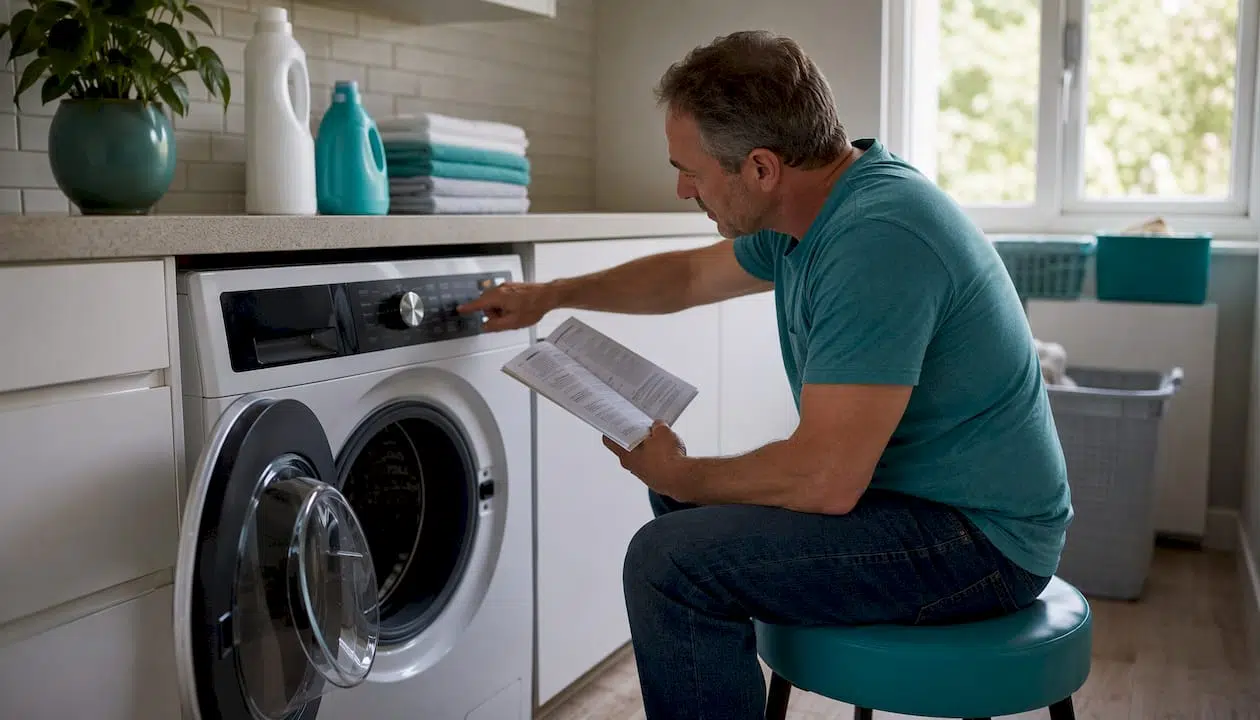
dE door lock errors
The dE, dE1, and dE2 codes all point to the door locking mechanism. A dE1 means the door is not fully closed; a dE2 means it closed but did not lock. Clothing caught in the rubber door gasket is the most common cause of both.
- Open the door and check the gasket for trapped fabric.
- Close the door firmly until you hear a click.
- Power off the washer and unplug it from the outlet.
- With the power off, press and hold START/PAUSE for 5 seconds.
- Plug the washer back in and start a new cycle.
If the dE code returns after this reset, the internal door lock micro-switch has likely failed. That assembly cannot be repaired in parts; the entire motorized door lock unit requires replacement. At that point, a technician is the right call.
IE water inlet errors
The IE code fires when the tub does not reach the required water level within a set time. Cold weather is a frequent cause during winter months: the inlet hose or supply tap can freeze solid.
- Confirm the water supply tap is fully open.
- Pull the washer slightly forward and check the inlet hose for kinks.
- Disconnect the hose and inspect the small mesh inlet filter at the back of the machine. Remove rust, sand, or debris with your fingers or needle-nose pliers.
- If the hose is frozen, thaw it in warm water below 122°F (50°C), then reconnect.
- If the error persists after all of the above, the inlet valve itself may be failing and needs replacement.
OE drainage errors
An OE code means water is sitting in the drum because the drain system is blocked or the pump cannot move water out. Clogged drain pump filters are the leading cause, and cleaning them monthly prevents most OE errors entirely.
- Check the drain hose at the back for kinks or crushing.
- Confirm the hose is not inserted too deeply into the standpipe, which can create a siphon effect.
- Run a Spin Only cycle and listen for a humming sound from the pump. Humming means the motor is working but the filter may be clogged.
- Open the small access panel at the front bottom of the washer. Place a towel and a shallow pan underneath, then slowly unscrew the filter cap. Drain the water and remove any lint, coins, or debris.
- Run a Tub Clean cycle to confirm the error is cleared.
UE unbalanced load errors
Unusual thumping or vibration during spin almost always signals a UE code. Single heavy items like a bath towel or a comforter are the usual offenders because they absorb water unevenly.
- Pause the cycle, open the door, and manually spread the load around the drum.
- For bulky items, add a few smaller pieces to balance the weight.
- Check that all four leveling feet on the washer are contacting the floor evenly. A washer that rocks even slightly will trigger UE repeatedly.
Pro Tip: Never wash a single laundry net by itself. LG’s documentation specifically flags this as a UE trigger. Always pair it with other items.
SUD suds errors
The SUD error is almost never a mechanical fault. Towels and bulky items trap excess detergent and release it during agitation, creating foam even when you used the right amount. The fix is behavioral, not mechanical.
- Switch to a detergent labeled “HE” (High Efficiency). Non-HE detergent produces far more foam than front-load and high-efficiency top-load washers can handle.
- Use the amount printed on the HE detergent label for your load size. More is not better.
- If the SUD code appears after a bulky load, run a Rinse and Spin cycle without adding any detergent to flush out residual soap.
- If SUD keeps returning despite correct detergent and dosage, the pressure sensor may need diagnosis by a technician.
CE and FE errors
The CE code (motor overcurrent) and FE code (overfill) both warrant immediate unplugging. For CE, a 10-second power interruption often clears a transient surge event. For FE, unplug the machine and do not restart it until you have confirmed the water valve is not stuck open. Repeated FE errors after a reset point to a failed water level sensor or inlet valve, both of which require a service call.
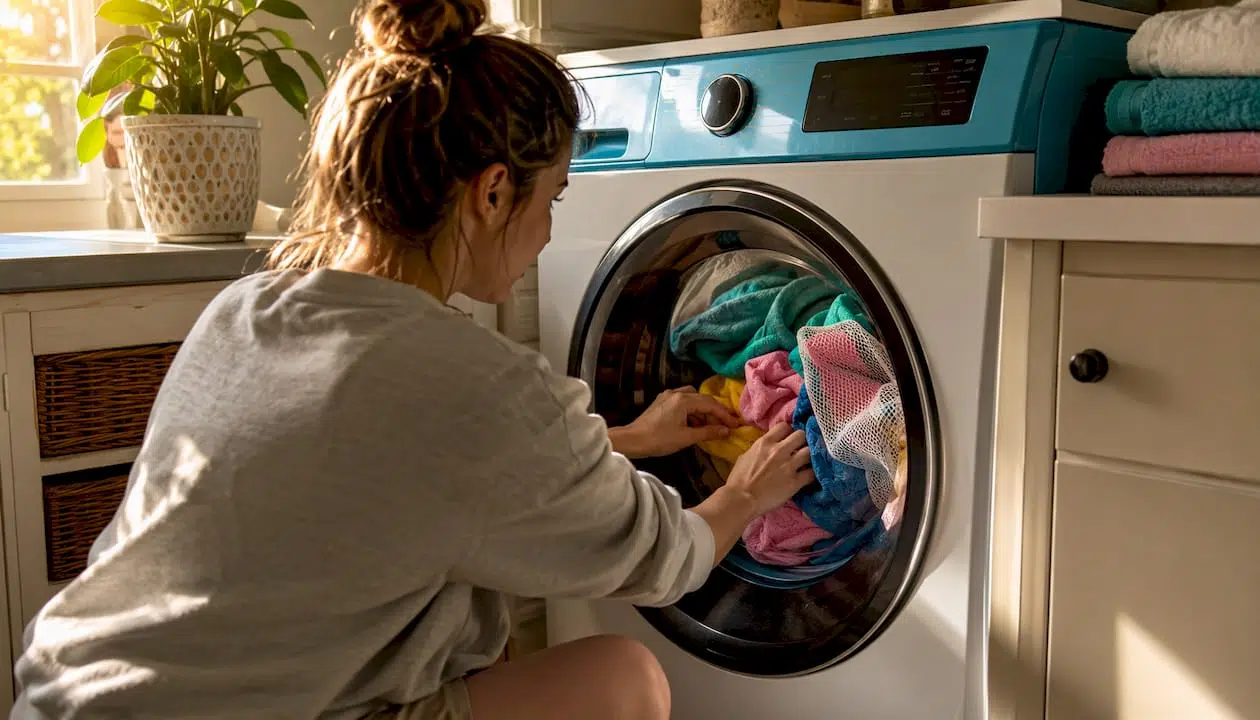
How to prevent LG washer errors before they start
The most effective LG washing machine repair guide is the one you never need because the machine keeps running. A short monthly routine handles the majority of common LG washing machine problems.
Monthly checklist:
- Clean the drain pump filter. Access the small panel at the front bottom of the washer, drain residual water, and remove debris. This single step prevents most OE errors.
- Rinse the inlet filters. Turn off the water supply, disconnect the inlet hoses, and pull out the small mesh screens. Rinse under running water and reinstall before reconnecting the hoses.
- Run a Tub Clean cycle. Use a washing machine cleaner tablet or LG’s recommended Tub Clean setting. The tCL reminder on the display is not an error; it is a prompt to run this cycle. Skipping it repeatedly leads to odor, mold, and detergent buildup that contributes to SUD errors.
- Check hoses for kinks or wear. In winter, inspect both the inlet and drain hoses for signs of freezing or cracking. A kinked hose is the fastest path to an IE or OE code.
- Load the drum correctly. Fill it no more than three-quarters full. Overloading strains the motor (CE, LE codes) and causes uneven spinning (UE code).
Pro Tip: Use only HE-labeled detergent in every LG front-load and high-efficiency top-load washer. The washer maintenance guide from Appliancesrepairmdtech recommends measuring detergent by load size rather than guessing. One tablespoon too many on a small load is enough to trigger a SUD cycle.
A few habits that go beyond the monthly checklist: leave the washer door ajar after each cycle to let the drum dry out and prevent mold on the gasket. Wipe the rubber door seal dry after every wash. And if you live in a region that sees freezing temperatures, insulate exposed inlet hoses or move the washer to a heated space before winter.
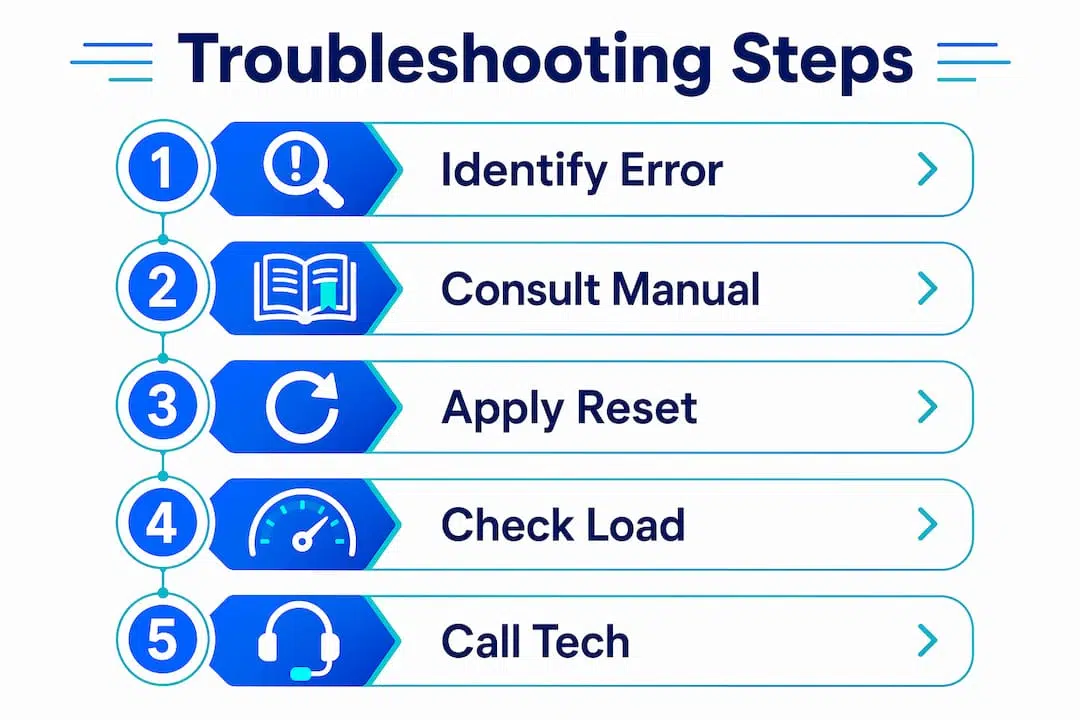
How to reset your LG washing machine safely
A power reset clears transient errors from the control board without touching any mechanical parts. It is the right first move for dE, CE, PF (power failure), and AE (leak sensor) codes that appeared after a power fluctuation.
- Press the Power button to turn the washer off.
- Unplug the power cord from the wall outlet, or flip the dedicated circuit breaker.
- Wait at least 1–5 minutes. This allows the control board’s capacitors to fully discharge.
- With the washer still unplugged, press and hold the START/PAUSE button for 5 seconds to drain any residual charge.
- Plug the washer back in and select a new cycle.
Power fluctuations and outages can also trigger PF or AE codes. Unplugging and restarting resolves these in most cases, but using a surge protector on the washer’s outlet prevents the control board from taking damage during voltage spikes.
Pro Tip: A reset clears the error display but does not fix a mechanical fault. If the same code returns within one cycle after a reset, the underlying component needs inspection, not another reset.
One important distinction: the soft reset described above works for sensor and control board errors. It will not fix a physically jammed drum, a broken door latch, a clogged filter, or a failed inlet valve. Those require hands-on repair. Think of the reset as a diagnostic step: if the error comes back, you have confirmed the problem is hardware, not a glitch.
When should you call a professional for LG washer repairs?
Some LG washer problems sit outside the range of safe DIY repair. Knowing where that line is saves you from making a minor fault worse and potentially voiding your warranty.
Stop and call a technician when: the error code returns immediately after a reset, you smell burning plastic or rubber, water is leaking from the machine body (not the hose connections), or the drum makes grinding or scraping sounds during spin.
These are the specific situations that require professional service:
- Persistent dE code after a reset. The door lock micro-switch has failed. The entire motorized lock assembly needs replacement, and sourcing the correct part for your model requires access to LG’s parts catalog.
- Recurring CE code. A motor overcurrent that returns after a reset points to a short circuit, a ground fault, or a failing motor. Working near live motor wiring without proper tools is a genuine safety risk.
- FE code that repeats. A stuck-open inlet valve or failed water level sensor will keep overfilling the tub. Left unattended, this causes water damage to flooring and cabinetry.
- Burning smell or electrical tripping. Unplug the machine immediately and do not restart it. This is a fire and shock hazard.
- Loud grinding during spin. Foreign objects lodged between the drum and the tub, or a failing drum bearing, both require disassembly that goes beyond filter cleaning.
- Water leaking from the machine body. Check hose connections first. If those are tight and water still appears, the door gasket, pump housing, or tub seal may be compromised.
For homeowners in Orange County and Los Angeles County, Appliancesrepairmdtech provides licensed technicians who specialize in LG washer diagnosis and repair. Booking is available online, and the team covers a wide range of cities across both counties. If you are weighing whether a repair makes financial sense, the repair vs. replacement guide on the Appliancesrepairmdtech site walks through the cost factors clearly.
Appliancesrepairmdtech also covers appliance parts replacement for homeowners who want to handle straightforward component swaps themselves, with guidance on sourcing the right parts for LG models.
Key Takeaways
Most LG washing machine errors are preventable with monthly filter cleaning, correct HE detergent use, and balanced loading, and most that do appear can be cleared with a simple power reset before any technician is needed.
| Point | Details |
|---|---|
| Seven primary error codes | dE, IE, OE, UE, FE, CE, and SUD cover the majority of LG washer faults homeowners encounter. |
| SUD extends cycle time | A suds-reduction cycle can significantly extend the wash; switch to HE detergent and reduce dosage to prevent it. |
| Monthly filter cleaning | Cleaning the drain pump filter and inlet filters monthly prevents most OE and IE errors before they start. |
| Power reset procedure | Unplug, hold START/PAUSE for 5 seconds, wait 1–5 minutes, then restart to clear transient sensor errors. |
| Call a technician when | A burning smell, recurring error after reset, or water leaking from the machine body all require professional service. |