
Living in Southern California means counting on your air conditioner to keep your home cool when the heat waves roll in. When your AC starts blowing warm air or your energy bill climbs, low Freon could be to blame. Maintaining proper Freon levels is vital for efficient cooling and long-term comfort. This guide breaks down how Freon works, why recharging it matters, and what Orange and Los Angeles County homeowners need to know when choosing the right HVAC professional.
Table of Contents
- Freon Recharge Explained For Homeowners
- Types Of Refrigerants Used In California Acs
- How Professional Freon Recharge Works
- California Laws On Freon Handling And Use
- Costs, Risks, And Common Pitfalls To Avoid
Key Takeaways
| Point | Details |
|---|---|
| Understanding Freon | Freon is essential for air conditioning systems, facilitating the removal of heat and humidity. Low levels can impair cooling efficiency. |
| Regulatory Compliance in California | Homeowners must ensure their HVAC systems meet California’s changing refrigerant regulations to avoid penalties and support environmental goals. |
| Professional Recharge Importance | A professional Freon recharge is necessary to ensure environmental compliance and system integrity, as improper handling can lead to significant risks. |
| Cost Considerations | The cost of Freon recharge varies widely based on refrigerant type and system complexity; understanding these factors can prevent unexpected expenses. |
Freon Recharge Explained for Homeowners
Understanding Freon is crucial for maintaining a comfortable home cooling system. This specialized refrigerant plays a critical role in how air conditioning units function, enabling them to remove heat and humidity from indoor spaces. Chemical refrigerants like Freon are responsible for the cooling magic happening inside your AC unit.
Freon operates through a fascinating heat transfer process that involves several key stages:
- Absorbs heat from indoor air
- Transforms from liquid to gas state
- Transfers heat outside the home
- Recondenses back into liquid form
The refrigeration cycle depends on precise pressure and temperature changes, which allow Freon to continuously move heat from inside to outside your living space. Without proper Freon levels, your air conditioning system cannot effectively cool your home.
Low Freon levels can significantly impact your AC’s performance. Safely adding refrigerant requires specialized tools and technical knowledge, making professional intervention critical. Homeowners should watch for warning signs like:
- Warm air blowing from vents
- Increased energy bills
- Ice forming on refrigerant lines
- Unusual system noise
Modern HVAC systems use different types of refrigerants, with older R-22 models being phased out in favor of more environmentally friendly alternatives like R-410A. Professional technicians can help determine the right refrigerant type for your specific system.
Pro tip: Schedule annual HVAC maintenance to catch potential Freon leaks early and ensure optimal system performance.
Types of Refrigerants Used in California ACs
California’s HVAC industry is experiencing a significant transformation in refrigerant technologies, driven by stringent environmental regulations and sustainability goals. State regulations are rapidly changing the landscape of acceptable refrigerant types, compelling homeowners and technicians to adapt to new environmental standards.
The primary refrigerant types currently used in California air conditioning systems include:
- R-22 (being phased out)
- R-410A (current standard)
- R-134a (common in older systems)
- R-404A (used in commercial applications)
- Newer hydrofluoroolefins (HFOs)
Environmentally friendly refrigerant options are becoming increasingly important. California has implemented strict guidelines that prohibit refrigerants with a Global Warming Potential (GWP) exceeding 750 for new equipment, with specific deadlines for different HVAC system types.
The state’s regulations create a clear timeline for refrigerant transitions:
- 2024: Chiller systems must comply
- 2025: Other AC equipment transitions
- 2026: Variable Refrigerant Flow (VRF) systems update
- 2030: Complete phaseout of R-22
Homeowners should work closely with certified HVAC professionals to understand which refrigerant is appropriate for their specific system and how upcoming regulations might impact their cooling infrastructure. The transition represents not just a regulatory requirement, but a significant step toward reducing environmental impact.
Here’s a quick comparison of common air conditioning refrigerants used in California:
| Refrigerant Type | Environmental Impact | Phaseout Status | Common Application |
|---|---|---|---|
| R-22 | High ozone depletion | Phased out by 2030 | Older AC systems |
| R-410A | Lower GWP | Standard, transition after 2025 | Newer home AC units |
| R-134a | Moderate GWP | Limited phaseout | Auto & older ACs |
| R-404A | High GWP | Commercial use, being replaced | Commercial HVAC |
| HFOs | Very low GWP | Preferred for new installs | Latest eco-friendly tech |
California’s refrigerant regulations aim to dramatically reduce greenhouse gas emissions from HVAC systems while promoting more sustainable cooling technologies.
Pro tip: Consult with a licensed HVAC technician to determine the most appropriate and eco-friendly refrigerant for your specific air conditioning system.
How Professional Freon Recharge Works
Professional Freon recharge is a precise and technical process that requires specialized training and equipment. Certified technicians follow strict protocols to ensure safe and effective refrigerant handling, protecting both your HVAC system and the environment.
The professional Freon recharge process involves several critical steps:
- Inspecting the entire AC system for potential leaks
- Measuring existing refrigerant pressure
- Recovering remaining refrigerant using specialized equipment
- Checking system components for potential damage
- Adding the manufacturer-recommended refrigerant amount
Refrigerant charging procedures require precision instruments and extensive technical knowledge. Technicians use specialized manifold gauges to measure system pressures, ensuring the exact amount of refrigerant is added without risking system damage.
The technical requirements for a professional Freon recharge include:
- EPA Section 608 Certification
- Specialized recovery and charging equipment
- Precise pressure measurement tools
- Understanding of manufacturer specifications
- Environmental compliance protocols
Professional Freon recharge is not a DIY task – it requires specialized certification and expertise to protect both your HVAC system and the environment.
Pro tip: Always request to see a technician’s EPA certification before allowing them to perform a Freon recharge on your air conditioning system.
California Laws on Freon Handling and Use
Navigating the complex landscape of Freon handling regulations in California requires a comprehensive understanding of both state and federal environmental guidelines. California’s Refrigerant Management Program establishes rigorous standards for refrigerant use, emphasizing environmental protection and emissions reduction.
Key regulatory requirements for Freon handling include:
- Mandatory registration for facilities using high GWP refrigerants
- Annual reporting for systems containing over 50 pounds of refrigerant
- Strict leak detection and repair protocols
- Certification requirements for technicians
- Comprehensive documentation of refrigerant activities
California Air Resources Board regulations align with federal Clean Air Act standards, creating a comprehensive framework for refrigerant management. Businesses and HVAC professionals must comply with multiple layers of regulatory oversight, including:
- Obtaining proper technician certifications
- Maintaining detailed service records
- Implementing leak prevention strategies
- Reporting refrigerant usage annually
- Following specific handling and disposal protocols
California’s refrigerant laws are designed to protect the environment by minimizing greenhouse gas emissions and preserving the ozone layer.
Pro tip: Keep detailed records of all refrigerant service activities and ensure all technicians working on your HVAC systems are EPA and California-certified.
Costs, Risks, and Common Pitfalls to Avoid
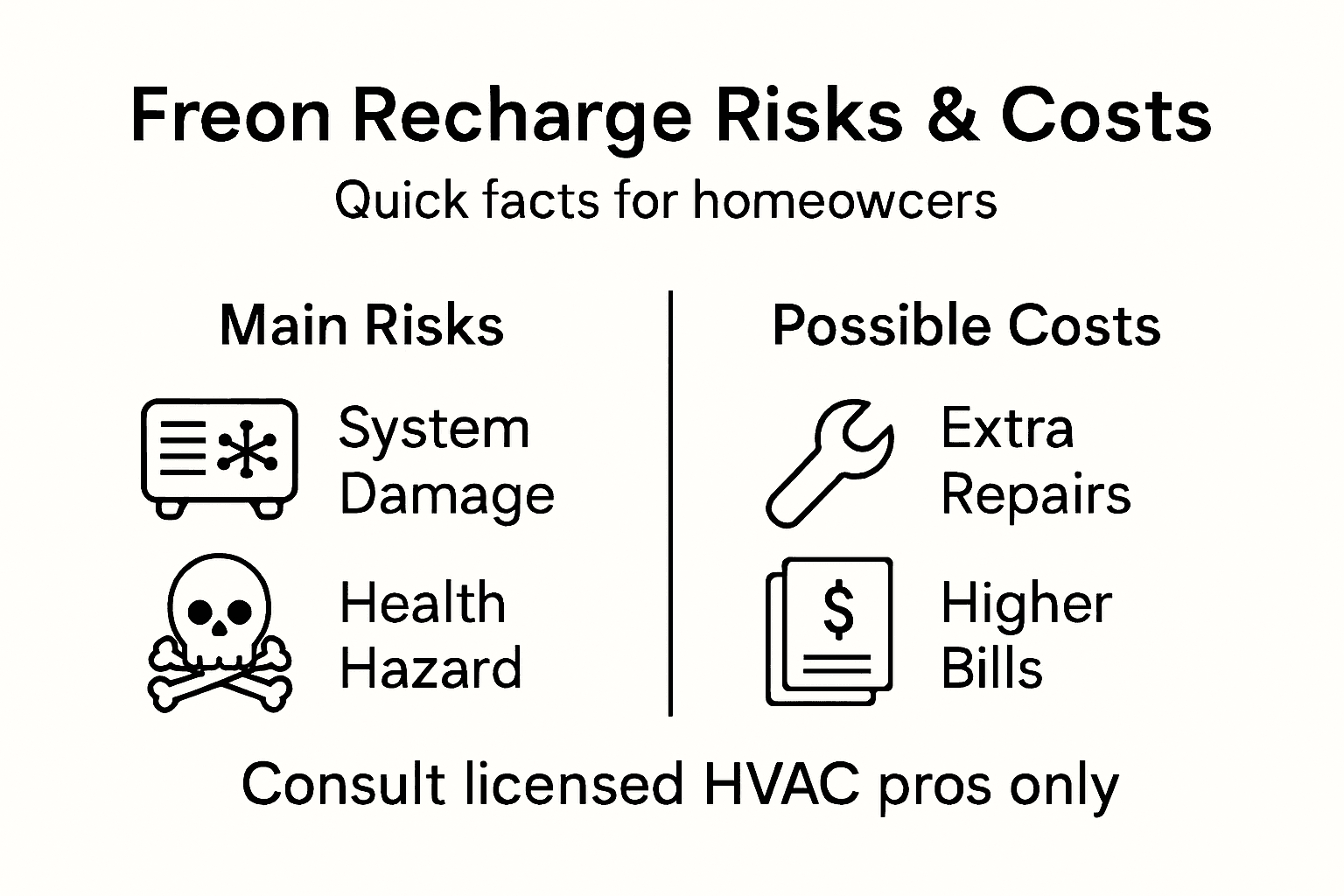
Understanding the financial and environmental implications of Freon recharge is crucial for homeowners in Orange and Los Angeles Counties. Freon recharge costs vary significantly, ranging from $150 to over $3,000 depending on multiple factors, including refrigerant type, system complexity, and regional labor rates.
Key cost and risk considerations include:
- Refrigerant type selection impacts overall expense
- R-22 refrigerant prices continue to escalate
- Newer refrigerants like R-410A are more expensive
- Labor fees contribute substantially to total costs
- Potential system damage from improper charging
Refrigerant handling requires careful environmental management, with significant risks for homeowners who attempt DIY solutions. The most common pitfalls that can lead to expensive repairs or environmental violations include:
- Ignoring existing system leaks
- Attempting unauthorized refrigerant recharging
- Failing to detect and repair minor refrigerant leaks
- Using incorrect refrigerant types
- Venting refrigerants into the atmosphere
Professional intervention is critical to prevent costly mistakes and potential environmental violations during Freon recharge procedures.
Pro tip: Request a detailed written estimate and system assessment before authorizing any Freon recharge to understand potential costs and necessary repairs.
Review these factors to understand the cost drivers and risks of Freon recharge:
| Cost/Risk Factor | Impact on Homeowners | Long-Term Consideration |
|---|---|---|
| Refrigerant type chosen | Price and compliance | Cost rises for phased-out types |
| Labor and service fees | Major expense portion | Higher for complex systems |
| Environmental penalties | Possible fines | Strict enforcement in California |
| Professional oversight | Reduces risk, adds value | Essential for regulatory compliance |
Trusted Freon Recharge Services for Orange and Los Angeles County Homeowners
Low Freon levels can put your home comfort at risk and lead to costly repairs if not addressed by a certified professional. This article highlights the importance of proper refrigerant handling, safe recharge procedures, and understanding California’s evolving refrigerant regulations. If you notice warm air from your vents or ice on refrigerant lines, it is crucial to act quickly to avoid further damage and higher energy bills.
Make a confident choice with Appliances Repair MD Tech, your local expert for professional Freon recharge and HVAC repair in Orange County and Los Angeles County. Our licensed technicians have EPA certification and the specialized tools needed to safely inspect, recharge, and maintain your air conditioning system according to California laws. Schedule reliable service today and protect your home from inefficient cooling and environmental risks. Visit https://appliancesrepairmdtech.com to book your appointment and experience trusted care for your essential appliances.
Frequently Asked Questions
How do I know if my air conditioning system needs a Freon recharge?
Low Freon levels can cause your AC unit to blow warm air, increase energy bills, or develop ice on refrigerant lines. If you notice these signs, it’s time to consider a Freon recharge.
What are the risks of DIY Freon recharge?
Attempting a DIY Freon recharge can lead to significant risks, including system damage, environmental violations, and potential fines. It’s best to consult a certified technician for safe handling.
What types of refrigerants are commonly used in air conditioning systems?
Common refrigerants include R-22, which is being phased out, R-410A, which is currently standard, and environmentally friendly options like hydrofluoroolefins (HFOs). Choosing the right type is essential for system compatibility and efficiency.
What is involved in a professional Freon recharge?
A professional Freon recharge involves inspecting the AC system for leaks, measuring existing refrigerant pressure, recovering any remaining refrigerant, and then adding the recommended amount of refrigerant. Certified technicians follow strict protocols to ensure safety and environmental compliance.