
Choosing new appliances for your home can feel complicated, especially when shifting away from traditional gas systems. Many residents in Orange and Los Angeles counties are considering gas appliance conversion to boost energy efficiency and reduce indoor air pollution. Understanding the facts about conversion, local regulations, and available options helps you make smart decisions that protect both your comfort and budget.
Table of Contents
- Defining Gas Appliance Conversion And Common Myths
- Types Of Gas Appliance Conversions Explained
- Step-By-Step Conversion Process For Homes
- California Laws And Local Safety Compliance
- Risks, Costs, And Mistakes To Avoid
Key Takeaways
| Point | Details |
|---|---|
| Understanding Conversion | Gas appliance conversion involves replacing or modifying appliances for better efficiency and environmental compliance. |
| Dispelling Myths | Many misconceptions exist, such as the belief that all gas appliances must be replaced immediately. |
| Key Considerations | Important factors include installation costs, energy efficiency ratings, and local regulations. |
| Professional Guidance | Consulting licensed technicians ensures compliance with regulations and helps avoid costly mistakes. |
Defining Gas Appliance Conversion and Common Myths
Gas appliance conversion is a strategic process of transitioning household equipment from traditional gas-powered systems to more efficient alternatives. This technical transformation involves modifying existing gas-powered appliances or replacing them entirely with newer, more environmentally friendly options that can operate using different energy sources.
The conversion process isn’t simply about swapping equipment, but understanding the nuanced technological and regulatory landscape. Emerging efficiency standards are driving homeowners to reconsider their current gas appliance setups, particularly in regions with strict environmental regulations.
Common myths about gas appliance conversion often prevent homeowners from making informed decisions. Here are several key misconceptions:
- Myth 1: All gas appliances must be immediately replaced
- Myth 2: Conversion is always expensive and disruptive
- Myth 3: New regulations require instant equipment overhaul
- Myth 4: Performance will decrease with alternative technologies
In reality, regional air quality regulations typically apply only when existing equipment fails or during proactive replacements. Most working gas appliances can continue functioning without immediate intervention.
Key considerations for gas appliance conversion include:
- Energy efficiency ratings
- Local environmental regulations
- Installation costs and potential rebates
- Long-term operational expenses
- Environmental impact
Conversion Benefits:
- Reduced carbon emissions
- Potential energy cost savings
- Improved indoor air quality
- Compliance with emerging environmental standards
Pro tip: Before initiating any gas appliance conversion, consult a licensed local technician who understands Orange and Los Angeles county-specific regulations and can provide a comprehensive assessment of your specific home setup.
Types of Gas Appliance Conversions Explained
Gas appliance conversions encompass a wide range of technological transformations designed to improve home energy efficiency, reduce environmental impact, and optimize household systems. Homeowners in Orange and Los Angeles counties have several strategic options when considering appliance upgrades that can significantly impact their energy consumption and utility costs.
Furnace and boiler technologies represent one of the most critical areas for potential conversion. These heating systems can be upgraded to high-efficiency models that dramatically reduce energy waste and lower monthly utility expenses. The primary conversion types include:
- Furnace Conversions
- Natural gas to high-efficiency models
- Gas to electric heat pump systems
- Upgrading existing furnace components
- Boiler Conversions
- Steam to hot water systems
- Natural gas to condensing boiler technologies
- Transitioning to electric or hybrid heating solutions
Cooking appliances offer another significant conversion opportunity. Induction stove technologies have emerged as a game-changing alternative to traditional gas cooktops, providing several compelling benefits:
- Faster cooking times
- Improved energy efficiency
- Reduced indoor air pollution
- More precise temperature control
- Enhanced safety features
Key Conversion Categories:
- Heating systems
- Cooking appliances
- Water heaters
- Dryer technologies
- Residential HVAC systems
Conversion success depends on understanding your specific home infrastructure, local energy regulations, and long-term efficiency goals.
Each conversion type requires careful consideration of installation costs, potential energy savings, environmental impact, and local regulatory compliance. Homeowners should evaluate their current equipment’s age, performance, and existing infrastructure before making a final decision.
Here’s a comparison of common gas appliance conversion options and their advantages:
| Conversion Type | Typical Upgrade | Main Benefit |
|---|---|---|
| Furnace | Electric heat pump | Lower utility bills |
| Boiler | Condensing boiler | Improved energy efficiency |
| Cooking Appliance | Induction stove | Better indoor air quality |
| Water Heater | Electric heat pump | Reduced carbon emissions |
| Dryer | Electric model | Safer indoor air environment |
| HVAC System | Electric system | Enhanced comfort and savings |
Pro tip: Request a professional energy audit from a local technician to determine the most cost-effective and environmentally friendly conversion strategy for your specific home setup in Orange or Los Angeles County.
Step-by-Step Conversion Process for Homes
Gas appliance conversion requires a systematic approach that balances technical expertise, local regulations, and homeowner goals. Understanding the comprehensive process helps Orange and Los Angeles county residents navigate this complex home improvement strategy with confidence and precision.
Home appliance upgrades demand careful planning and strategic execution. The conversion process involves multiple critical stages that ensure optimal performance, energy efficiency, and long-term cost savings.
The comprehensive conversion process typically includes these essential steps:
- Initial Home Assessment
- Evaluate current appliance efficiency
- Identify potential conversion candidates
- Measure existing infrastructure compatibility
- Research and Planning
- Compare energy-efficient replacement options
- Review local building codes
- Calculate potential cost savings
- Check available rebates and incentives
- Professional Consultation
- Schedule professional energy audit
- Obtain multiple contractor estimates
- Discuss specific home requirements
- Equipment Selection
- Choose ENERGY STAR certified models
- Consider long-term efficiency ratings
- Analyze installation requirements
Furnace and boiler replacements represent particularly complex conversions that require specialized expertise. These transformations demand precise measurements, professional installation, and careful system integration.
Successful gas appliance conversion hinges on matching technological solutions with your home’s unique infrastructure and energy consumption patterns.
Key Conversion Considerations:
- Total installation cost
- Expected energy savings
- Equipment warranty
- Professional installation requirements
- Potential tax credits
Pro tip: Request detailed written documentation from your contractor outlining specific conversion steps, expected efficiency improvements, and total project timeline before initiating any gas appliance upgrade.
California Laws and Local Safety Compliance
California’s commitment to environmental safety and energy efficiency creates a complex regulatory landscape for gas appliance conversions. Homeowners in Orange and Los Angeles counties must navigate intricate legal requirements that balance technological innovation with stringent safety standards.
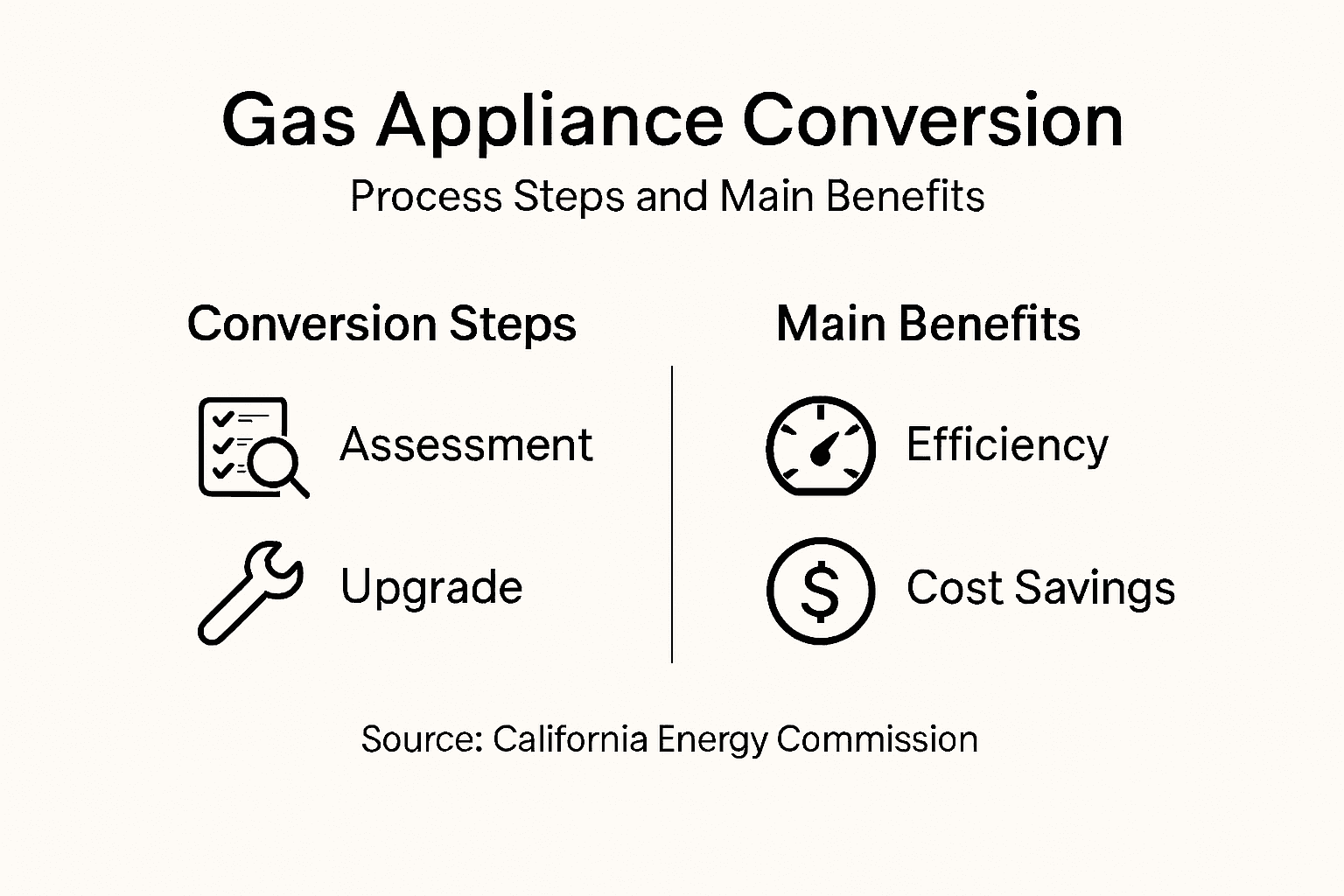
Alternative fuel conversion regulations demonstrate California’s rigorous approach to technological transitions. The state’s comprehensive certification procedures reflect a meticulous commitment to ensuring public safety and environmental protection during any conversion process.
Key Regulatory Considerations:
- Emissions control standards
- Safety certification requirements
- Professional installation mandates
- Energy efficiency guidelines
- Local building code compliance
Recent legislative developments are actively reshaping the gas appliance conversion landscape. Specific legal frameworks now aim to:
- Streamline conversion processes
- Remove barriers to electric appliance upgrades
- Prevent homeowners association restrictions
- Support clean energy transition goals
- Facilitate easier residential modifications
California’s conversion regulations prioritize safety, environmental impact, and technological innovation across residential and commercial sectors.
Compliance Documentation Requirements:
- Certified contractor credentials
- Detailed equipment specifications
- Energy efficiency ratings
- Emissions testing documentation
- Professional installation certifications
Potential Legal Challenges:
- Navigating complex permit processes
- Meeting strict emissions standards
- Ensuring contractor certification
- Maintaining property insurance compatibility
- Documenting conversion modifications
Pro tip: Consult with a licensed local contractor who specializes in California energy conversion regulations to ensure complete compliance and avoid potential legal complications during your gas appliance upgrade.
Risks, Costs, and Mistakes to Avoid
Gas appliance conversion represents a significant investment that requires careful planning and comprehensive understanding of potential pitfalls. Homeowners in Orange and Los Angeles counties must navigate a complex landscape of technical, financial, and health-related considerations to ensure a successful transition.
Health risks associated with gas stoves highlight the critical importance of making informed conversion decisions. Indoor air pollution from gas appliances can lead to serious respiratory complications and long-term health concerns that extend far beyond simple equipment replacement.
Primary Conversion Risks:
- Improper installation hazards
- Unexpected equipment compatibility issues
- Potential increase in energy expenses
- Compromised home safety systems
- Voided manufacturer warranties
Induction stove conversion strategies emphasize the need for professional guidance to mitigate potential financial and technical risks. Homeowners should be aware of several critical cost considerations:
Financial Risk Factors:
- Initial equipment purchase expenses
- Professional installation fees
- Potential infrastructure modification costs
- Electrical system upgrade requirements
- Ongoing maintenance expenses
Successful gas appliance conversion demands thorough research, professional consultation, and a comprehensive understanding of both short-term and long-term implications.
Common Conversion Mistakes:
Below is a breakdown of risks, cost factors, and mitigation strategies in gas appliance conversion:
| Risk Area | Cost Component | Mitigation Strategy |
|---|---|---|
| Installation Hazards | Professional installation fee | Always hire certified contractors |
| Equipment Compatibility | Infrastructure modifications | Conduct thorough pre-assessment |
| Energy Expenses | Long-term operational costs | Choose high-efficiency replacements |
| Safety Compliance | Code-related upgrades | Review local building requirements |
| Warranty Issues | Manufacturer certification | Ensure all work is fully documented |
- Selecting incompatible replacement equipment
- Ignoring local building code requirements
- Underestimating total conversion costs
- Neglecting professional installation standards
- Failing to assess home infrastructure limitations
Potential Cost Breakdown:
- Basic appliance conversion: $500 – $2,500
- Complex system modifications: $2,500 – $7,500
- Electrical system upgrades: $1,000 – $4,000
- Total potential investment range: $2,000 – $10,000
Pro tip: Request comprehensive written estimates from multiple licensed contractors, ensuring they include detailed breakdowns of equipment, installation, potential infrastructure modifications, and projected long-term energy savings.
Upgrade Your Home Efficiency with Expert Gas Appliance Conversion Services
If you are facing challenges with outdated or inefficient gas appliances in Orange and Los Angeles counties, understanding the complexities of gas appliance conversion is crucial. From compliance with California’s strict safety regulations to upgrading furnaces, boilers, and cooking appliances for better energy savings and improved indoor air quality, every step counts. Avoid common pitfalls such as improper installation or unexpected costs by trusting knowledgeable professionals who specialize in these specific conversions.
Take control of your home’s energy efficiency today with reliable service from licensed technicians at Appliances Repair MD Tech. Our team offers fast, dependable installation and repair solutions tailored to your unique household needs. Whether you want to convert your gas furnace to a high-efficiency electric heat pump or switch to safer induction cooking appliances, we provide expert guidance and local support to ensure compliance and maximize savings. Don’t wait until costs rise or safety risks grow – book your consultation now and experience peace of mind with your home’s energy upgrades.
Explore how we help homeowners like you with professional gas appliance conversion and repair services at Appliance Repair and Installation in Orange County. Ensure your home is ready for a cleaner, safer, and more efficient future today.
Frequently Asked Questions
What is gas appliance conversion?
Gas appliance conversion is the process of modifying or replacing gas-powered appliances with more energy-efficient alternatives that use different energy sources. This transformation aims to improve home efficiency and reduce environmental impact.
What are the benefits of converting gas appliances?
Converting gas appliances can lead to reduced carbon emissions, potential energy cost savings, improved indoor air quality, and compliance with emerging environmental standards.
Are all gas appliances required to be replaced immediately during conversion?
No, not all gas appliances must be immediately replaced. Many functioning gas appliances can continue to operate until they fail or until it is time for a proactive replacement based on local regulations.
How can I ensure a successful gas appliance conversion?
To ensure a successful conversion, conduct a thorough home assessment, research energy-efficient options, consult with professionals for advice, and follow local building codes and safety regulations.