
Most American homeowners are surprised to learn that nearly half of all appliance failures occur within the first five years. For families in Orange County and Los Angeles County, an unplanned repair can quickly become a costly headache. Appliance warranties are your first line of defense, but registration is what gives you better access to essential support, smoother claims, and immediate safety updates. This guide explains exactly how protecting your investment starts with an extra step that saves time and money.
Table of Contents
- Defining Appliance Warranties and Registration
- Types of Appliance Warranties Explained
- How Warranty Registration Benefits Homeowners
- Legal Protections and Common Misconceptions
- Practical Risks of Not Registering Warranties
- Registration Process and Mistakes to Avoid
Key Takeaways
| Point | Details |
|---|---|
| Understanding Warranties | Appliance warranties protect homeowners against repair costs and malfunctions, and they come in full and limited coverage options. |
| Importance of Registration | Registering appliances streamlines service requests and provides manufacturers with the ability to communicate critical safety information. |
| Types of Warranties | Homeowners can choose from manufacturer, extended, and retailer warranties, each varying in duration and coverage. |
| Legal Protections | The Magnuson-Moss Warranty Act ensures consumers receive clear warranty information and protects them from deceptive practices. |
Defining Appliance Warranties and Registration
Appliance warranties represent a critical legal protection that safeguards homeowners against unexpected repair costs and product malfunctions. Under federal warranty regulations, these agreements establish the manufacturer’s commitment to repair or replace defective products within a specified timeframe. Understanding these warranties means recognizing the nuanced differences between full and limited coverage options that directly impact your financial protection.
At its core, a warranty serves as a guarantee from the manufacturer promising product performance and quality. These legal documents outline specific conditions under which repairs or replacements will be provided, typically covering mechanical failures, electrical issues, or manufacturing defects. Manufacturers design warranties to provide consumers confidence in their product’s reliability while establishing clear boundaries for their repair obligations.
Registration plays a strategic role in warranty management. While not always mandatory for maintaining warranty coverage, product registration enables manufacturers to communicate critical safety notifications, track product distribution, and establish direct communication channels with consumers. Homeowners who complete registration forms provide essential contact information that can expedite service requests and ensure timely notifications about potential product recalls or safety updates.
Pro tip: Keep all warranty documentation organized in a dedicated folder, including registration confirmations, purchase receipts, and manufacturer contact details for quick reference during potential service scenarios.
Types of Appliance Warranties Explained
Homeowners navigating appliance protection have several warranty options to consider. Appliance warranty types generally fall into three primary categories: manufacturer warranties, extended warranties, and retailer warranties. Each offers distinct levels of protection and coverage that can significantly impact your financial security and peace of mind when purchasing home appliances.
Manufacturer warranties come standard with new appliances and typically provide the most basic level of protection. These warranties usually cover manufacturing defects, mechanical failures, and workmanship issues for a predetermined period, often one year from the purchase date. The coverage is designed to protect consumers against inherent product flaws and ensure the appliance performs as advertised. Manufacturers establish clear terms outlining what components are covered and under what specific conditions repairs or replacements will be authorized.
Extended warranties represent an additional layer of protection that consumers can purchase beyond the standard manufacturer coverage. Warranty terms vary widely in length and scope, potentially covering wear and tear, accidental damage, or providing longer protection periods. These service contracts often come with additional costs but can offer comprehensive protection for complex or expensive appliances. Some extended warranties might include benefits like on-site repairs, expedited service, or total replacement for significant malfunctions.
Pro tip: Always compare the cost of an extended warranty against the appliance’s original price and potential repair expenses to determine if the additional coverage provides genuine value for your specific situation.
Here’s a comparison of the main appliance warranty types:
| Warranty Type | Standard Duration | Typical Coverage | Extra Features |
|---|---|---|---|
| Manufacturer Warranty | 1 year (average) | Defects, mechanical failures | Included with purchase |
| Extended Warranty | 2-5 years (varies) | Additional wear, accidental damage | Paid, may add extra perks |
| Retailer Warranty | Varies by seller | May overlap with manufacturer, store-only | Store-specific service terms |
How Warranty Registration Benefits Homeowners
Warranty registration provides homeowners with a crucial layer of protection and communication with manufacturers. Warranty registration benefits extend far beyond simply keeping a record of purchase. By proactively registering appliances, consumers create a direct line of communication with manufacturers, enabling faster response times for potential recalls, safety notifications, and service interventions.
One of the most significant advantages of warranty registration is the streamlined claims process. When an appliance is officially registered, manufacturers can quickly verify ownership and product details, which dramatically reduces the time and complexity of processing repair or replacement requests. This documentation becomes especially critical when dealing with complex appliances that may require specialized diagnostic procedures or replacement parts. Homeowners who maintain accurate registration records essentially create a digital paper trail that protects their investment and simplifies potential future service interactions.
Consumer protection strategies demonstrate that registration offers multiple protective benefits beyond immediate repair services. Registered products often receive priority support, faster technical assistance, and more comprehensive tracking of potential systemic issues. Additionally, registration helps manufacturers maintain accurate records about product performance, which can lead to improved design and quality control in future product generations. For homeowners, this means not just immediate protection, but contributing to long-term product reliability and safety standards.
Pro tip: Create a digital folder on your computer or cloud storage to scan and save all warranty registration confirmations, making them easily accessible whenever you need to reference product details or initiate a service claim.
Legal Protections and Common Misconceptions
Consumer warranty protections are governed by complex legal frameworks designed to safeguard purchasers of household appliances. Magnuson-Moss Warranty Act establishes critical federal standards that require manufacturers to provide clear, comprehensive warranty information. This legislation ensures that consumers receive transparent details about warranty coverage, remedies, and limitations, protecting them from deceptive or overly restrictive warranty practices that could unfairly disadvantage product owners.
One of the most pervasive misconceptions about warranties involves registration requirements. Many consumers believe that failing to return registration cards automatically invalidates their warranty protection. However, federal regulations explicitly prohibit manufacturers from conditioning warranty coverage on product registration. Consumer warranty rights are designed to provide protection regardless of whether a consumer completes and returns registration documentation. Manufacturers can offer incentives for registration but cannot legally nullify warranty coverage based on this administrative step.
The legal landscape of warranty protection is nuanced, with distinct differences between express and implied warranties. Express warranties are specific promises made by manufacturers about product performance, while implied warranties provide fundamental protections regarding product usability and basic functionality. These legal protections ensure that consumers have recourse when products fail to meet reasonable performance standards. Understanding these distinctions empowers homeowners to make informed decisions and effectively advocate for their rights when experiencing product defects or performance issues.
Pro tip: Always keep original purchase receipts and warranty documentation in a secure, easily accessible location, as these documents serve as critical evidence when pursuing warranty claims or resolving potential disputes.
Practical Risks of Not Registering Warranties
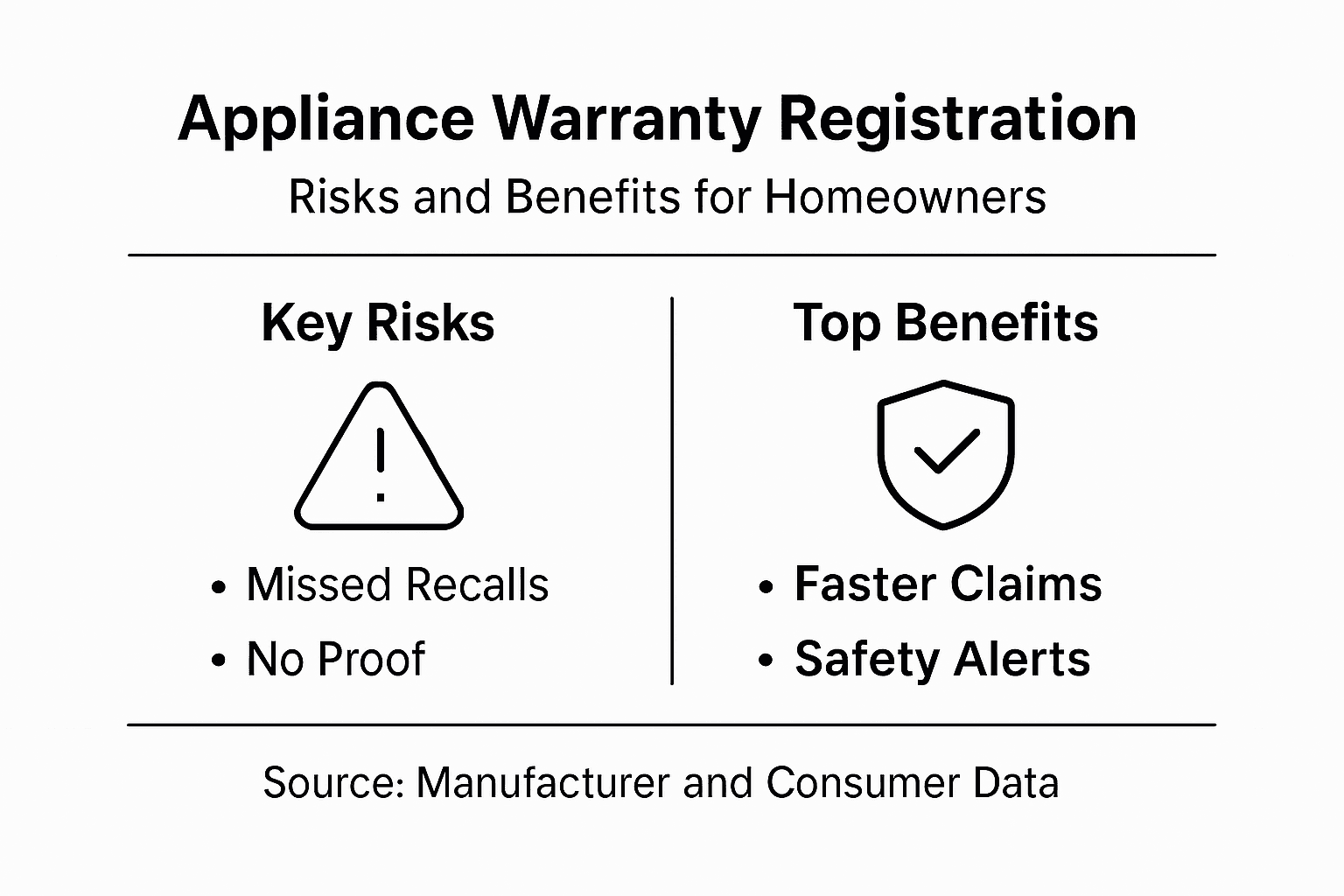
Neglecting to register appliance warranties can expose homeowners to significant financial and logistical challenges. Consumer warranty risks include delayed service responses, complicated claims processes, and potential difficulties in proving product ownership. When manufacturers cannot quickly verify an appliance’s purchase details, the entire repair or replacement process can become unnecessarily complicated and time-consuming.
One of the most critical risks involves safety notifications and recall information. Unregistered products make it challenging for manufacturers to communicate directly with owners about potential hazards or critical product updates. Extended warranty complications often arise when consumers fail to complete registration, potentially leaving them vulnerable to unexpected repair costs and unable to leverage full warranty protections. This communication gap can result in owners being unaware of critical safety modifications or systemic product issues that could impact their appliance’s performance and reliability.
Financial exposure represents another significant risk of warranty non-registration. Without proper documentation and registered contact information, homeowners may face increased out-of-pocket expenses for repairs that would otherwise be covered. Manufacturers and extended warranty providers frequently use registration as a primary method of verifying ownership, tracking product history, and establishing the basis for potential service interventions. The absence of this documentation can transform what might have been a straightforward warranty claim into a complex and potentially costly dispute.
Pro tip: Create a digital spreadsheet to track all appliance purchases, warranty registration dates, and confirmation numbers, ensuring you have quick access to critical information when service needs arise.
Registration Process and Mistakes to Avoid
The warranty registration process requires careful attention to detail and strategic information sharing. Product registration requirements are often misunderstood, with many consumers believing registration is mandatory for maintaining warranty coverage. In reality, most limited warranties do not require formal registration, though providing basic information can streamline future service interactions and protect your investment.
Typical registration processes involve submitting key product details such as purchase date, serial number, and contact information. Warranty claim strategies recommend registering promptly after purchase and providing only essential information. Common mistakes include waiting too long to register, providing incomplete or inaccurate data, or oversharing personal details. Consumers should carefully review manufacturer registration forms, providing minimal necessary information and retaining copies of all submitted documentation.
Navigating the registration process effectively means understanding the distinction between mandatory and optional information. While some manufacturers offer incentives for complete registration, consumers should remain cautious about sharing unnecessary personal data. Always verify the legitimacy of registration channels, preferring direct manufacturer websites or official documentation. Pay special attention to serial numbers, purchase dates, and model information, as these details are crucial for potential future service claims or product support.
Below is a summary of the most common registration mistakes and how to avoid them:
| Mistake | Potential Impact | Best Practice |
|---|---|---|
| Delayed registration | Claims processing delays | Register promptly after buying |
| Providing incomplete details | Service claim complications | Double-check data accuracy |
| Oversharing information | Increased privacy risk | Only supply essential details |
| Losing confirmation records | Difficulty proving registration | Save digital and physical backups |
Pro tip: Create a dedicated digital or physical folder to store all warranty registration confirmations, taking a quick smartphone photo of completed forms as an additional backup method.
Secure Your Appliance Investment With Expert Support Today
Understanding the hidden value of registering your appliance warranty is only the first step in protecting your home and wallet from unexpected repair costs. The article highlights the challenges homeowners face such as delayed service, complicated claims, and missing critical safety notifications when warranty registration is overlooked. These pain points emphasize the importance of clear documentation and quick access to trusted repair solutions that honor your warranty rights.
Don’t let warranty confusion add stress to your appliance problems. At Appliances Repair MD Tech, our team of licensed technicians in Orange County and Los Angeles County is ready to provide fast, reliable repairs that respect your warranty terms. Whether you need help with refrigerators, washers, or HVAC systems, our local experts ensure your registered appliances receive priority service reducing delays and hassle.
Protect your investment with professional care backed by clear warranty understanding. Visit Appliance Repair Services now to book your appointment online. Act now to avoid expensive out-of-pocket repair costs and keep your home running smoothly with skilled technicians you can trust.
Frequently Asked Questions
What is the purpose of registering appliance warranties?
Registering appliance warranties allows homeowners to establish a direct line of communication with manufacturers, ensuring they receive important updates about recalls, safety notifications, and eligibility for warranty claims more efficiently.
How can warranty registration simplify the claims process?
When an appliance is registered, manufacturers can quickly verify ownership and product details, which significantly reduces the complexity and time needed to process repair or replacement requests.
Are there any legal protections related to appliance warranties?
Yes, the Magnuson-Moss Warranty Act requires manufacturers to provide clear warranty information to consumers and prohibits them from voiding warranty protections based on registration status alone, ensuring significant consumer rights.
What are the risks of not registering appliance warranties?
Failing to register warranties can lead to delayed service responses, complications in claims processing, and difficulties in proving ownership, potentially resulting in increased out-of-pocket expenses for repairs that could have been covered.