
A leaking refrigerator can ruin your day and your kitchen floor in moments. Moisture from a faulty seal or broken water line is one of the top causes of appliance-related insurance claims in the American home. For Orange and Los Angeles County residents, quick leak detection and expert repairs are crucial to prevent mold, warped flooring, and costly food loss. Uncover the most common causes behind these frustrating leaks so you can protect your investment and act fast when problems strike.
Table of Contents
- What Causes Refrigerators to Leak Water
- Main Types of Refrigerator Leaks
- Inside the Refrigerator’s Drainage System
- External Water Line and Seal Issues
- Common Risks: Mold, Flooring, and Food Safety
- Prevention Steps and When to Call Experts
Key Takeaways
| Point | Details |
|---|---|
| Identify Common Leak Sources | Leaks often result from blocked defrost drains, cracked drain pans, and damaged door gaskets. Regular inspections can help prevent water damage. |
| Monitor Water Supply Lines | Check for damaged valves and loose connections, especially in refrigerators with ice makers, to avoid significant leaks. |
| Understand Leak Types | Different leak types, including drainage, condensation, and supply line leaks, require specific diagnostic and repair approaches for effective management. |
| Establish a Maintenance Routine | Conduct monthly inspections and timely repairs to enhance appliance lifespan and reduce the risk of leaks and subsequent damage. |
What Causes Refrigerators to Leak Water
Water leakage from refrigerators can transform a minor inconvenience into a major household problem, potentially causing significant floor damage and expensive repairs. Understanding the underlying causes helps homeowners quickly diagnose and address these frustrating water issues. Comprehensive refrigerator leak analysis reveals multiple potential sources that can trigger unexpected water accumulation.
Most refrigerator leaks stem from several common mechanical and environmental factors. Blocked defrost drains represent one of the primary culprits, where accumulated debris and ice prevent proper water drainage, causing liquid to back up and overflow onto your kitchen floor. Similarly, cracked drain pans can create unexpected water pooling, especially in older refrigerator models where plastic components have degraded over time. Damaged door gaskets also contribute significantly to moisture problems, allowing warm exterior air to infiltrate the cooling compartment and create condensation.
Water supply line issues frequently cause substantial leakage problems. Damaged water valves, microscopic cracks in supply lines, and loose connections can transform a minor plumbing weakness into a significant water release scenario. Refrigerators with integrated ice makers are particularly susceptible to these challenges, as complex water routing systems increase potential failure points. Environmental factors like ambient humidity and kitchen temperature also play crucial roles in determining moisture accumulation and potential leak risks.
Pro Tip for Leak Prevention: Conduct a monthly visual inspection of your refrigerator’s water supply lines, checking for any signs of wear, moisture, or minor cracking. Early detection can save you hundreds of dollars in potential water damage repairs.
Critical Considerations for Orange and Los Angeles County Homeowners:
Here’s a quick summary of key refrigerator leak sources and their impact:
| Leak Source | Common Symptoms | Typical Repair Complexity | Potential Damage Risk |
|---|---|---|---|
| Blocked Defrost Drain | Water pooling in fridge | Moderate | Floor and appliance damage |
| Cracked Drain Pan | Water underneath unit | Easy | Warped flooring |
| Damaged Door Gasket | Condensation inside | Simple | Mold, temperature issues |
| Water Supply Line | Steady external leak | Advanced | Structural, mold, rot |
| Faulty Valve | Intermittent leaks | Variable | Electrical, food safety |
- Check refrigerator seals quarterly
- Maintain consistent interior temperatures
- Clean drainage systems regularly
- Monitor water line connections
- Schedule professional maintenance annually
Main Types of Refrigerator Leaks
Refrigerator leaks manifest in diverse forms, each presenting unique challenges for homeowners in Orange and Los Angeles Counties. Understanding these variations helps prevent potential water damage and costly repairs. Comprehensive leak classification research reveals that refrigerator leaks can be categorized into several critical types, each requiring specific diagnostic and repair approaches.
The primary leak categories include water drainage leaks, condensation leaks, and water supply line leaks. Water drainage leaks typically occur when defrost drains become blocked or damaged, preventing proper water flow from the refrigerator’s interior. Condensation leaks emerge from temperature fluctuations, where moisture accumulates and cannot effectively evaporate or drain. Water supply line leaks represent the most potentially destructive category, often resulting from damaged connections, worn valves, or microscopic pipe fractures that can release significant water volumes.
Mechanical components contribute significantly to leak potential. Detailed EPA investigations highlight critical failure points such as shut-off valves, flare joints, mechanical connections, and pressure relief mechanisms. These components can degrade over time due to thermal expansion, material fatigue, and regular usage, creating potential leak pathways that compromise refrigerator performance and kitchen infrastructure.
Pro Tip for Leak Type Identification: Learn to distinguish between minor condensation and serious water supply line leaks by monitoring leak location, volume, and frequency. Small puddles might indicate minor issues, while consistent water flow suggests more significant mechanical problems.
Critical Leak Prevention Strategies:
Compare how different leak types affect repairs and household risk levels:
| Leak Type | Diagnostic Challenge | Household Risk Level | Typical Resolution Approach |
|---|---|---|---|
| Water Drainage Leak | Low | Medium | Clear drain, inspect pan |
| Condensation Leak | Medium | Low to Medium | Adjust seals, control temp |
| Supply Line Leak | High | High | Replace line, call expert |
- Monitor water line connections monthly
- Check drainage systems for blockages
- Inspect door seals for potential moisture entry
- Maintain consistent refrigerator temperatures
- Schedule professional annual maintenance
Inside the Refrigerator’s Drainage System
The refrigerator’s drainage system represents a complex network of components designed to manage moisture and prevent water accumulation. Comprehensive drainage mechanism analysis reveals an intricate process involving multiple critical components working together to redirect condensation and prevent potential water damage.
At the core of the drainage system are several key elements: the drain hole, located near the evaporator coils, and the drain pan positioned at the unit’s base. Moisture generated during the cooling process follows a precise route through these interconnected pathways. Detailed drainage flow investigations explain how condensation travels through drain tubes, ultimately collecting in the pan where it can naturally evaporate. However, this delicate system remains vulnerable to numerous potential blockages and mechanical interruptions.
Common obstacles can significantly impair drainage functionality. Food particles, mineral deposits, and ice buildup can obstruct drain holes and tubes, preventing proper water flow. Temperature fluctuations and improper installation further complicate drainage mechanics, potentially causing water to back up and leak into the refrigerator’s interior or onto kitchen floors. Mechanical wear, including tube degradation and seal failures, can create additional vulnerability points that compromise the entire drainage infrastructure.
Pro Tip for Drainage Maintenance: Use a mixture of warm water and mild detergent to periodically flush your refrigerator’s drain system, preventing buildup and maintaining optimal moisture management.
Critical Drainage System Care Strategies:
- Inspect drain holes quarterly
- Clear debris from drain tubes
- Monitor condensation patterns
- Check drain pan for cracks
- Ensure proper refrigerator leveling
External Water Line and Seal Issues
Refrigerator water lines represent critical infrastructure that can quickly transform from a convenience to a potential disaster when compromised. Comprehensive water line failure analysis reveals multiple vulnerabilities that homeowners must understand to prevent substantial water damage and costly repairs.
Modern refrigerators utilize polyethylene or copper tubing for water supply connections, each material presenting unique challenges. These water lines are susceptible to degradation through multiple mechanisms: thermal expansion, mechanical stress, water pressure fluctuations, and gradual material fatigue. Pinhole leaks can develop microscopic openings that initially produce minimal moisture but gradually escalate into significant water release scenarios. Seal integrity plays an equally crucial role, with connection points representing potential failure zones where microscopic gaps can emerge over time.
Environmental factors significantly impact external water line performance in Orange and Los Angeles County homes. High temperature variations, mineral-rich water supplies, and installation complexities contribute to accelerated wear. Refrigerator models with integrated ice makers and water dispensers face heightened risks, as more complex routing and additional connection points increase potential leak opportunities. Rubber gaskets and compression fittings require regular inspection, as these components degrade faster than the primary water line materials, creating hidden moisture pathways.
Pro Tip for Water Line Maintenance: Conduct quarterly visual inspections of your refrigerator’s water line, looking for subtle discoloration, minor bulges, or slight moisture accumulation that might indicate developing issues.
Critical Water Line Protection Strategies:
- Check connection points monthly
- Monitor for subtle moisture signs
- Replace rubber seals every 2-3 years
- Use water line protective sleeves
- Maintain consistent water pressure
Common Risks: Mold, Flooring, and Food Safety
Refrigerator leaks extend far beyond simple water accumulation, presenting significant health and property risks for homeowners in Orange and Los Angeles Counties. Comprehensive mold risk guidelines reveal that water damage can trigger rapid microbial growth, transforming a minor leak into a potentially dangerous environmental hazard within just 24 to 48 hours.
The structural vulnerabilities created by persistent moisture can devastate multiple home systems. Wooden flooring, subflooring, and adjacent cabinetry absorb water quickly, leading to warping, structural degradation, and potential wood rot. These damages frequently occur beneath visible surfaces, creating hidden deterioration that can compromise entire kitchen infrastructure. Mold spores represent an equally serious concern, potentially spreading through wall cavities and ventilation systems, creating respiratory risks and indoor air quality challenges for household occupants.
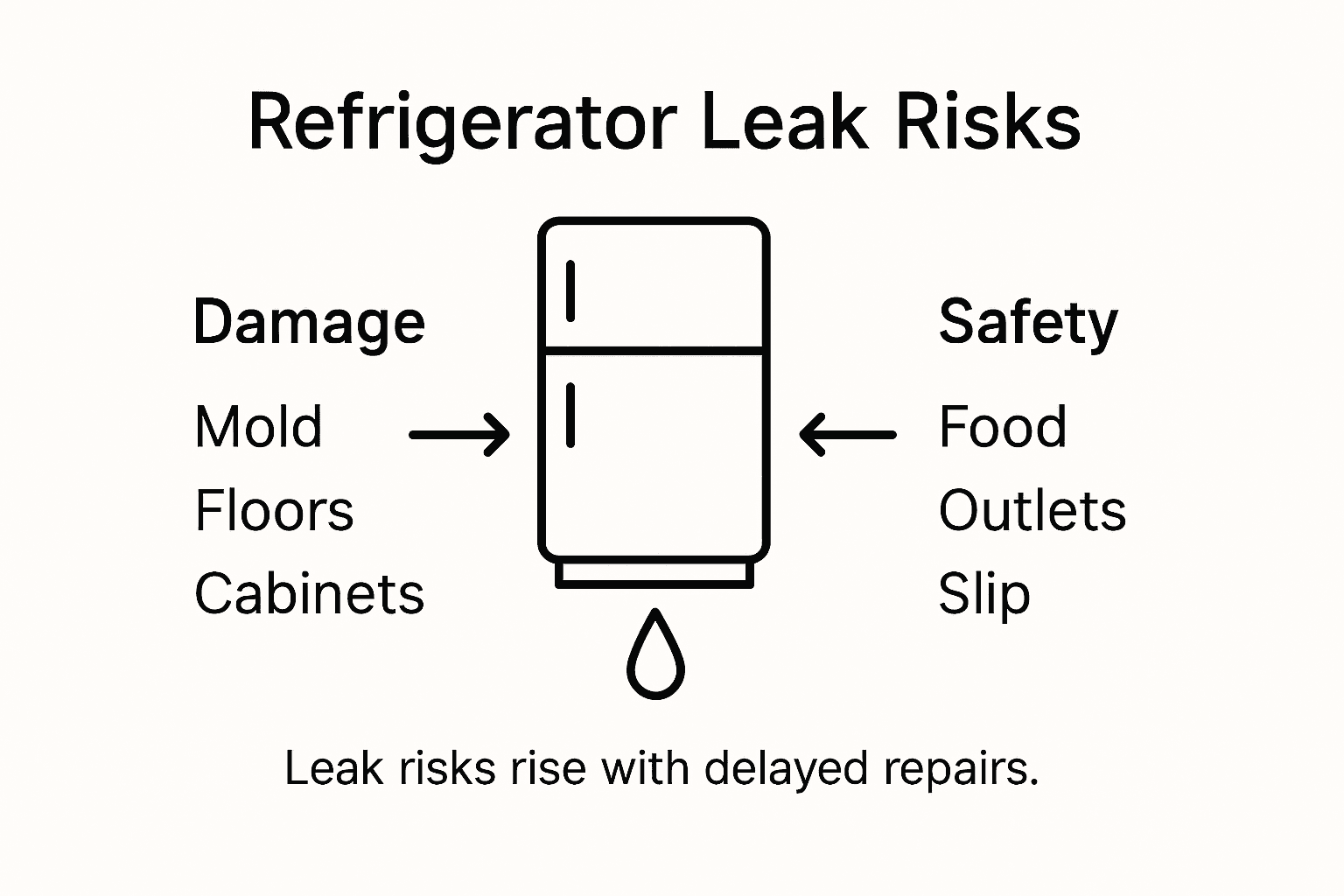
Food safety emerges as a critical secondary concern during refrigerator leaks. Water intrusion can compromise electrical systems, temperature regulation mechanisms, and seal integrity, potentially creating environments where bacterial growth accelerates. Persistent moisture around food storage areas increases contamination risks, potentially exposing families to foodborne pathogens. Moreover, electrical complications from water damage can create additional safety hazards, including short circuit potential and compromised appliance performance.
Pro Tip for Rapid Leak Response: Immediately unplug the refrigerator, remove all food items, and start drying processes within two hours of discovering a significant leak to minimize damage and health risks.
Critical Home Protection Strategies:
- Document water damage for insurance
- Use dehumidifiers in affected areas
- Inspect for hidden moisture pockets
- Test indoor air quality after leaks
- Consult professional restoration services
Prevention Steps and When to Call Experts
Proactive maintenance represents the most effective strategy for preventing refrigerator water leaks, protecting both appliance functionality and home infrastructure. Comprehensive leak prevention research demonstrates that strategic, regular interventions can dramatically reduce the risk of substantial water damage and costly repairs for homeowners in Orange and Los Angeles Counties.
Homeowners should establish a systematic maintenance protocol that includes quarterly visual inspections, seal assessments, and drainage system evaluations. Critical prevention steps involve checking water line connections, examining door seals for potential gaps, and monitoring drainage pathways for any signs of obstruction. Advanced leak detection requires understanding subtle warning signs such as minor moisture accumulation, unexpected temperature fluctuations, or slight discoloration around connection points. These early indicators can help prevent more significant issues before they escalate into major water release scenarios.
Deciding between DIY repairs and professional intervention requires careful assessment of the leak’s complexity and potential risk. Minor issues like simple seal replacements or drain line clearance might be manageable for skilled homeowners, while more complex problems involving internal mechanical components, extensive water line damage, or potential electrical system compromise demand professional expertise. Technological advances in refrigerator design have increased system complexity, making expert diagnosis increasingly important for comprehensive leak resolution and appliance preservation.
Pro Tip for Leak Risk Evaluation: Develop a ‘leak risk scorecard’ that helps you quickly determine whether a refrigerator issue requires immediate professional attention or can be addressed through personal maintenance.
Critical Prevention and Expert Consultation Strategies:
- Conduct monthly visual leak inspections
- Maintain comprehensive maintenance records
- Understand your refrigerator’s specific vulnerability points
- Budget for potential professional repairs
- Prioritize early intervention
Protect Your Home from Refrigerator Water Leaks with Expert Help
Water leaks from refrigerators can cause serious damage to your floors, promote mold growth, and even threaten food safety. If you notice signs like pooled water near your unit, damaged door gaskets, or issues with water supply lines, it is crucial to act quickly. Ignoring these warning signals may lead to costly repairs and health risks. Your goal is to safeguard your home and ensure your refrigerator works efficiently without unexpected leaks.
Do not wait for a small drip to become a big problem. At Appliances Repair MD Tech, our licensed technicians specialize in diagnosing and fixing refrigerator leaks throughout Orange County and Los Angeles County. Whether it is a blocked defrost drain, a cracked drain pan, or a faulty water line, we provide fast and reliable service. Book your repair online now and protect your investment with trusted local experts ready to restore your appliance and peace of mind. Visit https://appliancesrepairmdtech.com to schedule your appointment today.
Frequently Asked Questions
What are the common causes of water leaks in refrigerators?
The most common causes of refrigerator leaks include blocked defrost drains, cracked drain pans, damaged door gaskets, and issues with water supply lines. Each of these can lead to water accumulation and significant leaks if not addressed promptly.
How can I prevent my refrigerator from leaking water?
To prevent leaks, regularly inspect the water supply lines, check the door seals for damage, clean the drainage systems, and maintain consistent interior temperatures. Conducting monthly visual checks can help you detect potential issues early.
What should I do if I notice water pooling under my refrigerator?
If you notice water pooling under your refrigerator, first unplug the appliance and remove any food items. Check for common issues such as blocked defrost drains or damaged water lines. It may also be necessary to call a professional if the problem seems complex.
How can I identify the type of leak my refrigerator has?
To identify the type of leak, observe the leak’s location and volume. Water drainage leaks often involve small puddles inside the fridge, while supply line leaks may present as steady external leaking. Monitoring these factors can help determine the seriousness of the issue.