
Every American household relies on their dishwasher to make cleanup effortless, yet few realize that a single malfunction can halt almost half the country’s kitchens. With over 80 million American homes using dishwashers regularly, even minor performance issues create headaches and disrupt daily routines. Understanding exactly how each cycle works and what can trigger a sudden shutdown empowers you to keep your appliance running smoothly and prevent costly surprises.
Table of Contents
- How Dishwashers Operate During Each Cycle
- Common Reasons for Mid Cycle Shutdowns
- Signs of Dishwasher Component Failure
- Troubleshooting Steps for Homeowners
- When to Call a Local Dishwasher Technician
Key Takeaways
| Point | Details |
|---|---|
| Dishwasher Cycle Stages | A typical cycle includes washing, rinsing, and drying, with water temperatures up to 160°F for effective cleaning. |
| Causes of Mid-Cycle Shutdowns | Issues such as door latch failures and overheating from restricted airflow can disrupt operations, requiring thorough checks. |
| Signs of Component Failure | Warning signs include unusual noises, water leakage, and inconsistent cleaning performance, indicating potential issues. |
| When to Call a Technician | Persistent problems that cannot be resolved through basic troubleshooting should be addressed by a professional for specialized diagnosis. |
How Dishwashers Operate During Each Cycle
Dishwashers are complex household appliances designed to automate the process of cleaning dishes through a systematic series of cleaning stages. Modern dishwashers utilize advanced sensor technologies that optimize water temperature and usage during each operational cycle, ensuring efficient and thorough cleaning.
A typical dishwasher cycle involves multiple precise stages. First, dishes are strategically loaded into designated racks that allow water and detergent to reach all surfaces. Spray arms rotate strategically, distributing hot water and cleaning solution across dishes from multiple angles. Water is continuously filtered and recirculated throughout the washing process/Energy_Conservation_for_Environmental_Protection_(Pisupati)/05:_Appliances/5.7:_Dishwashers), which helps remove food particles and ensures consistent cleaning performance.
The complete dishwasher cycle typically involves three primary phases: washing, rinsing, and drying. During the initial washing phase, water temperatures can reach between 120 to 160 degrees Fahrenheit, effectively breaking down grease and food residue. The rinsing stage uses fresh water to remove any remaining detergent and debris, while the final drying phase employs either heated air or natural air circulation to eliminate moisture from dishes.
Here is a quick summary of the primary dishwasher cycle phases and their roles:
| Phase | Main Purpose | Water Temperature Range |
|---|---|---|
| Washing | Breaks down food and grease | 120–160°F |
| Rinsing | Removes detergent and debris | Typically room temperature |
| Drying | Eliminates moisture from dishes | Heated or natural air used |
Pro Tip – Cycle Optimization: Always scrape large food particles off dishes before loading, but avoid pre-rinsing, which can actually interfere with modern dishwasher detergent performance and reduce cleaning effectiveness.
Common Reasons for Mid Cycle Shutdowns
Dishwasher mid-cycle shutdowns can be frustrating and disruptive, often indicating underlying mechanical or electrical issues. Door latch failures represent a primary cause of unexpected cycle interruptions, preventing the appliance from maintaining a secure operational environment.
Electrical and thermal complications frequently contribute to sudden dishwasher stops. Overheating can trigger automatic shutdown mechanisms, which may result from multiple factors such as dust accumulation, restricted airflow, or malfunctioning internal components. Thermal sensors and thermostats play crucial roles in monitoring and regulating the appliance’s internal temperature, automatically interrupting cycles to prevent potential damage.
Additional reasons for mid-cycle interruptions include power supply inconsistencies, faulty control boards, water inlet valve problems, and mechanical issues with spray arms or pumps. These complex interactions between electrical, mechanical, and thermal systems can cause unpredictable dishwasher performance, making diagnostic work challenging for homeowners without specialized technical knowledge.
Compare common causes of mid-cycle shutdowns and recommended initial homeowner actions:
| Cause Category | Example Issues | First Diagnostic Step |
|---|---|---|
| Mechanical | Door latch misalignment, faulty pump | Check door latching and spray arm motion |
| Electrical | Power surges, broken control boards | Inspect power supply and breaker |
| Thermal | Overheating, sensor failures | Look for blocked vents or dust buildup |
Pro Tip – Diagnostic Approach: Before calling a professional, check your dishwasher’s power connection, ensure no visible obstructions block spray arms, and verify that the door is completely latching to rule out simple mechanical issues.
Signs of Dishwasher Component Failure
Dishwasher component failures can manifest through various subtle and obvious warning signs that homeowners should carefully monitor. Critical indicators include difficulties with the door mechanism, such as the door not staying securely closed during operation, which can signal serious underlying mechanical problems.
Electrical system failures represent another significant category of component issues. These problems often present through symptoms like inconsistent power supply, unexpected cycle interruptions, or the dishwasher failing to respond when the start button is pressed. Thermal sensors and internal temperature regulation mechanisms can trigger automatic shutdowns when detecting potential system overheating, which might indicate impending component breakdown.
Additional warning signs of potential dishwasher component failure include unusual noises during operation, water leakage, persistent drainage issues, and visible signs of wear on critical components like spray arms, seals, and electrical connections. Homeowners should pay special attention to changes in cleaning performance, such as dishes emerging dirty or with persistent food residue, which could suggest problems with water inlet valves, pump mechanisms, or heating elements.
Pro Tip – Early Detection: Conduct monthly visual inspections of your dishwasher’s internal components, checking for signs of corrosion, loose connections, or unusual wear, and keep a maintenance log to track any recurring performance issues.
Troubleshooting Steps for Homeowners
Systematic dishwasher troubleshooting begins with understanding basic diagnostic techniques that can help homeowners identify and potentially resolve common operational issues. Proper load configuration, cycle selection, and maintenance play crucial roles in preventing and diagnosing potential problems before they escalate into more significant mechanical failures.
Door mechanism inspection represents a critical first step in troubleshooting. Homeowners should carefully examine the door latch for signs of damage, misalignment, or wear, which can interrupt the dishwasher’s ability to function correctly. This process involves checking the physical condition of the latch, ensuring smooth closure, and verifying that the latch switch responds appropriately when the door is secured.
Additional troubleshooting steps include conducting comprehensive electrical system checks, examining water inlet connections, and performing visual inspections of critical components. Homeowners should look for signs of corrosion, listen for unusual noises during operation, and monitor the dishwasher’s cleaning performance. Checking power connections, verifying water supply lines, and ensuring proper drainage can help identify underlying issues that might cause mid-cycle interruptions or complete system failures.
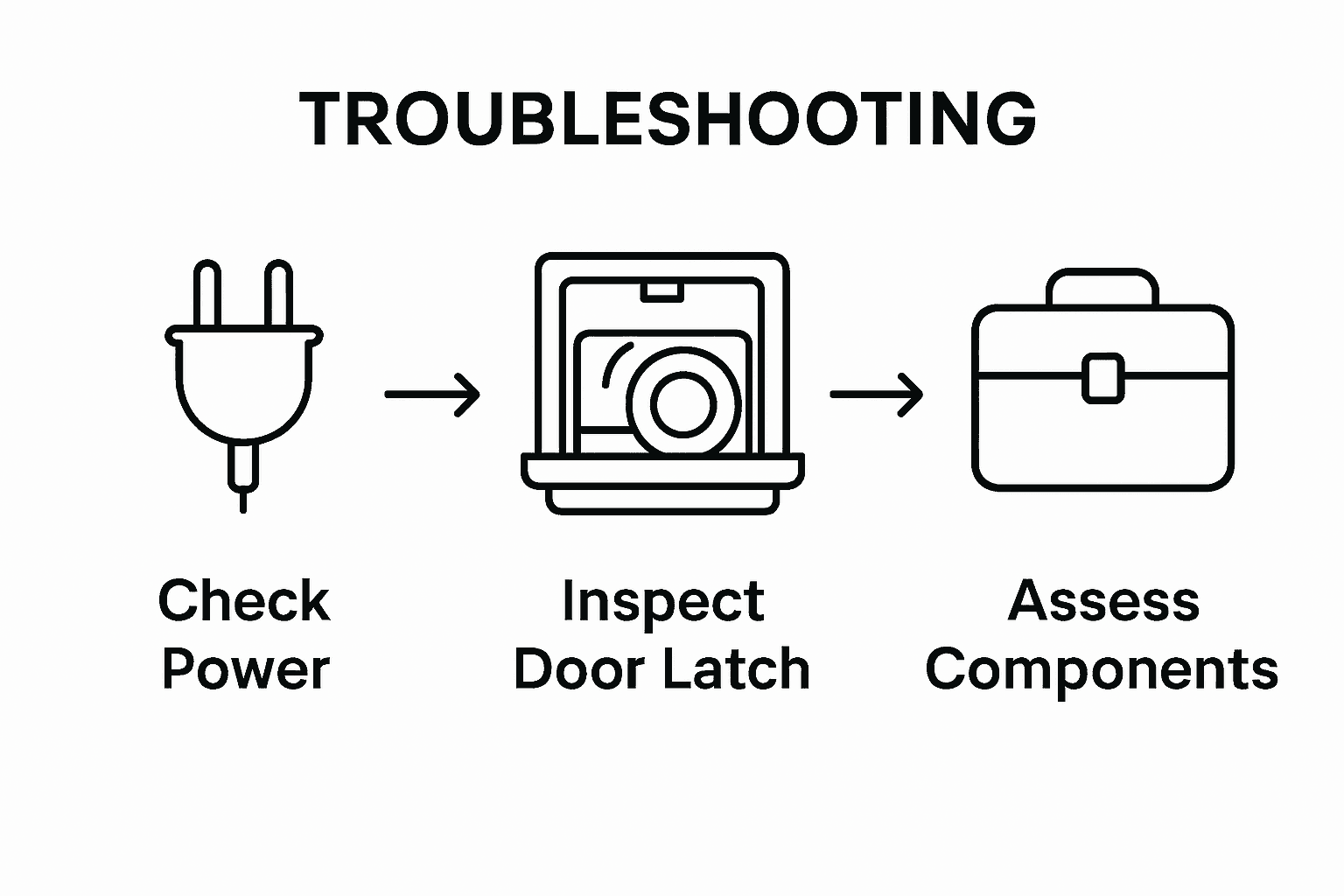
Pro Tip – Diagnostic Approach: Before calling a professional, reset your dishwasher by unplugging it for five minutes, then reconnect and run a diagnostic cycle to potentially resolve minor electronic glitches.
When to Call a Local Dishwasher Technician
Homeowners must recognize specific scenarios that warrant professional intervention beyond basic troubleshooting efforts. Persistent door latch mechanism problems that cannot be resolved through simple cleaning or adjustment indicate the need for professional diagnostic services, as these components are critical to the dishwasher’s overall functionality.
Electrical and thermal system complications represent another crucial category requiring professional expertise. Unexpected shutdowns caused by complex thermal regulation issues or recurring overheating problems suggest underlying mechanical failures that demand specialized technical knowledge, which most homeowners cannot effectively diagnose or repair independently. Warning signs include frequent circuit breaker trips, inconsistent heating performance, or repeated mid-cycle interruptions that persist after basic reset procedures.
Additional indicators that necessitate professional technician intervention include water leakage around the dishwasher base, unusual grinding or scraping noises during operation, visible corrosion on internal components, and significant drops in cleaning performance that cannot be attributed to user error. Modern dishwashers incorporate sophisticated electronic systems that often require specialized diagnostic tools and technical expertise to accurately assess and repair.
Pro Tip – Service Preparation: Before scheduling a technician, compile a detailed list of observed symptoms, recent performance issues, and any troubleshooting steps you’ve already attempted to help the repair professional diagnose the problem more efficiently.
Get Your Dishwasher Running Smoothly Again with Expert Help
Facing unexpected dishwasher shutdowns mid cycle can disrupt your daily routine and leave you frustrated. Whether the issue stems from a faulty door latch, overheating sensors, or electrical glitches, these common causes demand timely and reliable solutions. Understanding terms like thermal sensors, door mechanism failures, and power supply inconsistencies is a start but fixing them requires professional skill to restore your appliance’s full function.
Do not let your dishwasher’s mid cycle stops keep slowing you down. At Appliances Repair MD Tech, our licensed technicians in Orange County and Los Angeles County provide fast, trusted repairs tailored to your dishwasher’s needs. From diagnosing electrical faults to mechanical adjustments, we cover it all so you can confidently rely on your dishwasher again. Take control now by visiting our service page and booking your appointment. Your kitchen deserves expert care when it matters most.
Frequently Asked Questions
Why does my dishwasher stop mid-cycle?
Typically, dishwashers stop mid-cycle due to door latch failures, electrical issues, overheating, or problems with the control board. These disruptions can prevent the dishwasher from completing its washing, rinsing, or drying phases effectively.
What are common signs of a failing dishwasher?
Common signs include inconsistent cleaning performance, unusual noises during operation, persistent leaks, and the door not closing securely. Monitoring these symptoms can help identify underlying issues before they escalate.
How can I troubleshoot my dishwasher if it shuts down mid-cycle?
Start by checking the door latch for damage or misalignment, inspecting power connections for continuity, and examining the water supply lines for blockages. Listening for unusual noises and monitoring the cleaning effectiveness can also provide diagnostic clues.
When should I consider calling a technician for my dishwasher?
You should call a technician if you encounter persistent door latch problems, frequent unexpected shutdowns, visible leaks, mechanical noises, or significant drops in cleaning performance that don’t resolve through basic troubleshooting.