
Most American homes rely on their dishwasher for daily convenience, yet nearly 70 percent of users overlook filter maintenance entirely. This small but vital component keeps dishes spotless and appliances running smoothly, often without anyone noticing. Understanding the purpose of your dishwasher filter not only protects your investment but also preserves cleaning power, helping you avoid dirty dishes and costly repairs over time.
Table of Contents
- What Is A Dishwasher Filter And Its Purpose
- Types Of Dishwasher Filters And How They Differ
- How Dishwasher Filters Work In Everyday Use
- Common Signs Of A Clogged Or Failing Filter
- Filter Maintenance Tips For Optimal Performance
Key Takeaways
| Point | Details |
|---|---|
| Dishwasher Filters Are Essential | They prevent food particles from redepositing on clean dishes and protect against clogs. |
| Two Main Filter Types | Self-cleaning filters use built-in grinders, while manual-clean filters require user maintenance. |
| Regular Maintenance Is Crucial | Inspect and clean the filter monthly to ensure optimal performance and clean dishes. |
| Signs of a Failing Filter | Look for dirty dishes, odors, or slow drainage as indicators that the filter needs attention. |
What Is a Dishwasher Filter and Its Purpose
Your dishwasher filter is a critical component that acts as a guardian for your appliance’s cleaning performance and longevity. Consumer Reports highlights that this small but mighty mechanism prevents food particles from redepositing on clean dishes and protects your drain from potential clogs.
At its core, a dishwasher filter functions like a precision screening system within your appliance. During each wash cycle, it captures and traps food debris, preventing these tiny particles from circulating back onto your plates, glasses, and utensils. Without this crucial component, your supposedly clean dishes would essentially be getting washed in a soup of previously discarded food fragments.
Bosch Home experts explain that consistent filter maintenance is essential for maintaining optimal cleaning performance. Modern dishwashers typically feature two primary filter types: self-cleaning and manual-clean models. Self-cleaning filters use built-in grinders to pulverize food waste, while manual-clean filters require periodic removal and rinsing to prevent buildup.
Filters work through a sophisticated yet straightforward mechanism. As water circulates during a wash cycle, the filter’s mesh-like surface captures particles ranging from large food chunks to microscopic debris. This prevents potential drainage issues and ensures your dishes emerge sparkling clean without residual grime.
Pro Maintenance Tip: Clean your dishwasher filter monthly by removing it carefully, rinsing under warm water, and gently scrubbing away any trapped debris to maintain peak appliance performance.
Types of Dishwasher Filters and How They Differ
Consumer Reports reveals that dishwasher filters primarily fall into two distinct categories: self-cleaning filters and manual-clean filters. Each type offers unique advantages and operational characteristics that impact your appliance’s performance and maintenance requirements.
Self-cleaning filters represent a more modern approach to debris management. These sophisticated systems incorporate built-in grinders that automatically pulverize food particles during the wash cycle. The grinding mechanism breaks down food waste into tiny fragments, which are then flushed away through the drainage system. While incredibly convenient, these filters tend to generate more noise during operation compared to their manual counterparts.
Bosch Home experts explain that manual-clean filters require more direct user interaction. These filters feature a removable mesh screen that traps food particles, necessitating periodic manual cleaning. Homeowners must physically remove the filter, rinse it under warm water, and gently scrub away accumulated debris. Despite the extra maintenance, manual-clean filters offer several advantages: they typically operate more quietly and provide greater visibility into the appliance’s cleaning performance.
The choice between self-cleaning and manual filters often depends on individual preferences and lifestyle factors. Some households prioritize convenience and opt for self-cleaning models, while others prefer the control and thoroughness of manual filter maintenance. Modern dishwashers increasingly offer hybrid designs that combine elements from both filter types, providing enhanced flexibility for users.
Here’s a side-by-side comparison of self-cleaning and manual-clean dishwasher filters:
| Filter Type | Noise Level During Use | Typical Maintenance Needed | User Effort Required |
|---|---|---|---|
| Self-cleaning | Louder operation | Grinder may need occasional check | Minimal, mostly automatic |
| Manual-clean | Quieter wash cycles | Monthly manual cleaning essential | Moderate, hands-on care |
Pro Selection Tip: Consider your household’s cleaning habits and maintenance tolerance when choosing between self-cleaning and manual filters. If you prefer minimal effort, a self-cleaning filter might be ideal; if you enjoy more hands-on appliance care, a manual filter could be your best option.
How Dishwasher Filters Work in Everyday Use
Consumer Reports explains that the dishwasher filter plays a crucial role in maintaining cleaning efficiency during every wash cycle. Think of the filter as a vigilant guardian, continuously protecting your dishes from recirculating food debris and ensuring a pristine cleaning environment.
During a typical wash cycle, water enters the dishwasher and begins circulating through multiple spray arms. As this water moves, it carries food particles and remnants from your dishes. The dishwasher filter acts as a sophisticated screening mechanism, capturing these particles before they can redeposit on your clean dishes or cause drainage problems. The filter’s intricate mesh surface traps everything from large food chunks to microscopic debris, preventing them from returning to the wash cycle.
Bosch Home experts highlight that the filtering process is continuous throughout the entire wash cycle. As water repeatedly circulates, the filter consistently removes and contains food particles. This ongoing filtration ensures that each subsequent spray of water remains as clean as possible, ultimately resulting in sparkling dishes free from residual grime or food fragments.
The filter’s performance depends on several factors, including water pressure, spray arm design, and the filter’s own condition. A clean, well-maintained filter allows water to flow smoothly, distributing cleaning agents more effectively and ensuring maximum washing performance. Conversely, a clogged or dirty filter can impede water flow, reduce cleaning efficiency, and potentially cause unpleasant odors or residue on your dishes.
Pro Maintenance Tip: Inspect and rinse your dishwasher filter weekly to prevent buildup. Remove the filter carefully, rinse under warm water, and gently scrub away any trapped debris to maintain optimal cleaning performance.
Common Signs of a Clogged or Failing Filter
Tom’s Guide reports that a compromised dishwasher filter presents several telltale warning signs that homeowners should never ignore. These symptoms range from subtle performance changes to more obvious operational disruptions that can significantly impact your appliance’s cleaning effectiveness.
The most immediate indicator of a failing filter is consistently dirty dishes after a complete wash cycle. When your filter becomes clogged, it can no longer effectively trap food particles, causing debris to recirculate during washing. You might notice food remnants stuck on plates, glasses with cloudy residue, or utensils that seem only partially cleaned. These signs suggest your filter is struggling to perform its primary screening function and requires immediate attention.
Homes and Gardens experts highlight that additional warning signs include unpleasant odors emanating from your dishwasher and poor water drainage. A blocked filter prevents proper water circulation, leading to stagnant water pooling at the bottom of the appliance. This can create a breeding ground for bacteria, resulting in musty or unpleasant smells that persist even after running a cleaning cycle. Moreover, you might observe water not draining completely, which indicates a serious filtration system blockage.
Additionally, a compromised filter can manifest through increased noise during wash cycles, reduced water pressure, and longer washing times. The dishwasher might work harder to compensate for the restricted water flow, putting extra strain on the motor and potentially shortening the appliance’s overall lifespan. Visual inspection can also reveal clues: a filter covered in thick, grimy residue or displaying visible food particle buildup is a clear signal that maintenance is overdue.
Use this quick reference guide to recognize and address dishwasher filter problems:
| Warning Sign | Likely Cause | Immediate Action | Potential Risk if Ignored |
|---|---|---|---|
| Dishes remain dirty | Filter is clogged | Remove and clean filter | Reduced cleaning, appliance strain |
| Persistent odors | Food trapped, stagnant water | Deep clean filter and check drain | Bacterial growth, unpleasant smells |
| Slow drainage | Severe filter/blockage | Inspect and clear filter | Water overflow, possible damage |
Pro Detection Tip: Perform a monthly visual and tactile filter inspection by removing the filter and checking for excessive debris, discoloration, or a slimy texture. If the filter looks dirty or feels sticky, it’s time for a thorough cleaning.
Filter Maintenance Tips for Optimal Performance
Bosch Home experts recommend that dishwasher filter maintenance is a critical aspect of keeping your appliance running efficiently. Regular care prevents performance issues and extends the life of your dishwasher, ensuring sparkling clean dishes with every wash cycle.
The first step in filter maintenance involves a systematic removal and cleaning process. Carefully detach the filter system, which typically consists of multiple interlocking components. Rinse each piece thoroughly under warm running water, using gentle pressure to dislodge trapped food particles. A soft-bristled brush can help remove stubborn debris without damaging the delicate filter mesh. Pay special attention to the filter’s edges and crevices where grime tends to accumulate.
Consumer Reports suggests implementing a monthly deep cleaning routine. Beyond regular rinsing, use a mild dish soap and warm water to thoroughly clean the filter. For particularly stubborn residue, create a solution of white vinegar and water, which helps break down mineral deposits and eliminate lingering odors. Avoid using harsh chemicals or abrasive scrubbers that could damage the filter’s delicate surface.
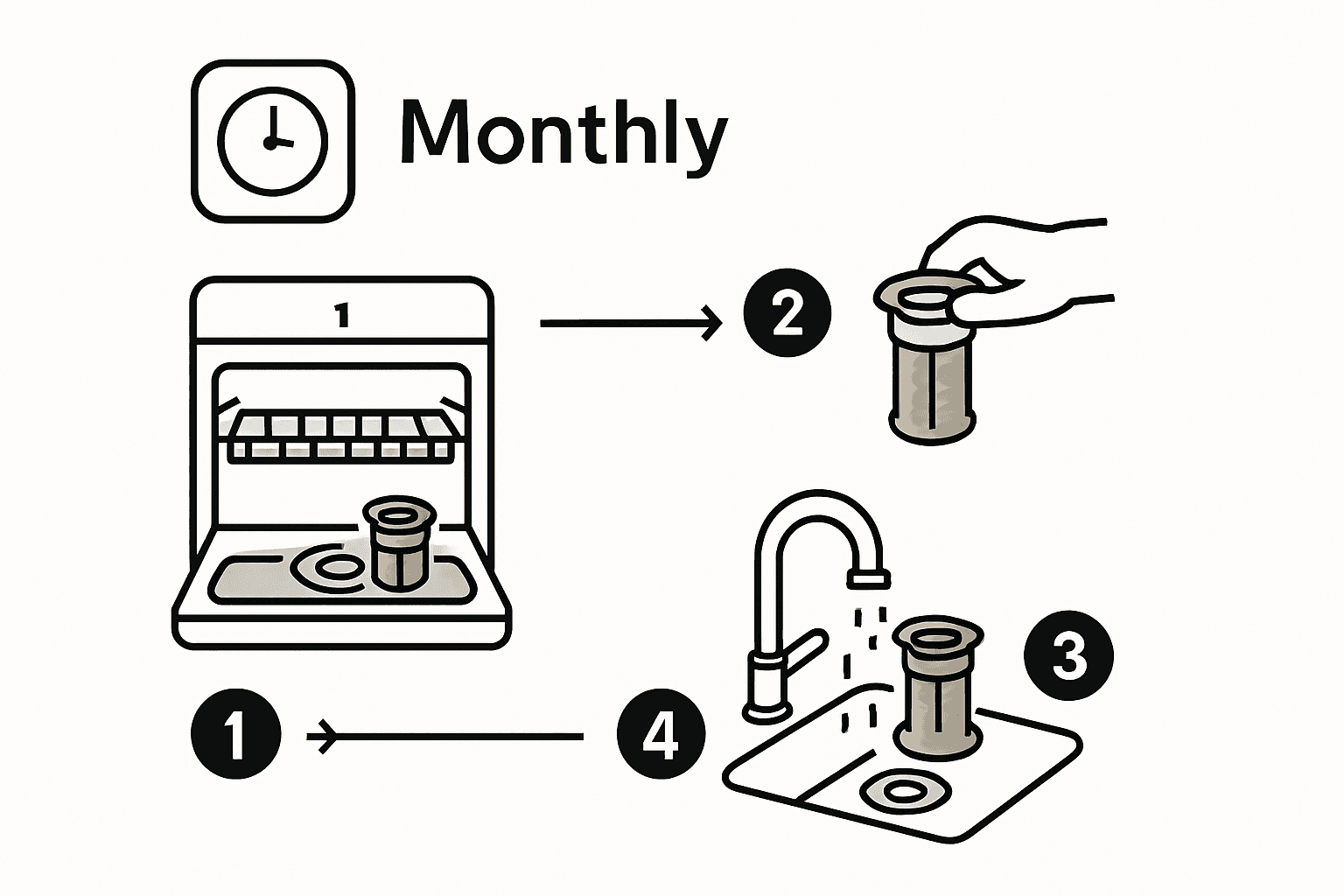
Pay attention to the specific maintenance requirements of your dishwasher model. Some filters are designed to be completely removed, while others require more nuanced cleaning approaches. Always consult your appliance’s owner manual for model-specific instructions. Additionally, inspect the filter for any signs of wear, damage, or excessive buildup that might indicate a need for replacement. A well-maintained filter not only improves cleaning performance but also prevents potential costly repairs down the line.
Pro Cleaning Tip: Create a monthly filter maintenance calendar reminder. Set aside 10-15 minutes to remove, inspect, and thoroughly clean your dishwasher filter, transforming this simple task into a consistent household maintenance routine.
Keep Your Dishwasher Filter Clean with Expert Help Nearby
A clogged or dirty dishwasher filter can lead to dirty dishes, bad odors, and even damage your appliance over time. The article explains how crucial it is to maintain your dishwasher filter by removing trapped food particles and preventing drainage issues. If you have noticed your dishes coming out less clean or unpleasant smells lingering, these are signs that your dishwasher filter needs attention now. Instead of risking further damage or costly repairs by delaying maintenance, let professionals help ensure your dishwasher runs smoothly with optimal cleaning performance.
Take control of your dishwasher’s health today with trusted appliance repair services in Orange County and Los Angeles County. At Appliance Repair MD Tech, our licensed technicians specialize in dishwasher upkeep, repair, and installation—helping you avoid filter clogs and restore sparkling results. Don’t wait for minor issues to become major problems. Book your appointment online now for quick, reliable service designed to keep your home running flawlessly. Discover more about our comprehensive appliance repair solutions and schedule your service with ease.
Frequently Asked Questions
What is the purpose of a dishwasher filter?
A dishwasher filter prevents food particles from redepositing on clean dishes and protects the drain from clogs, ensuring optimal cleaning performance and appliance longevity.
How often should I clean my dishwasher filter?
It is recommended to clean your dishwasher filter monthly. Regular maintenance helps maintain peak performance and prevents buildup that can affect cleaning efficiency.
What are the types of dishwasher filters, and how do they differ?
There are two primary types of dishwasher filters: self-cleaning filters, which grind food waste during the wash cycle, and manual-clean filters, which require periodic removal and rinsing by the user. Each has unique advantages in terms of convenience and noise levels.
What are the signs that my dishwasher filter is clogged or failing?
Common signs include dirty dishes after the wash cycle, unpleasant odors, poor water drainage, and increased noise during operation. If you notice these symptoms, it’s time to check and clean your filter.