
Over 60 percent of american households report washing machine issues in a typical year, with spin failures ranking among the most frequent complaints. When your washer suddenly refuses to spin, laundry day can quickly turn chaotic and stressful. Knowing what causes these breakdowns not only saves you time but also helps you avoid unnecessary repair bills. This guide reveals the most common reasons washers stop spinning and outlines practical steps to restore smooth operation.
Table of Contents
- What Causes Washers to Stop Spinning
- Types of Washers and Unique Issues
- Troubleshooting Common Washer Spin Problems
- Key Components That Affect Spinning
- When to Repair or Replace Your Washer
Key Takeaways
| Point | Details |
|---|---|
| Safety Mechanisms | Modern washers have built-in safety features that can halt spinning, such as an open lid or tripped circuit breakers. Always check these before troubleshooting further. |
| Washer Types and Issues | Top-load washers are typically simpler, while front-load washers are more efficient but can face unique mechanical challenges. Knowing your washer type aids in effective diagnosis. |
| Common Troubleshooting Steps | Begin by ensuring power and water supply are intact, and check for proper load distribution; resetting the washer can also resolve minor issues. |
| Repair vs. Replacement | Assess whether repair costs approach 50% of a new washer’s price; if so, replacement may be a better financial decision due to improved energy efficiency in newer models. |
What Causes Washers to Stop Spinning
When your washer suddenly stops spinning, it can quickly transform a routine laundry day into a frustrating experience. Several critical mechanical and electrical factors can interrupt this essential function, preventing your clothes from getting properly cleaned and dried.
One primary reason for a washer’s spinning failure involves safety mechanisms built into modern appliances. According to the GE Washer-Dryer Manual, certain conditions automatically halt spinning, such as an open lid which triggers a built-in safety switch. This prevents potential injury or damage during operation. Other common interruption causes include:
- Electrical issues like tripped circuit breakers
- Disconnected power supply
- Blocked or malfunctioning water intake valves
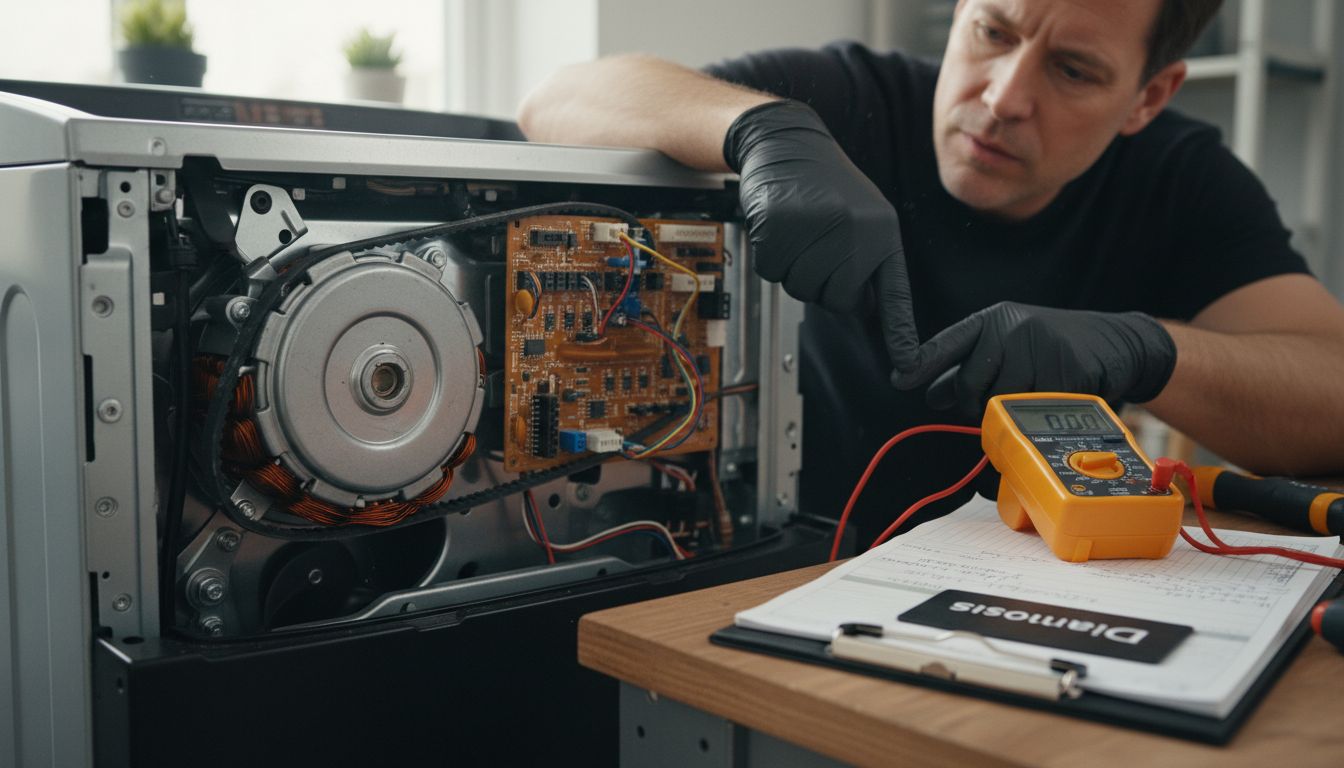
- Mechanical problems with drive belts or motor
The spin cycle’s core function involves creating centrifugal force to extract water from clothing, typically lasting at least 4 minutes at high speed. When this process gets disrupted, multiple underlying problems could be at play. These might range from simple power disconnections to more complex mechanical failures within the washer’s internal components.
Troubleshooting requires a systematic approach. Start by checking basic elements like power connections, water supply, and control settings. Unplug the washer for two minutes to reset its electronic systems, which can resolve minor glitches. If simple interventions fail, professional diagnostic services become necessary to identify and resolve more intricate mechanical or electrical problems preventing your washer from completing its spin cycle.
Types of Washers and Unique Issues
Washers come in diverse designs, each with distinctive operational characteristics and potential mechanical challenges. Understanding these variations helps homeowners diagnose and address spinning problems more effectively.
Two primary washer configurations dominate the market: top-load vertical-axis and front-load horizontal-axis models. Technological transformations have significantly impacted their performance and efficiency. Vertical-axis washers, the traditional design, typically consume more water and energy compared to their horizontal counterparts. Front-load washers, while more energy-efficient, often present unique spinning challenges due to their complex mechanical design.
The spinning mechanism varies considerably between washer types. Front-loading washers generally achieve lower moisture content through higher spin speeds, but this advantage comes with engineering complexities. These models require more robust motors and advanced off-balance detection systems to manage the horizontal tumbling action, which can introduce potential spinning interruptions.
Key differences between washer types include:
- Top-load vertical washers
- More traditional design
- Higher water consumption
- Simpler mechanical structure
- Front-load horizontal washers
- More energy-efficient
- Lower moisture content after spinning
- More complex mechanical systems
Regardless of washer type, spinning issues often stem from similar root causes: motor problems, electronic control malfunctions, or mechanical wear. Regular maintenance and understanding your specific washer’s design can help prevent and quickly resolve spinning complications.
Troubleshooting Common Washer Spin Problems
When your washer refuses to complete its spin cycle, the frustration can be overwhelming. Understanding the most common issues can help you diagnose and potentially resolve these mechanical challenges without immediately calling a professional.
Washer spin problems often stem from simple electrical or mechanical interruptions. The first line of troubleshooting involves checking basic operational conditions. This includes ensuring the washer is properly plugged in, verifying that circuit breakers haven’t tripped, and confirming that the lid is completely closed. Many modern washers have built-in safety mechanisms that prevent spinning if these fundamental conditions aren’t met.
The spin cycle’s critical function involves creating centrifugal force to extract water from clothing, typically lasting at least 4 minutes at high speed. When this process gets disrupted, several potential problems could be at play:
- Electrical Issues
- Tripped circuit breakers
- Blown fuses
- Unstable power supply
- Mechanical Problems
- Damaged drive belts
- Worn motor coupling
- Faulty lid switch
- Load-Related Challenges
- Unbalanced clothing distribution
- Overloaded machine
- Clothing tangled or bunched
Troubleshooting requires a systematic approach. Start by unplugging the washer for two minutes to reset its electronic systems. Check load distribution, ensure proper clothing arrangement, and verify that no mechanical obstructions exist. If simple interventions fail, professional diagnostic services become necessary to identify and resolve more complex mechanical or electrical problems preventing your washer from completing its spin cycle.
Key Components That Affect Spinning
Washer spinning relies on a complex network of mechanical and electronic components working in precise synchronization. Understanding these critical elements can help diagnose and prevent potential spinning failures before they disrupt your laundry routine.
Front gasket systems and damping mechanisms play a crucial role in maintaining stable drum movement during spinning. These components prevent destructive tub collisions and manage the intricate dynamic forces generated during the spin cycle. Uneven clothing distribution can dramatically impact these delicate mechanical interactions, potentially causing significant spinning interruptions.
The electronic control unit serves as the brain of the spinning mechanism. Advanced imbalance detection systems continuously monitor and regulate drum movement, implementing protective measures when mechanical stress exceeds safe thresholds. Key components critical to spinning include:
- Mechanical Components
- Drive motor
- Drive belts
- Suspension springs
- Drum bearings
- Electronic Components
- Control board
- Lid switch
- Sensors
- Imbalance detection system
- Structural Elements
- Drum mounting
- Shock absorbers
- Frame supports
Each component contributes uniquely to the spinning process. The drive motor generates rotational force, while suspension systems manage vibration and balance. Electronic sensors continuously monitor performance, ensuring smooth and efficient operation. When any of these components malfunction, the entire spinning mechanism can become compromised, leading to potential complete system failure.
When to Repair or Replace Your Washer
Deciding whether to repair or replace a malfunctioning washer involves careful consideration of multiple financial and practical factors. The right choice can save you money and prevent future laundry disruptions while ensuring optimal appliance performance.
Technological advancements in washer design have significantly impacted the repair versus replacement calculation. Modern washers with stronger motors and advanced structural support offer improved performance, making replacement an increasingly attractive option when older models experience consistent mechanical issues. The cost of repeated repairs can quickly approach or exceed the price of a new, more efficient machine.
Consider these critical factors when making your decision:
- Repair Indicators
- Age of washer (under 7 years)
- Minor mechanical issues
- Isolated component failure
- Warranty coverage still active
- Replacement Indicators
- Washer over 8 years old
- Repeated performance inefficiencies
- High energy consumption
- Extensive structural damage
- Frequent repair costs exceeding 50% of replacement price
Financial analysis suggests that if repair costs approach 50% of a new washer’s price, replacement becomes the more economical choice. Additionally, newer models offer improved energy efficiency, potentially reducing long-term utility expenses. Professional assessment can provide a precise recommendation based on your specific washer’s condition and performance history.
Restore Your Washer’s Spin and Take Control of Your Laundry
Washer spin cycles stopping unexpectedly can leave you with soggy clothes and growing frustration. The article explains that problems like motor issues, lid switches, or imbalance detection systems often cause these interruptions. If you are facing these challenges you know how quickly laundry day can turn into a stressful task. Do not let washing machine failures disrupt your routine or damage your clothes.
Get reliable help from local professionals who understand these specific washer problems and can provide fast, expert repairs. Visit Appliance Repairs in Orange and Los Angeles Counties to connect with licensed technicians ready to diagnose issues such as worn drive belts, faulty sensors, or control board malfunctions. Act now to avoid costly damage or repeated breakdowns that could mean replacing your appliance. Schedule your service online today at https://appliancesrepairmdtech.com for swift repairs that restore your washer’s spinning power and keep your laundry on track.
Frequently Asked Questions
What are the common reasons why my washer won’t spin?
Common reasons include electrical issues such as tripped circuit breakers, mechanical problems like damaged drive belts, or safety mechanisms being triggered due to an open lid or unbalanced load.
How can I troubleshoot my washer if it stops spinning?
Start by checking the power connections, ensuring the lid is closed, verifying load distribution, and unplugging the machine for two minutes to reset its electronic systems. If these steps don’t resolve the issue, further professional diagnostics may be needed.
What should I do if my front-load washer is not spinning correctly?
Ensure that your washer is not overloaded, check for any obstructions in the drum, and confirm that the water intake valves are functioning properly. Front-load washers may also require a balanced load to spin effectively.
When is it more economical to replace my washer instead of repairing it?
If your washer is over 8 years old, has repeated performance issues, or if repair costs exceed 50% of the price of a new model, it might be more economical to replace rather than repair your washer.