
A vented dryer pushes hot, moist air out of your house through a duct. A ventless dryer keeps the air inside the machine and removes the moisture another way. Vented models are usually the faster choice when you already have a clean exterior vent. Ventless models, especially heat-pump ones, are gentler on clothes, use less energy and fit places where a duct can’t go. This guide covers how each type works, how they compare, and what to check before you buy or install.
TL;DR
- Vented: fastest drying, simplest design, needs a duct that runs outside and gets cleaned regularly.
- Ventless: no exterior vent needed. Condenser models collect water in a tank or send it to a drain. Heat-pump models do the same with far less energy.
- Speed vs. efficiency: heat-pump dryers typically run about 30 minutes longer per load, but they use roughly half the energy of a standard dryer.
- Condenser vs. heat pump: both are “ventless”, but heat pumps recover heat, so they are the more efficient of the two.
- Installation: a new vent line can cost $300 to $600 plus drywall work, so a ventless model can make sense in a condo, a closet or an addition.
Table of Contents
- How vented and ventless dryers work
- Vented vs. ventless dryer at a glance
- Do ventless dryers dry slower?
- Energy use and running costs
- Installation: where each type goes
- Maintenance: what each type needs
- How to choose: vented, condenser or heat pump
- Our perspective
- Need help with your dryer?
- FAQ
- Sources
How vented and ventless dryers work
Every dryer heats air, passes it through a tumbling drum and picks up moisture from wet clothes. The difference is what happens to that humid air afterward.
A vented dryer blows the humid air out through a duct to the outside. Fresh room air is pulled in, heated and sent through the drum. It is the design most American homes were built around. The U.S. Department of Energy says a vented dryer needs rigid or semi-rigid metal ducting that ends outdoors, not a flexible plastic or foil tube running into an attic or crawl space.
A ventless dryer recirculates the same air inside the machine. The air passes over a heat exchanger that pulls out the moisture as water. That water is either collected in a tank you empty, or pumped to a drain. Because nothing is exhausted, there is no duct and no hole in the wall.
There are two kinds of ventless dryer:
- Condenser dryers use an electric heating element and an air-to-air heat exchanger to cool the air and condense the moisture.
- Heat-pump dryers use a compressor and a closed refrigerant loop. The heat pump cools the air to wring out moisture, then reuses that heat to warm the air again. Reusing heat is why they use so much less electricity.
When readers search “ventless dryer” they usually mean one of these two, and today most new ventless models sold in the U.S. are heat pumps.
Vented vs. ventless dryer at a glance
| Factor | Vented | Ventless condenser | Ventless heat pump |
|---|---|---|---|
| Exterior duct | Required | None | None |
| Drying speed | Fastest | Slower | Typically about 30 minutes longer per load |
| Energy use | Highest | Similar to or higher than vented | About 50% less than a standard dryer |
| Fabric care | High heat, easier to over-dry | Lower heat | Lowest heat, gentlest |
| Water handling | None (moisture leaves as vapor) | Tank or drain | Tank or drain |
| Placement | Near an exterior wall or roof run | Almost anywhere | Almost anywhere |
| Routine upkeep | Lint screen and duct cleaning | Lint screen, lint trap, heat exchanger | Lint screen, filter and condenser cleaning |
The energy figures for heat pumps come from Rewiring America’s homeowner guide, which puts heat-pump savings at about 50 percent compared with a standard dryer.
Do ventless dryers dry slower?
Yes, usually. A vented dryer runs very hot air through the drum and throws it away, so it dries fast. A ventless dryer works at lower temperatures and recycles its air, so each cycle takes longer. Consumer testing in New Zealand found heat-pump dryers typically take about 30 minutes longer than vented dryers, and that vented models suit households that put speed first.
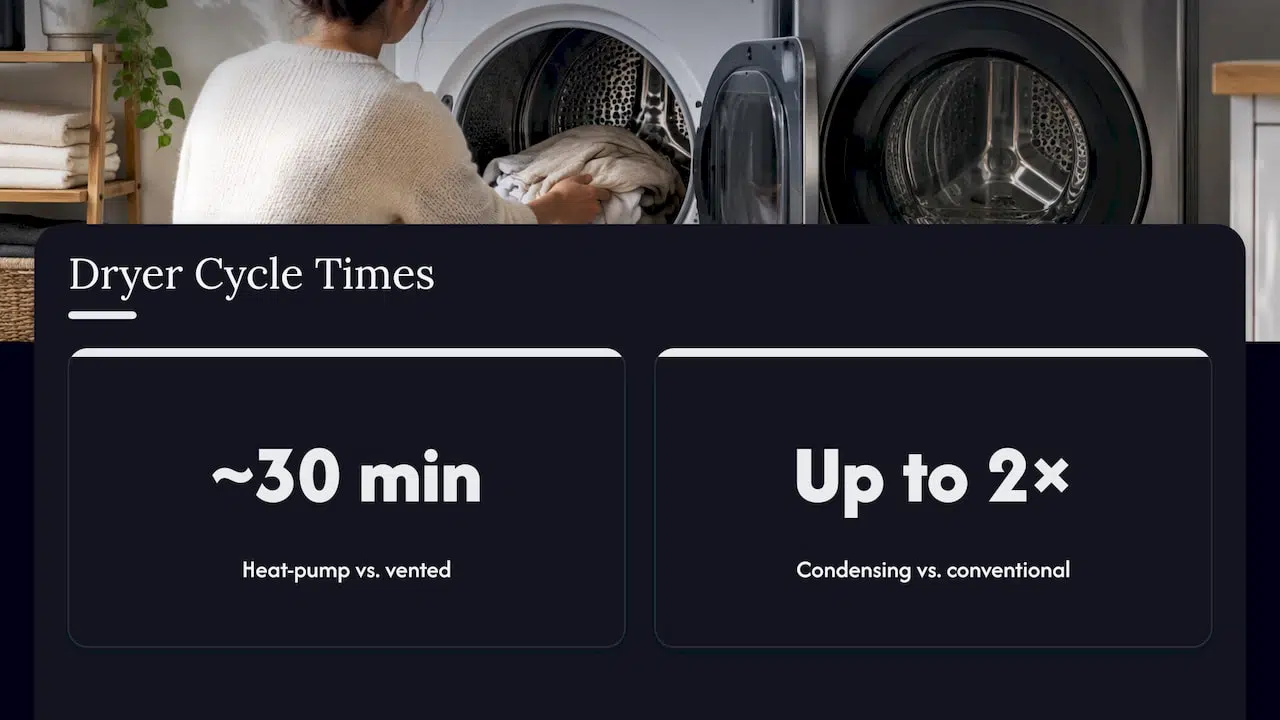
Condensing models can be slower still. The Department of Energy’s Building America Solution Center notes that condensing dryers may take as much as twice as long as conventional dryers to finish a load.
The slower cycle has an upside. Reviewed points out that lower temperatures are gentler on fabrics and help prevent the over-drying that high-heat vented dryers often cause. If you dry a lot of knits, activewear or delicates, that matters. If you do five loads on a Sunday and need them done by dinner, it matters in the other direction.
Why clothes can still feel damp after a ventless cycle
If a load comes out damp from a condenser or heat-pump dryer, check the basics first. The Building America guidance says to:
- keep the dryer’s location at 40°F or warmer
- drain or empty the condensate after every load
- clean the lint screen after every load
- empty any secondary lint trap monthly
Overstuffing the drum and mixing heavy towels with light items also lengthen cycles in any dryer. If the problem is a dryer that is just taking too long, our 5-minute heat test shows how to tell a ventilation or lint issue from a failing heating component.
Energy use and running costs
Vented dryers are the biggest electricity users of the three. A heat-pump dryer cuts that use by about half, with average annual savings of $15 to $45 per household according to Rewiring America. That is modest for a small household. It adds up over the 10 to 15 years a dryer can last, and it grows if you run many loads or pay high electricity rates.
Two official programs are worth knowing about:
- Rebates. ENERGY STAR notes that certified heat-pump dryers may qualify for rebates under programs such as the Inflation Reduction Act. Programs and eligibility change, so check the current terms with your utility or the ENERGY STAR rebate finder before you buy.
- New efficiency standards. The Department of Energy finalized new clothes-dryer standards, and compliance is required from March 1, 2028. Expect more efficient models, including heat pumps, to become common as that date approaches.
A standalone condenser dryer that uses a plain electric element is the weakest of the options on efficiency. If you are going ventless, a heat-pump model is generally the better long-term choice.
Installation: where each type goes
Installation is often the deciding factor, and it is where most of the surprises show up.
Vented dryers
A vented dryer needs a path outside. The shorter and straighter the run, the better it performs and the less lint collects. Metal ducting is the standard, and the Department of Energy’s venting guide calls for it to terminate outdoors.
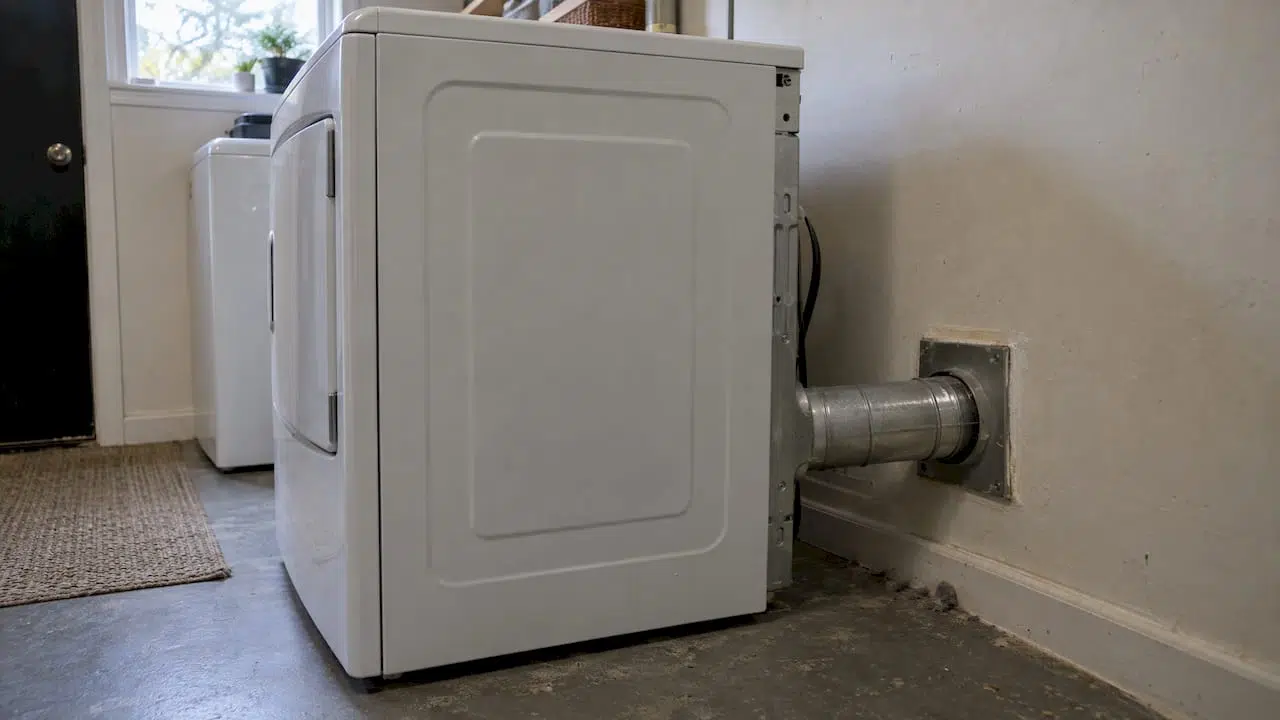
If your laundry space has no existing vent, the cost climbs. The EPA’s ENERGY STAR messaging guide says installing a vent line can cost $300 to $600, plus drywall work. That is a 2017 figure, so expect quotes today to come in higher in Southern California.
Ventless dryers
A ventless dryer skips the duct. That makes it a fit for apartments, condos, interior closets, garage conversions and additions. ENERGY STAR says heat-pump dryers suit small spaces, additions and apartments where outside venting isn’t possible or practical.
Three things to plan for:
- Electrical. Many full-size heat-pump dryers run on a 240-volt circuit, like a standard electric dryer, while some compact models use a regular 120-volt outlet. Read the spec sheet and look at the outlet where the dryer will sit.
- Water. You either empty a condensate tank regularly or run a drain hose to a standpipe or sink. A drain is more convenient for heavy laundry weeks.
- Air and space. Ventless machines still give off some warmth into the room and need clearance around them. Keep the room above 40°F, as the Building America guidance recommends.
One point in favor of ventless: the Building America Solution Center notes that these dryers remove the fire risk of clogged vent ducts and avoid the depressurization of a home that can come from sending air outdoors.
Gas dryers
Most ventless dryers are electric. If your home has a gas hookup and you want gas, you are in vented territory. Gas lines and connections should be handled by a licensed technician, and we cover appliance installation and gas conversions across Orange and Los Angeles counties.
Maintenance: what each type needs
Both types need regular care, just in different places.
Vented dryer
- Clean the lint screen after every load.
- Have the duct cleaned on a regular schedule. Lint buildup restricts airflow, makes the dryer work harder and is a fire hazard.
- Check the outside vent hood to make sure the flap opens freely.
Ventless condenser or heat-pump dryer
- Clean the lint screen after every load.
- Clean the condenser or heat-pump filter about monthly, and empty secondary lint traps monthly as well.
- Empty the water tank after each load, or confirm the drain hose isn’t kinked.
The Building America guidance backs the same routine: lint screen every load, condensate after every load, secondary lint traps monthly. Our dryer maintenance steps walk through it in more detail, and our dryer safety tips cover the fire-prevention basics that matter most for vented models.
How to choose: vented, condenser or heat pump
Start with the space, then the way you do laundry.
Choose a vented dryer if:
- you already have a short, clean, properly installed exterior vent
- you do a lot of back-to-back loads and want the fastest cycle
- you want gas, or you want the lowest purchase price
Choose a ventless heat-pump dryer if:
- there is no vent and running one would mean cutting through walls or paying for drywall repair
- you live in a condo, apartment or townhome with limits on exterior penetrations
- you want gentler drying for delicate fabrics and lower electricity use
- you can live with longer cycles
Choose a condenser dryer if: you want ventless placement and find a model that suits you, but be aware that heat pumps are the more efficient ventless option. Heat-pump models are increasingly the standard version of a ventless dryer on the market.
A rough rule: if a clean vent is already there, a vented dryer is the practical, quick choice. If it isn’t, the cost of building one often tips the decision toward ventless.
Our perspective
Most dryer calls we get have little to do with the dryer itself. They come from the room around it: a vent run that is too long, a duct packed with lint, a unit squeezed against a wall, or a ventless machine with a full water tank and a clogged filter.
That is why we tell homeowners to choose the dryer for the space first. In a home with a good exterior vent, a vented dryer does the job well and quickly. In a condo, a closet or an addition, a ventless heat-pump model avoids the vent altogether, and it can be the smarter long-term fit.
Either way, installation and upkeep decide how well it works. Our licensed technicians handle dryer repair and appliance installation across Orange County and Los Angeles County, and we explain what we find in plain terms so you can decide with the facts in front of you.
MDTECH
Need help with your dryer?
Whether you are setting up a new vented dryer, moving to a ventless model or sorting out a dryer that won’t heat or takes too long, our licensed technicians can help. We serve homeowners and property managers in Orange County and Los Angeles County, and you can book online. See our appliance installation services for setup, or our appliance repair services if yours is already acting up.

If you are deciding between repairing your current dryer and replacing it, our guide to repair vs. replacement lays out what to weigh. If your dryer spins but doesn’t heat, start with why a dryer isn’t heating.
FAQ
Do ventless dryers dry slower?
Usually, yes. Heat-pump dryers typically run about 30 minutes longer than vented dryers, and condensing models can take much longer. In return you get lower operating temperatures, gentler treatment of fabrics and lower energy use.
Is a heat-pump dryer better than a vented dryer?
It depends on your home. A heat pump uses about half the energy of a standard dryer, is easier on clothes and needs no vent. A vented dryer dries faster and is usually the practical pick when you already have a clean exterior vent.
What is the difference between a condenser dryer and a heat-pump dryer?
Both are ventless and both collect moisture as water. A condenser dryer heats air with an electric element and cools it to condense moisture. A heat-pump dryer recovers and reuses heat through a compressor loop, so it is more efficient.
Why are my clothes still damp after a ventless dryer cycle?
Most often it is a full water tank, a clogged lint screen or filter, or a room that is too cold. Empty the condensate, clean the lint screen and filters, and keep the room at 40°F or above. If clothes are still damp, a technician can check the heat exchanger and airflow.
Can I install a ventless dryer myself?
Plugging in and draining a compact unit can be simple. A full-size 240-volt model needs a suitable circuit, and gas hookups need a licensed technician. If you are unsure about your outlet or drain, having a professional install it is the safer route.
Sources
- Ventless (Condensing) Clothes Dryers, Building America Solution Center
- Vent a Clothes Dryer, U.S. Department of Energy
- U.S. EPA Consumer Messaging Guide for ENERGY STAR Certified Products
- ENERGY STAR Certified Washers and Dryers
- DOE Finalizes Efficiency Standards for Residential Clothes Washers and Clothes Dryers
- Heat Pump Clothes Dryer Home Electrification, Rewiring America
- Why we love vented clothes dryers and which ones are best, Consumer NZ
- Everything you need to know about ventless dryers, Reviewed