
A musty smell from your air conditioner almost always means moisture-driven mold, mildew, or bacterial growth somewhere in the system. Change the filter, check for standing water in the drain pan, and shut off cooling if the odor is strong. If the smell doesn’t clear up within a day or two, book a professional inspection before running the system heavily.
TL;DR:
- A persistent musty smell from your AC indicates microbial growth caused by moisture buildup, often originating from the coil or drain line.
- Homeowners can usually resolve odors by inspecting and replacing filters, flushing the drain line with vinegar, and running the fan-only mode to dry the system.
- If odors continue after DIY efforts, a professional inspection is necessary to detect hidden issues like mold, cracked pans, or duct leaks requiring advanced tools.
- Regular maintenance such as filter changes, drain line cleaning, and controlling indoor humidity keeps microbial growth and odors from recurring.
- Seek professional help if the smell returns quickly, water leaks appear, or residents experience health issues associated with moisture problems.
Table of Contents
- Why Does an Air Conditioner Smell Musty?
- How Do I Get Rid of a Musty Smell From My AC?
- When Should You Call an HVAC Technician for AC Odor?
- How Do You Prevent Musty Smells From Coming Back?
- What Happens During an MDTECH Inspection for AC Odor?
- Our Take: Don’t Chase the Smell, Chase the Moisture
- Get a Musty AC Smell Fixed by MDTECH
- Sources
Why Does an Air Conditioner Smell Musty?
Your AC pulls moisture out of the air every time it runs. That water has to go somewhere, and most of the smells homeowners complain about trace back to what happens to it once it leaves the coil.
The evaporator coil is ground zero. It stays wet during a cooling cycle, and dust in the airstream sticks to that moisture, building a thin biofilm of mold and bacteria over the fins. This layer doesn’t need to be thick to smell, and it usually isn’t visible without pulling an access panel.
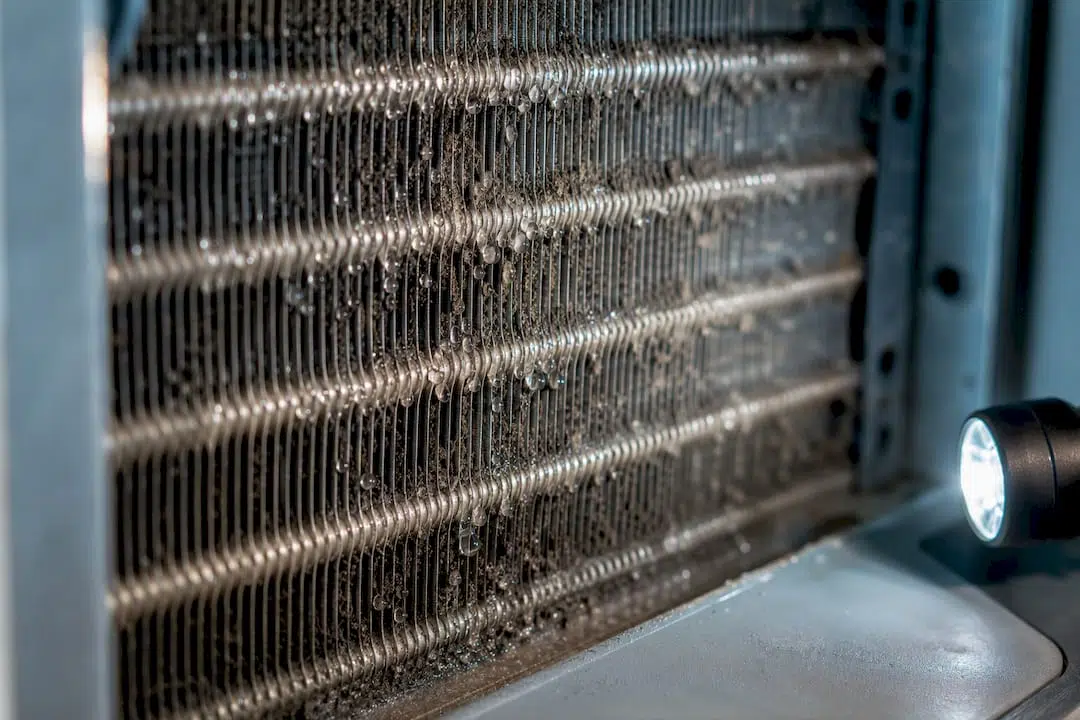
Below the coil sits a condensate drain line and pan designed to carry that water outside. When the line clogs with algae or sediment, water backs up and sits in the pan, turning it into a breeding ground for microbial growth. A dirty or wet filter compounds the problem by trapping organic debris right in the path of airflow, and if ductwork has leaks, it can pull in humid attic or crawlspace air that feeds mold growth further downstream.
Here’s the part that surprises most homeowners: you often smell the problem before you can see it.
- Mold and bacteria release microbial volatile organic compounds, or MVOCs, gases that carry the classic musty odor
- The EPA notes MVOCs appear before mold becomes visibly detectable, which is why a clean-looking coil can still smell off
- Startup odors are common because the system has been sitting warm and humid, giving trapped moisture time to off-gas before airflow clears it out
- Odors that fade after a few minutes of running usually point to the coil or drain pan rather than the ductwork
How Do I Get Rid of a Musty Smell From My AC?
Most musty odors respond well to a focused hour of homeowner troubleshooting. Work through these steps in order, and stop if you hit anything beyond simple maintenance.
- Pull and inspect the filter. Check for damp spots, dark staining, or a sour smell. Replace it regularly according to manufacturer recommendations or more often in high-use months.
- Look inside the indoor unit’s access panel. Check for standing water, soggy insulation around the coil, or drips along the housing. Any of these point to a drainage problem, not just a dirty filter.
- Flush the condensate drain line. Mix a 50/50 solution of white vinegar and water, pour it down the drain access point, then use a wet/dry vacuum on the outside drain termination to pull the clog free. Run a cup of water through afterward to confirm it drains freely.
- Switch the thermostat to fan-only mode for 30 to 60 minutes. This dries out the coil and drain pan without adding more condensation, which discourages regrowth.
- Run the Location Test. Turn the system off for at least an hour, then turn it back on and sniff each vent individually. If one room’s vent is noticeably worse, the problem is likely isolated to that duct run. If every vent smells the same, the source is probably shared equipment like the coil or air handler.
Pro Tip: Do the Location Test with the system off for a full hour first. A shorter wait lets residual odor near the air handler mask the truth about where the smell is actually coming from.
Know when to stop. Visible mold growing inside the air handler, a coil that needs disassembly to clean properly, or any repair near live electrical components isn’t a DIY job. Improper coil cleaning can bend fins, damage wiring, or knock spores loose into the air you breathe. For a broader walkthrough of what you can safely check yourself, see our air conditioning troubleshooting steps.
When Should You Call an HVAC Technician for AC Odor?
If you’ve flushed the drain, changed the filter, and run fan-only mode and the smell is still there, the moisture source is probably hidden. That’s where professional diagnostics earn their cost.
Technicians use tools homeowners typically don’t have on hand: moisture meters to find damp insulation or ductwork you can’t see, inspection cameras to check inside duct runs and behind panels, and HVAC gauges to confirm the system is operating at the right pressures. From there, treatment usually involves professional coil cleaning with an antimicrobial application, repair or replacement of a cracked drain pan or collapsed line, and duct inspection when contamination looks widespread. Some techs also install UV-C germicidal lights near the coil to slow regrowth after a proper cleaning, though the bulbs need annual replacement and only work on a coil that’s already been cleaned.
Call a professional if you notice any of these:
- Musty smell returns within days of a DIY cleaning
- Visible mold on coils, ducts, or the drain pan
- Water leaking from the unit or staining on ceilings/walls
- Airflow has dropped noticeably along with the odor
- Anyone in the home develops coughing, congestion, or headaches when the AC runs
When you call, ask whether the technician is certified, whether duct work follows NADCA standards, and request a written scope of work before repairs begin. Our HVAC repair services page outlines what a typical visit covers if you want to see the process ahead of time.
How Do You Prevent Musty Smells From Coming Back?
Prevention comes down to controlling moisture before it becomes a habitat. A little routine attention beats a repeat service call every time.
- Filters: Replace standard filters every 60 to 90 days, or every 30 days during peak summer use or if you have pets. High-MERV pleated filters can stretch closer to 90 days.
- Condensate line: Flush with a vinegar and water mix periodically to prevent buildup. Check the float switch and secondary drain (if your system has one) for buildup at the same time.
- Fan-only drying: Run it for 30 minutes after long cooling cycles, especially in humid weather, to keep the coil from sitting wet overnight.
- Dehumidify mode: Use it on sticky days when the AC is cooling the room fast enough that it isn’t running long enough to pull out much moisture.
- Professional tune-ups: Schedule one every 12 to 18 months. Have ducts inspected periodically, especially after leaks, renovations, or pest issues.
Indoor relative humidity matters more than most homeowners realize. Keeping it around 40 to 50 percent starves the mold and bacteria that cause the smell in the first place. If your AC struggles to hold that range even when it’s cycling normally, a whole-home dehumidifier fills the gap. It’s worth noting that poorly maintained AC systems have been linked to sick building syndrome symptoms, which is a strong argument for treating this checklist as routine rather than optional. For a fuller seasonal breakdown, check our HVAC maintenance checklist.
What Happens During an MDTECH Inspection for AC Odor?
MDTECH technicians start every musty-odor call the same way: find the moisture, not just the smell. A visit typically includes a documented inspection of the coil, drain pan, and condensate line, plus a safety check on the air handler before anything is touched. You’ll get a plain explanation of what’s causing the odor and a recommended next step, whether that’s a coil cleaning, drain line repair, or a duct evaluation.
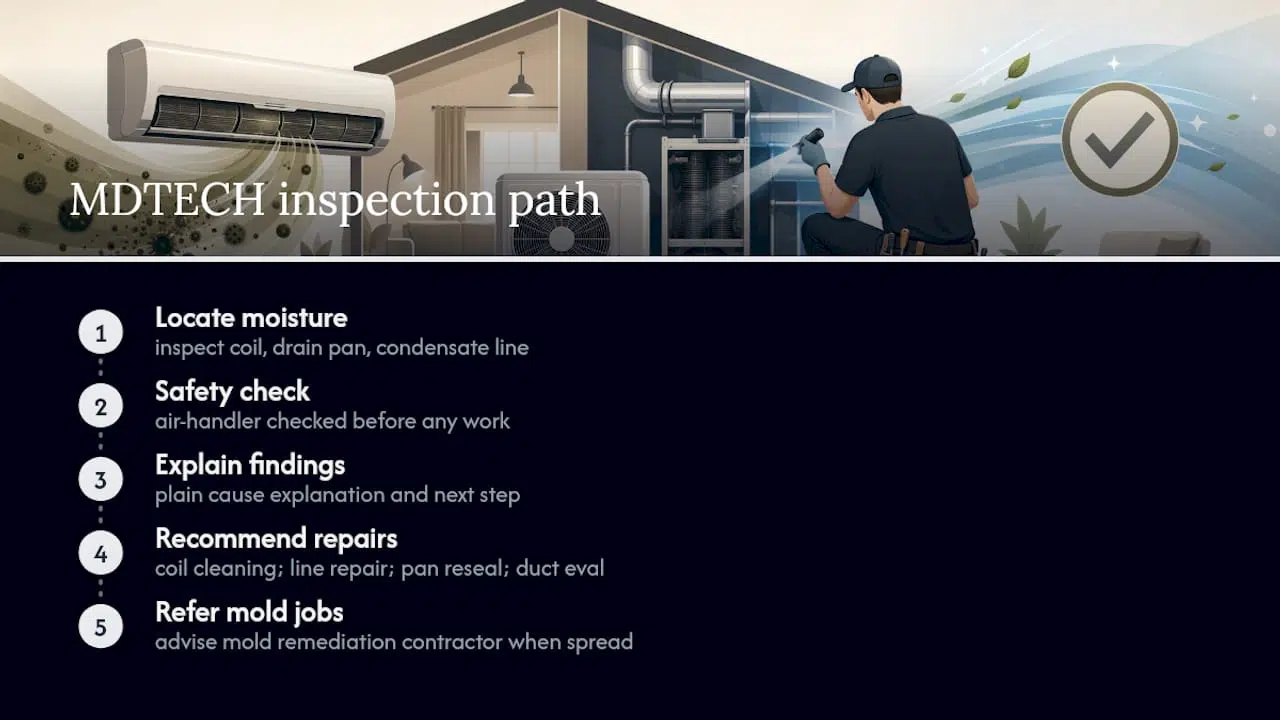
Most cases resolve with standard HVAC repair: clearing a clogged line, resealing a cracked pan, or cleaning a contaminated coil. Occasionally an inspection turns up mold that’s spread beyond the equipment into insulation or nearby drywall. In those cases, we’ll tell you plainly that the job calls for a dedicated mold remediation contractor rather than stretching an HVAC repair to cover work it isn’t built for. Details on our approach are on the HVAC repair page.
Our Take: Don’t Chase the Smell, Chase the Moisture
Most advice on musty AC odors treats the smell as the problem. It isn’t. The smell is a symptom of standing water, a clogged drain, or a coil that never fully dries between cycles. Spray a can of coil cleaner or an odor deodorizer at the vents and you’ll mask it for a week, maybe two, before it’s back.
The DIY steps in this guide work because they attack moisture directly: clearing the drain line, drying the coil with fan-only mode, replacing filters before they trap enough debris to hold water. That’s also where conventional advice tends to undersell the risk. A smell that returns fast after cleaning almost always means the moisture source wasn’t actually fixed, just interrupted.
Prioritize the drain line and the coil first. Everything else, filters, humidity control, duct sealing, supports those two components instead of replacing the need to check them. If the odor won’t quit after a real attempt at the basics, that’s not a sign to try a stronger DIY product. It’s a sign something structural, a cracked pan, a hidden duct leak, needs a trained eye.
— MDTECH
Get a Musty AC Smell Fixed by MDTECH
If the vinegar flush and a fresh filter didn’t clear the smell, you’re past the point where store-bought sprays help. Technicians diagnose the actual moisture source, whether that’s a cracked drain pan, a contaminated coil, or a duct leak, instead of just recommending another filter change and hoping.
An MDTECH visit gets you a documented inspection, a plain explanation of what’s causing the odor, and a repair plan before any work starts. That covers everything from coil cleaning and antimicrobial application to condensate line replacement and duct evaluation, so you’re not paying for guesswork or a second visit two weeks later. If the odor has already come back once after a DIY attempt, that’s usually the point where a professional inspection saves more money than another round of vinegar and a wet/dry vacuum.
Book an appointment through our HVAC repair services page and get a technician out to check the coil, drain, and ducts before the smell gets worse.
This article is general information, not a substitute for advice from a qualified doctor. Consult a qualified healthcare professional about your own circumstances before acting on anything here.
Sources
- EPA — What does mold smell like?
- PBS — Can air conditioning make you sick? A microbiologist explains (2025-08-17)