
An air gap and a high loop both try to stop dirty sink water from flowing back into your dishwasher, but they are not equal. An air gap is a fitting that creates a real break in the drain line. A high loop is a hose routed up under the counter. If you live in Orange County or Los Angeles County, plan on an air gap, and confirm the details with your local building department before any installation.
Below, we explain how each one works, where the rules differ, what manufacturers say about drain height, and how to tell whether your kitchen is set up correctly.
TL;DR
- An air gap is a deck-mounted fitting that separates the dishwasher drain from the sink drain with open air. A high loop is the drain hose looped up and fastened beneath the countertop.
- A high loop is permitted in some places, but a continuous hose connection can still allow siphoning. An air gap physically breaks that connection.
- California is the most-cited example of a state that calls for a deck-mounted air gap, so California homeowners should assume they need one and confirm locally.
- Manufacturers set minimum drain heights (20 inches for the connection to house plumbing in several installation guides), and they say a built-in air gap in the machine does not replace a code-required countertop one.
- If water comes out of the air gap or the dishwasher drains poorly, the cause is usually a clog downstream, and it is a quick service call.
Table of Contents
- What the air gap and the high loop each do
- Air gap vs high loop at a glance
- What California requires
- What dishwasher manufacturers say about drain height
- Which setup fits your kitchen
- Common air gap problems and what they mean
- Perspective
- Get the air gap installed or checked
- Before you decide: a short checklist
- FAQ
- Sources
What the air gap and the high loop each do
Both parts solve the same problem. When the kitchen sink drain or garbage disposal clogs, dirty water has nowhere to go. Without protection, it can travel up the dishwasher drain hose and into a tub that holds your clean dishes.
The air gap
A dishwasher air gap is a small cylinder that connects the sink drain to the dishwasher. It separates two hose branches with an unpressurized gap of air, which helps keep dirty water from re-entering the dishwasher. On most kitchens it is the small chrome or metal cap next to the faucet. Sub-Zero describes it as a small pipe that sticks up off the kitchen sink, typically 4 to 5 inches.
Inside, the fitting has holes through which air and water can pass. If water flows backward from the drain, it spills out of the air gap rather than going on into the dishwasher. A California plumber quoted by the same publication describes it as a fail-safe: if the sink backs up, water simply flows out of the air gap onto the countertop, not into the machine.
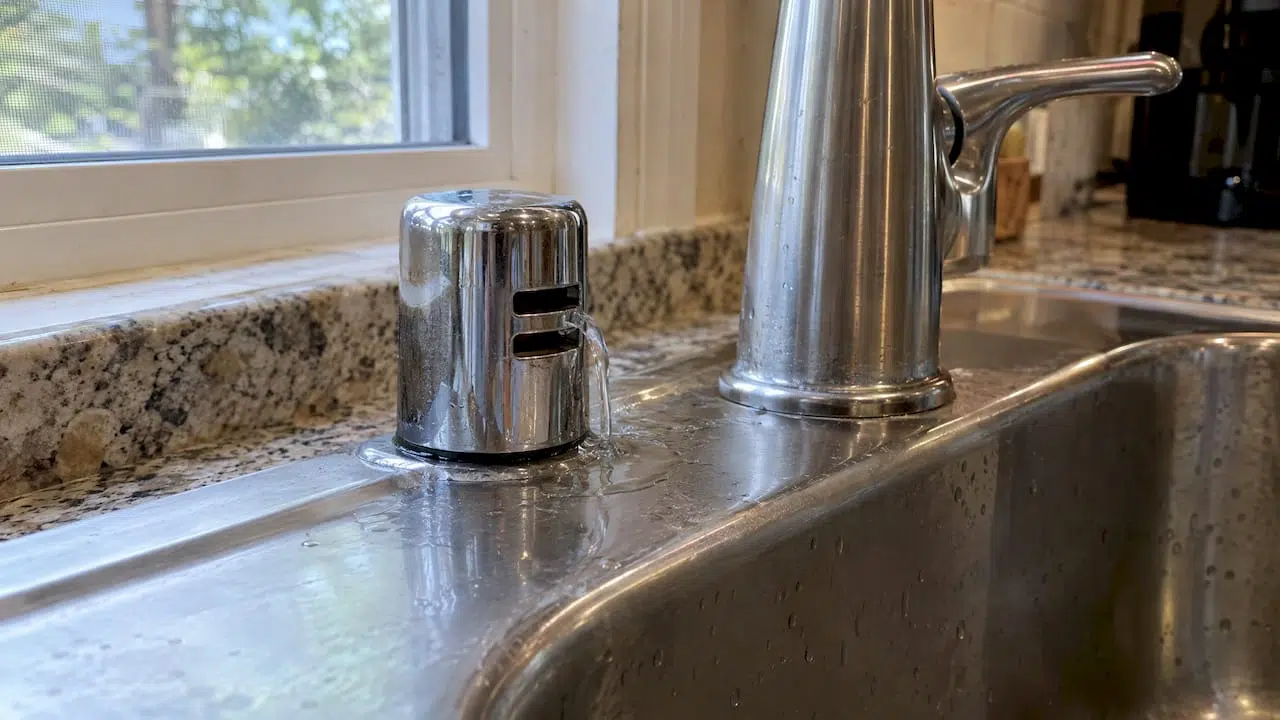
That last point matters. If you ever see water spitting from the air gap, the device is doing its job and telling you the drain downstream is blocked.
The high loop
A high loop is not a part you buy. It is a way of routing the drain hose. GE Appliances describes it as a loop in the hose that sits a minimum of 32 inches above the floor, done by attaching the hose to the underside of the countertop. The idea is that gravity and the height of the loop work against water running backward.
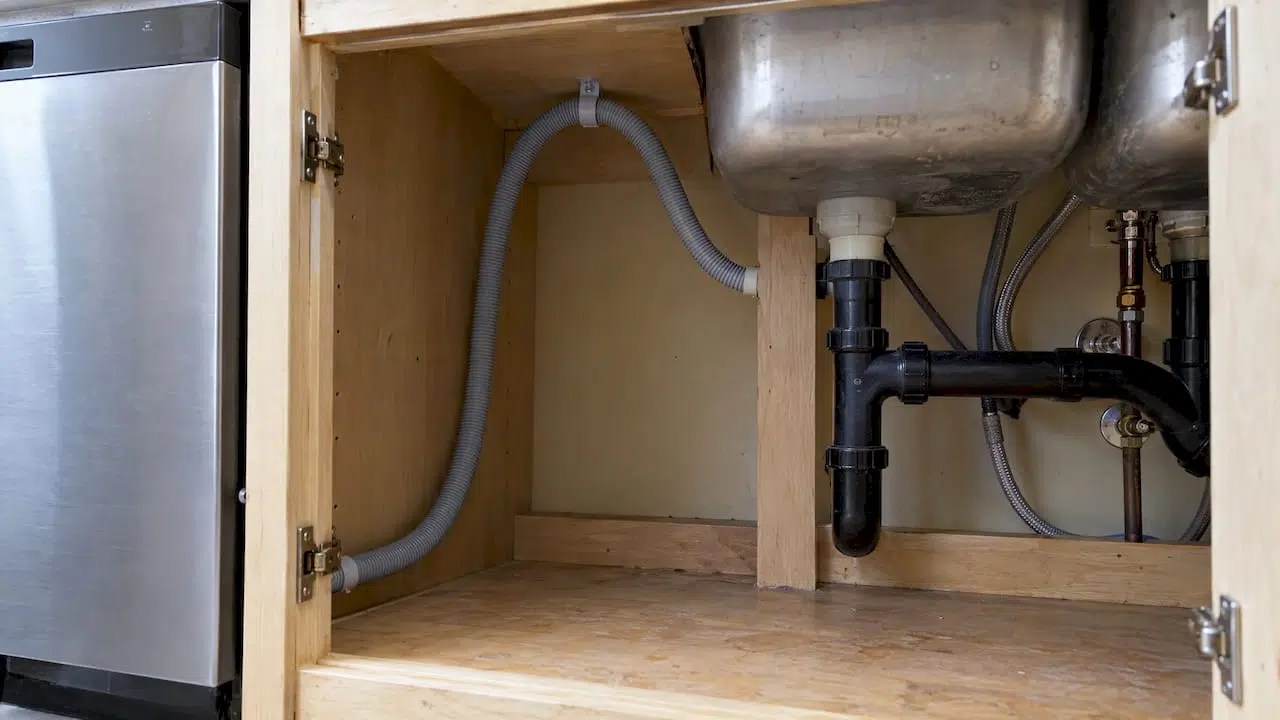
The limitation is that the hose is still one continuous connection. The residential-code explanation from a licensed plumber is that a high loop reduces back-siphoning but does not give the same protection as an air gap. A common misconception is that the two do the same job, when the continuous connection can still allow backflow through siphoning.
Air gap vs high loop at a glance
| Air gap | High loop | |
|---|---|---|
| What it is | A fitting mounted on the sink deck or countertop | The drain hose routed up and fastened under the counter |
| Breaks the connection with open air | Yes | No, the hose stays continuous |
| Visible on the countertop | Yes, a small cap near the faucet | No |
| Extra countertop or sink hole | Yes, one hole | No |
| Typical code context | Required in some plumbing-code jurisdictions, California most often cited | Accepted in jurisdictions following the residential code language on a raised, secured drain line |
| What you see if the drain clogs | Water may spill from the fitting | Water may back toward the machine |
| Maintenance | Cap can be removed and cleaned | None, but the hose must stay secured |
What California requires
Code language differs by region. In jurisdictions that follow the International Residential Code, the dishwasher drain must rise and be securely fastened to the underside of the sink rim or countertop, which is the high loop. A deck-mounted air gap is required in some jurisdictions that follow the Uniform Plumbing Code, and California is the most-cited example.
Other homeowner-facing sources agree. Family Handyman lists California among the states where a dishwasher air gap is a mandatory residential plumbing procedure. Lists of states vary between sources, and some are out of date, so treat any list as a starting point.
For Orange County and Los Angeles County, the practical advice is simple:
- Assume a deck-mounted air gap is expected on your dishwasher.
- Confirm with your city or county building department, especially for a remodel, a new dishwasher installation, or a sale inspection.
- Keep the air gap physically present and properly mounted, with its flood-level marking at or above the flood level of the sink.
If your kitchen has only a high loop and you are planning a remodel or a permit, ask the building department how it applies to your project before you assume the old setup is acceptable.
What dishwasher manufacturers say about drain height
The code is one layer. Your dishwasher’s installation instructions are another, and the installer is expected to follow both.
- Minimum height for the house-plumbing connection. Whirlpool says a drain hose connected to house plumbing lower than 20 inches above the floor will need an air gap. Maytag says the same, 20 inches above the subfloor or floor. JennAir’s installation guide says the hose should connect to the waste tee or disposer inlet above the drain trap and at least 20 inches above the floor.
- High loop and floor drains. The same JennAir guide says a high loop is required when the dishwasher drains into a floor drain. When the drain goes to a sink drain, a countertop air gap or a disposer, a high loop is generally not required because an internal check valve prevents backflow.
- Built-in air gaps do not count as code air gaps. Some Whirlpool dishwashers include an air gap on the drain end, but these devices are not recognized by code agencies and do not replace a through-counter device where one is required.
- The air gap belongs to the plumbing. GE notes that an air gap is part of the plumbing, not the dishwasher, and that not every area requires one.
It also helps to separate the two sides of the machine. On the supply side, the residential code language says water supply to a dishwasher must be protected against backflow by an air gap integral to the machine or by a backflow preventer, so every modern dishwasher has a built-in supply-side air gap. That is a different thing from the drain-side air gap in your sink.
Which setup fits your kitchen
Use this as a quick decision guide for a home in Southern California.
You already have an air gap on the sink
You are set up the way California homeowners generally should be. Keep the cap clean, and make sure the hose from the dishwasher to the air gap and the hose from the air gap to the disposer or drain are both secure. If you are replacing the dishwasher, the new unit should be connected to the existing air gap.
You have no air gap, only a hose under the sink
Look under the sink. If the drain hose rises and is fastened to the underside of the counter, you have a high loop. It reduces siphoning risk, but because California is the most-cited example of a deck-mounted air gap requirement, this is the situation to raise with a licensed technician or your building department, especially before a remodel, a permit or a home sale.
You are installing a new dishwasher or countertop
This is the easiest time to get it right. A new countertop, especially stone, often needs holes planned in advance. If you want an air gap, tell your installer before the countertop is cut so the hole sits where it should. Our dishwasher installation guide walks through how a safe setup comes together.
You have a garbage disposal
The dishwasher drain typically connects to the disposer inlet or the sink drain above the trap. The disposer must have its dishwasher knockout plug removed, or the dishwasher will not drain. That is a classic cause of a brand-new dishwasher that will not empty. Our dishwasher drain fixes cover that and other common causes.
Common air gap problems and what they mean
An air gap is simple, so its problems are usually easy to trace.
- Water leaks from the cap during a cycle. The line past the air gap, either the hose to the disposer or the drain connection, is partly blocked. The air gap is releasing pressure the way it should. The fix is clearing the downstream line, not removing the air gap.
- Dishwasher drains slowly or leaves standing water. Food debris often collects in the air gap itself or the short hoses. Removing the cap and rinsing the barrel can help. If the water remains, the problem may be the drain pump, the check valve or the disposer connection.
- Gurgling or odor from the sink area. Residue can sit in the fitting and hoses. A thorough cleaning usually resolves it.
- Water pooling at the base of the sink or under the dishwasher. This can be a loose hose clamp, a cracked hose or a failed seal rather than an air gap issue. Our guides on dishwasher overflows and leaks from the bottom help you trace where the water is really coming from.
The cap on most air gaps lifts off for cleaning. Turn the dishwasher off first, and if you are unsure what you are looking at, have a technician check it rather than taking apart plumbing connections.
Perspective
We see the air gap question come up most often in two moments: when a homeowner buys a new dishwasher, and when a kitchen has a mystery drain problem. In both cases the drain path is the real story, and the air gap is the one part of it you can see.
Our view is simple. In Orange County and Los Angeles County, the air gap is the setup to plan around. It gives the dishwasher a clear, physical break from the sink drain, and it gives you an early warning if something downstream is blocked. A high loop is a useful routing practice for the hose, but it is a different thing, and we do not treat it as a stand-in for a deck-mounted fitting where California expects one.
What matters most is the whole drain run: the air gap, the hoses and clamps, the disposer connection and the drain line. A properly mounted fitting connected to a clean line means your dishwasher drains the way it should, and your clean dishes stay clean. That is what our licensed technicians check when we install or service a dishwasher, and it is why we offer air gap installation and repair as part of our appliance work.
MDTECH
Get the air gap installed or checked
If your dishwasher drains without an air gap, or the one you have leaks, gurgles or clogs, we can help. MDTECH Appliance Repair serves homeowners and property managers across Orange County and Los Angeles County, with licensed technicians and online booking. You can read about air gap installation or air gap repair, or go straight to our appliance repair services page to book.
If a new dishwasher is on the way, our appliance installation services cover the hookup, so the drain, supply and air gap are handled in one visit. Rates are not published, so book online to get a quote for your kitchen.
Before you decide: a short checklist
- Look under the sink. Find where the dishwasher drain hose ends: an air gap, a disposer inlet, or a sink tailpiece connection.
- Look at the countertop. A small cap beside the faucet is the air gap. No cap means there is likely none.
- Check hose height. If the hose connects to the house plumbing lower than your manufacturer’s stated minimum (often 20 inches above the floor), an air gap is called for.
- Read your installation instructions. They list the connection height and what to do with a disposer.
- Ask the building department. For California projects, confirm what applies to your address and project, especially with permits or a sale.
- Have a licensed technician do the work. Cutting a countertop hole and connecting drain lines is easier to get right once.
FAQ
Is an air gap better than a high loop?
An air gap gives stronger protection because it breaks the drain connection with open air. A high loop raises the hose to reduce back-siphoning, but the hose stays continuous. In California, the air gap is the setup to plan for.
Do I need a dishwasher air gap in California?
California is the most-cited example of a place that requires a deck-mounted air gap. Assume you need one, and confirm with your city or county building department, particularly if you are remodeling, pulling a permit or selling.
Can you run a dishwasher without an air gap?
In some jurisdictions that follow the residential code, a properly secured high loop is accepted. Check your local code and your dishwasher’s installation instructions. In California, an air gap is generally the safer assumption.
Why is water coming out of my air gap?
The drain line past the air gap is probably partly blocked, often at the disposer or the drain connection. The air gap is releasing the water instead of sending it into the dishwasher. Clear the blockage or have a technician do it.
Does a dishwasher with a built-in air gap still need one on the sink?
Where code calls for a through-counter device, yes. Whirlpool states that built-in drain-end air gaps are not recognized by code agencies and do not replace it.
Sources
- What is a Dishwasher Air Gap? | Whirlpool
- What Is a Dishwasher Air Gap? | Maytag
- Dishwasher Air Gap Device | Sub-Zero, Wolf, and Cove
- What Is the Thing Next to My Kitchen Faucet? | Family Handyman
- What Is a Dishwasher Air Gap and Why Is It Important? | Family Handyman
- Dishwasher Air Gap vs High Loop: What Code Requires | PlumbingPicks
- Dishwasher – Water in the Bottom of the Tub | GE Appliances
- Dishwasher – Cleaning the Air Gap | GE Appliances
- Undercounter Dishwasher installation guide | JennAir
- Air gap (plumbing) | Wikipedia