
TL;DR:
- An HVAC maintenance workflow involves routine tasks documented to prolong system life and prevent failures. Proper scheduling, use of the right tools, and professional inspections typically lead to fewer breakdowns and lower energy costs. Building a condition-based maintenance plan that tracks system performance, rather than following fixed schedules, improves reliability and efficiency.
An HVAC maintenance workflow is a structured sequence of routine tasks designed to keep your heating and cooling systems running efficiently and reliably. Property managers and homeowners who follow a documented service workflow see up to 70% fewer unplanned breakdowns and 15–25% lower annual energy costs compared to reactive approaches. The difference between a system that lasts 20 years and one that fails at year 10 almost always comes down to whether a consistent preventive HVAC maintenance plan was in place. ASHRAE and the U.S. Department of Energy both recognize structured maintenance programs as the single most cost-effective way to protect HVAC equipment. This guide gives you a practical, step-by-step framework to build that workflow from scratch.
What does an HVAC maintenance workflow require?
A complete HVAC service workflow requires the right tools, clear documentation, and an honest understanding of which tasks belong to you and which belong to a licensed technician. Skipping any of these three elements is where most maintenance programs break down.
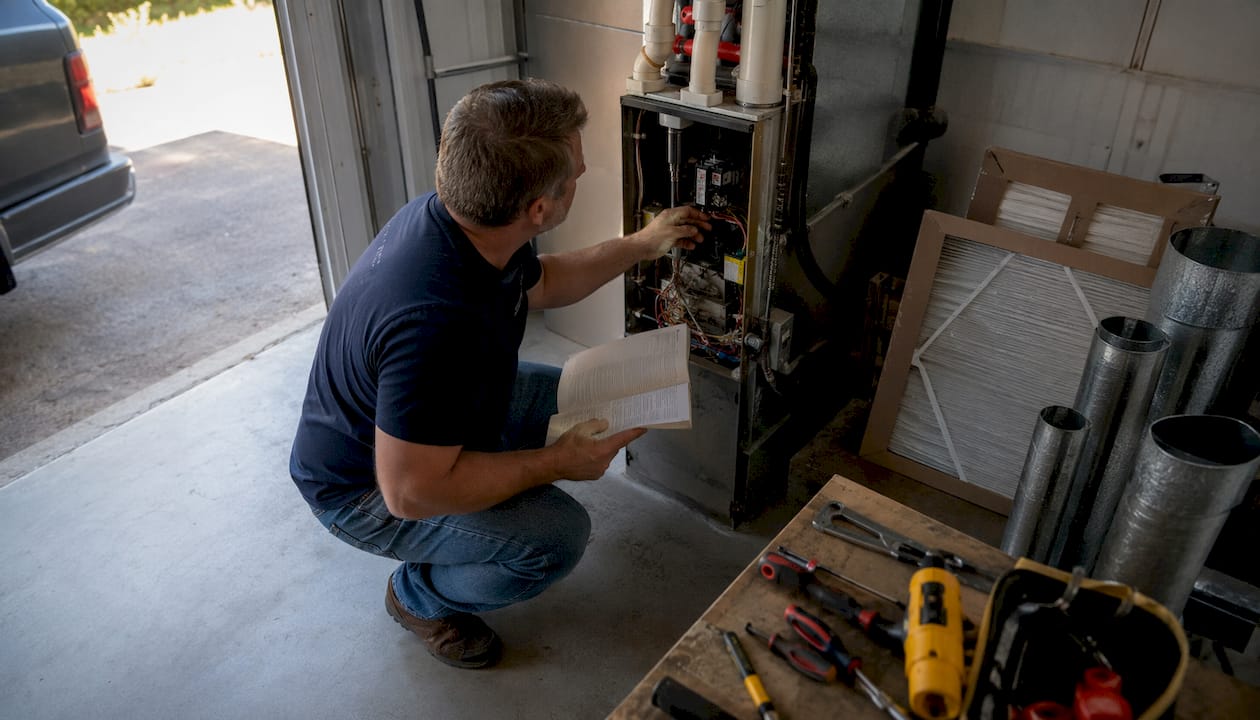
Tools and materials you need on hand
Before starting any HVAC system inspection, gather the following:
- Air filters (MERV 8–13 rated for most residential systems)
- Coil cleaner (no-rinse foaming type for evaporator and condenser coils)
- Condensate drain tablets or diluted bleach for drain line treatment
- Refrigerant leak detector (electronic or UV dye kit)
- Adjustable wrenches and screwdrivers for panel access
- Multimeter for checking voltage and amp draw on motors and contactors
- Mastic sealant or metal foil-backed tape for duct repairs
One item on that list deserves special attention. Standard duct tape fails under the temperature swings and humidity inside ductwork. Mastic sealant or foil-backed tape is the industry standard for any duct repair that needs to last.
Documentation tools
Paper checklists work, but digital forms with photo capture produce far more accurate service records. A Computerized Maintenance Management System (CMMS) stores service history, flags overdue tasks, and generates reports that help property managers track performance across multiple units. Even a well-organized spreadsheet beats a stack of handwritten notes when you need to prove maintenance history for a warranty claim.
Pro Tip: Take a timestamped photo of each filter before and after replacement. That single habit builds a visual record that helps technicians spot airflow trends during professional visits.
How do you build a step-by-step HVAC maintenance schedule?
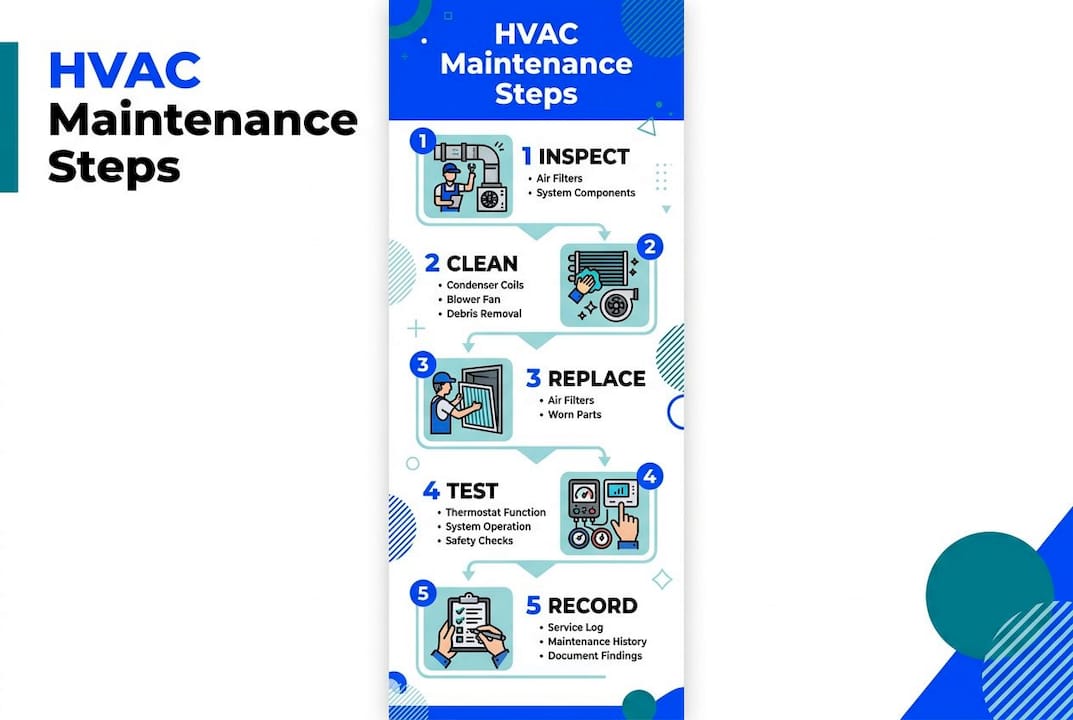
A practical HVAC maintenance schedule organizes tasks by frequency: monthly, quarterly, and bi-annual. Each tier addresses a different layer of system health.
Monthly tasks
- Inspect the air filter. Hold it up to light. If you cannot see light through it, replace it immediately. Filters should be checked every 30 days and replaced every 1–3 months, more often in homes with pets or allergy concerns.
- Check thermostat settings. Confirm the schedule matches the season and that the display reads correctly.
- Clear the area around the air handler and outdoor unit. Remove debris, vegetation, and stored items within 2 feet of the equipment.
- Listen for unusual sounds. Rattling, banging, or squealing during startup often signals a loose component or failing motor bearing.
Quarterly tasks
- Flush the condensate drain line. Pour a cup of diluted bleach or a condensate drain tablet into the access port. A clogged drain causes water damage and mold growth inside the air handler.
- Clean the outdoor condenser unit. Rinse coils gently with a garden hose from the inside out to remove dirt and debris without bending fins.
- Inspect duct connections at accessible points for gaps or separation. Seal any openings with mastic sealant.
- Test the blower motor. Listen for changes in airflow volume compared to previous months.
Bi-annual professional inspections
Schedule a licensed technician visit before the cooling season (spring) and before the heating season (fall). These visits cover tasks that homeowners cannot safely perform. Licensed professionals must handle electrical safety checks, refrigerant pressure measurements, combustion safety tests, and heat exchanger crack inspections. A cracked heat exchanger is a carbon monoxide risk, and it requires specialized equipment to detect.
A thorough professional inspection covers 15 or more core areas: filters, coils, refrigerant pressures, electrical connections, blower assemblies, safety controls, and more. Each finding gets logged in a service record that becomes your system’s health history.
Pro Tip: Do not schedule your bi-annual visits strictly by the calendar. If your system runs heavily due to an unusually hot summer or a long heating season, move the next inspection forward. Runtime matters more than the date.
Adapting your HVAC maintenance schedule to actual usage rather than fixed dates is a core principle of condition-based maintenance. Condition-based triggers outperform fixed calendar schedules by responding to how hard the system actually worked, not just how much time has passed.
What mistakes should you avoid in your HVAC maintenance workflow?
Most HVAC failures trace back to a small number of repeated errors. Knowing them in advance saves you from expensive repairs.
The most common maintenance mistakes
- Skipping filter changes. A clogged filter forces the blower motor to work harder, raises energy consumption, and accelerates wear on the heat exchanger and evaporator coil.
- Using standard duct tape on ductwork. It peels within months. Mastic sealant or foil-backed tape is the only reliable fix.
- Ignoring unusual odors. A burning smell often signals an electrical issue or overheating motor. A musty smell points to mold in the drain pan or ductwork. Neither should wait.
- Treating maintenance as cleaning only. Wiping down surfaces does not tell you whether the system is performing correctly. Metrics like superheat, subcooling, and amp draw reveal actual system health in ways that visual checks cannot.
- Delaying professional visits to save money. Professional seasonal visits cost $80–$150. Emergency repairs triggered by neglect cost 5–10 times more.
“Maintenance workflows fail when the focus stays on task completion rather than performance outcomes. Tracking runtime hours and system metrics, not just checking boxes, is what separates a reliable system from a costly one.”
Pro Tip: Log your system’s runtime hours each month. When runtime spikes without a change in weather, that is a condition-based signal that something needs attention before it becomes a breakdown.
Troubleshooting airflow problems starts with the filter and duct connections. Thermostat calibration issues show up as temperature swings that do not match the set point. Refrigerant leaks require a licensed technician with recovery equipment. Knowing which problems you can address and which require professional help is the clearest line in any HVAC repair process.
How does HVAC maintenance scheduling and automation work?
Automation removes the single biggest reason maintenance programs fail: forgetting. CMMS platforms and digital checklist apps send reminders, track task completion, and store service history in one place.
Manual vs. digital workflow options
| Workflow type | Reminders | Service history | Scales to multiple units | Condition-based triggers |
|---|---|---|---|---|
| Paper checklist | None | Manual filing | No | No |
| Spreadsheet | Manual calendar | Partial | Limited | No |
| CMMS platform | Automated | Full digital log | Yes | Yes |
Property managers overseeing multiple rental units gain the most from CMMS tools. A single dashboard shows which units are overdue for service, which technicians completed which tasks, and where costs are trending. That visibility is impossible with paper records.
Condition-based maintenance reduces labor by 20–30% compared to fixed-date scheduling. That reduction comes from servicing equipment when it actually needs attention rather than on an arbitrary date. A hybrid approach combining time-based minimums with runtime or sensor triggers produces the best return on investment for both homeowners and property managers.
For property managers, the benefits of regular HVAC service extend beyond individual units. Documented maintenance histories protect against warranty disputes, support insurance claims, and increase property value at resale or lease renewal.
Key Takeaways
A structured, documented HVAC maintenance workflow is the most cost-effective way to extend system life, reduce energy costs, and prevent emergency repairs.
| Point | Details |
|---|---|
| Preventive maintenance pays off | Structured programs cut unplanned failures by up to 70% and reduce energy use by 15–25%. |
| Filter changes drive system health | Check filters monthly and replace every 1–3 months based on usage and household conditions. |
| Professional visits are non-negotiable | Licensed technicians must handle refrigerant, electrical, and combustion safety checks twice a year. |
| Use the right repair materials | Mastic sealant or foil-backed tape is required for duct repairs; standard duct tape fails quickly. |
| Condition-based scheduling beats the calendar | Trigger service by runtime and sensor data, not just fixed dates, to cut labor and improve reliability. |
What I have learned from years of HVAC service calls
After working with hundreds of homeowners and property managers across Orange County and Los Angeles, one pattern stands out clearly. The homes with the fewest emergency calls are not the ones with the newest equipment. They are the ones where someone kept a consistent service log and treated the HVAC system like a vehicle with a maintenance schedule, not a fixture that runs until it breaks.
The biggest gap I see is the confusion between cleaning and maintaining. Homeowners wipe down vents, replace filters occasionally, and assume the system is fine. But a system can look clean and still be running at 60% efficiency because the refrigerant charge is off or the contactor is pitting. Those are not visible problems. They show up in your energy bill and then in a repair invoice.
The second gap is the reluctance to call a professional before something breaks. A $120 tune-up in the spring catches the issues that would otherwise become a $900 compressor repair in August. That math is not complicated, but it requires trusting the process before the crisis arrives.
My honest advice: build your workflow around performance data, not just task lists. Track your energy bills month over month. Note when the system cycles more than usual. Log every service visit with dates and findings. That record becomes your best tool for catching problems early and making the case for repair versus replacement when the time comes.
— MDTECH
Appliancesrepairmdtech is here when your workflow needs backup
Running a consistent HVAC maintenance workflow keeps most problems from becoming emergencies. But some issues require a licensed technician with the right tools and certifications.
Appliancesrepairmdtech serves homeowners and property managers across Orange County and Los Angeles County with professional HVAC repair and tune-up services backed by licensed technicians. Whether you need a seasonal inspection, a refrigerant check, or help deciding between repair and replacement, the team is available for same-day and scheduled appointments. Booking online takes under two minutes. Your system does the heavy lifting every day. Make sure it gets the professional attention it needs to keep doing that reliably.
FAQ
What is an HVAC maintenance workflow?
An HVAC maintenance workflow is a structured sequence of routine inspection and service tasks performed on a set schedule to keep heating and cooling systems running efficiently and prevent unplanned failures.
How often should I change my HVAC air filter?
Check your filter every 30 days and replace it every 1–3 months. Homes with pets or allergy concerns need more frequent changes.
Which HVAC tasks can homeowners do themselves?
Homeowners can safely handle filter changes, debris cleanup around outdoor units, and condensate drain flushing. Electrical checks, refrigerant handling, and combustion safety inspections require a licensed technician.
How much does a professional HVAC tune-up cost?
A seasonal professional visit typically costs $80–$150. Skipping it risks emergency repairs that cost 5–10 times more.
What is condition-based HVAC maintenance?
Condition-based maintenance triggers service based on runtime hours or sensor data rather than fixed calendar dates. This approach reduces unnecessary labor and catches real problems earlier than time-only schedules.