
TL;DR:
- Gas conversions change appliances from one fuel type to another and must be performed with OEM parts to ensure safety. Proper permits and licensed technicians are essential to prevent hazards like carbon monoxide and guarantee compliance with code. Conversion costs generally recover within 3 to 7 years and depend on fuel prices and appliance type.
Gas conversions are defined as the technical process of modifying a home appliance to operate safely on a different fuel gas, most commonly switching between natural gas and propane. The types of gas conversions homeowners encounter fall into a few clear categories, each requiring specific parts, pressure adjustments, and permits. Getting this wrong creates real safety hazards, including carbon monoxide exposure and appliance damage. This guide breaks down each gas conversion type, explains what the process involves, and clarifies what 2026 codes require before any work begins.
1. What are the main types of gas conversions?
Gas conversion methods divide into two primary categories for residential appliances: natural gas to propane (LP) and propane to natural gas. A third, less common category covers fuel type switches such as oil to gas or gas to electric heat pump systems. Each type involves different technical steps, different parts, and different permit requirements. Understanding which category your project falls into is the first decision you need to make.
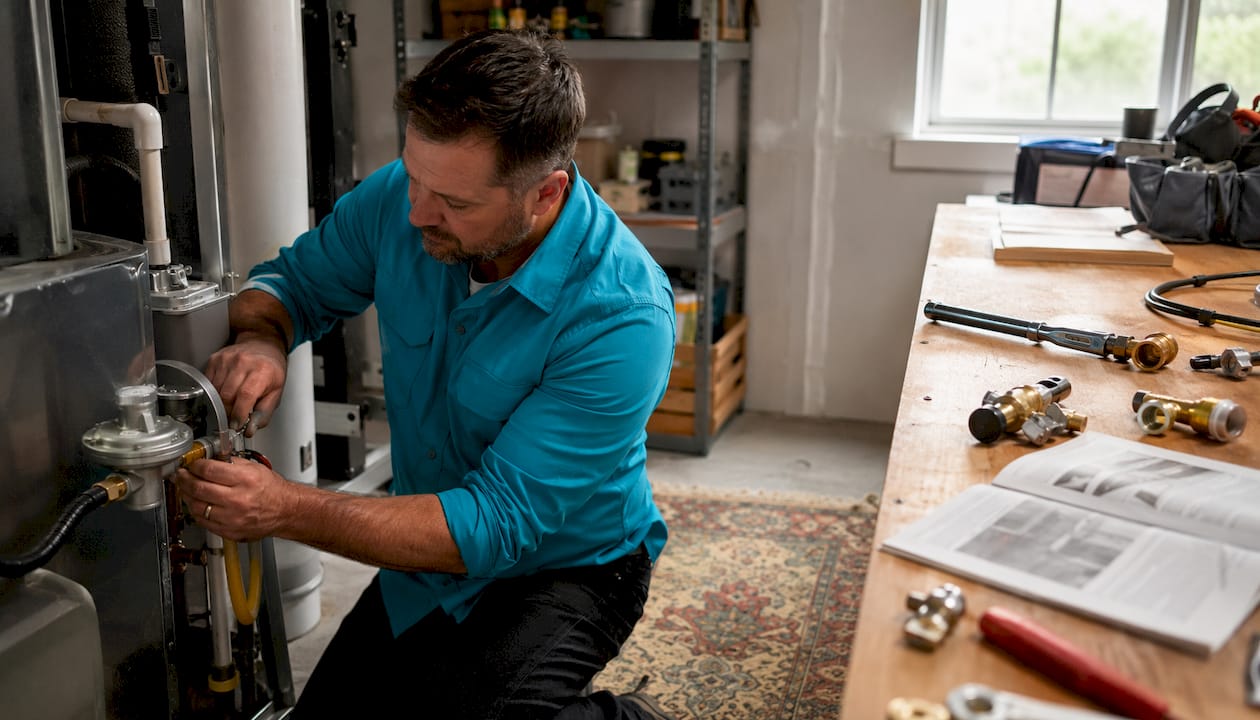
2. Natural gas to propane conversion
Natural gas to propane is the most common residential gas conversion. Propane operates at 10–11 inches water column (W.C.) pressure, compared to natural gas at 3–4 inches W.C. That pressure difference means your appliance’s burner orifices and regulator must be replaced with propane-specific parts.
Conversion kits include smaller orifices and a calibrated regulator designed for propane’s higher pressure and energy density. These kits are strictly model-specific. Even two ovens from the same brand may require completely different parts.
Key steps in this conversion:
- Replace burner orifices with smaller propane-rated orifices
- Swap or recalibrate the pressure regulator for LP operation
- Adjust the air shutter on each burner for proper combustion
- Test all connections with a manometer after installation
- Verify flame color (blue with small yellow tips is correct for propane)
The most common conversion mistake is mismatching orifices and regulators, which causes incomplete combustion, sooting, and carbon monoxide hazards. Generic kits sold online are a leading cause of dangerous installations.
Pro Tip: Always request the manufacturer’s OEM conversion kit by your appliance’s exact model number. A universal kit may physically fit but will not meet the combustion specifications required by the International Residential Code.
3. Propane to natural gas conversion
Propane to natural gas is the reverse process, and it carries its own set of challenges. Natural gas runs at lower pressure, so the appliance needs larger orifices and a regulator calibrated for the reduced delivery pressure of 3–4 inches W.C.
Many homeowners assume this conversion is simpler because natural gas pressure is lower. The opposite is true. Incorrect orifice sizing on a natural gas setup causes weak flames, poor combustion efficiency, and potential gas buildup. The IRC 2021 section M1304.1 requires that fuel-fired appliances only operate on the fuel type for which they are listed and tested, with approved conversion kits mandatory for any fuel change.
Key steps in this conversion:
- Install larger natural gas orifices rated for the appliance model
- Replace or adjust the regulator for natural gas pressure
- Tune airflow and burner air shutters for proper combustion
- Conduct a leak test and pressure check after installation
- Obtain a mechanical subpermit before starting work
DIY attempts on this conversion are particularly risky. Unpermitted conversions found during home inspections cause insurance denial and legal liability. A licensed technician handles the permit, the parts, and the post-installation inspection.
Pro Tip: If you are moving into a home that already has propane appliances and your neighborhood has natural gas mains, verify the conversion history of every gas appliance before use. Undocumented conversions are a hidden hazard.
4. Other gas conversion types and specialized methods
Beyond the two primary residential conversions, homeowners sometimes face less common fuel type switches. These carry greater complexity and cost.
Oil to natural gas or propane: Converting an oil-fired furnace or boiler to gas requires replacing the burner assembly, modifying the venting system, and often upgrading the gas supply line. This is a major mechanical project, not a kit swap.
Gas to electric heat pump: Removing gas entirely and switching to an electric heat pump eliminates the gas line from the equation. This conversion requires electrical permits in addition to mechanical ones, and the upfront cost is substantially higher.
Appliance compatibility limits: Some appliances cannot be safely converted at all. Sealed combustion units and certain older or high-end models have no manufacturer-approved conversion procedure. Attempting a conversion on these units voids the warranty and creates a code violation.
Key considerations for specialty conversions:
- Verify manufacturer documentation before purchasing any kit
- Confirm local utility requirements for the new fuel type
- Budget for venting modifications, which are often required for oil-to-gas switches
- Check whether your jurisdiction requires a separate gas-piping subpermit
Many modern appliances are labeled “field-convertible,” but high-end and older units often are not. Always check the appliance data plate and the manufacturer’s installation manual first.
5. Permit requirements and professional installation standards
Gas conversions in 2026 require more than just the right parts. Most jurisdictions require a mechanical subpermit distinct from a standard building permit, and a licensed gas technician must perform the work.
The permit process typically follows these steps:
- Submit a permit application describing the appliance, fuel type change, and technician credentials
- Obtain the mechanical subpermit before any work begins
- Complete the conversion using manufacturer-approved kits
- Schedule a pre-inspection if required by your jurisdiction
- Pass the final inspection to receive a Certificate of Compliance
Mechanical subpermits cost $100–$300, and gas-piping subpermits run $75–$200 depending on location. These fees are small compared to the cost of an insurance claim denial or a forced remediation.
Insurance companies require a Certificate of Compliance documenting a permitted and professionally inspected gas conversion to maintain policy validity. Unpermitted work is a common cause of claim denial. Skipping the permit does not save money. It creates a liability that follows the property.
Licensed technicians are mandatory for this work because gas conversion is a safety-critical procedure, not a hardware swap. Qualified inspectors confirm that every conversion meets the exact combustion and pressure specifications required by code.
6. Comparing benefits, costs, and decision factors
Choosing between natural gas and propane depends on your location, your appliances, and your long-term utility costs. Neither fuel is universally better. The right choice depends on your specific situation.
| Factor | Natural gas | Propane |
|---|---|---|
| Availability | Requires mains connection | Available anywhere via tank delivery |
| Typical cost | Generally lower per BTU | Higher per BTU but no mains needed |
| Pressure | 3–4 inches W.C. | 10–11 inches W.C. |
| Appliance compatibility | Wider appliance support | Requires LP-rated or convertible units |
| Permit complexity | Standard mechanical subpermit | Same, plus tank installation rules |
Conversion costs can rival appliance replacement, with payback periods of 3–7 years depending on consumption. That range matters when you are deciding whether to convert an older appliance or replace it entirely.
Natural gas is the better long-term choice when mains access is available. Propane makes sense for rural properties, outdoor kitchens, or locations where gas mains are not an option. The gas appliance conversion benefits extend beyond fuel cost. A properly converted appliance runs at the correct combustion ratio, which extends its service life and reduces maintenance calls.
Pro Tip: Before committing to a conversion, get a written quote that itemizes the kit cost, labor, permit fees, and inspection. A reputable technician provides this upfront. If a quote skips the permit line item, that is a red flag.
Key takeaways
The safest and most cost-effective gas conversion requires a model-specific OEM kit, a licensed technician, and a mechanical subpermit before any work begins.
| Point | Details |
|---|---|
| Pressure differences are critical | Propane runs at 10–11 inches W.C.; natural gas runs at 3–4 inches W.C., requiring different orifices. |
| OEM kits are non-negotiable | Generic kits cause combustion hazards; always use the manufacturer-approved kit for your exact model. |
| Permits protect you legally | Unpermitted conversions void insurance and create liability that stays with the property. |
| Payback periods vary | Conversion costs recover in 3–7 years depending on fuel consumption and local utility rates. |
| Not all appliances convert | Sealed combustion units and some older models have no approved conversion procedure. |
What I have learned from years of gas conversion work
Gas conversions are the most misunderstood service call I see. Homeowners treat them as a parts swap. They are not. Every conversion is a combustion system recalibration, and the margin for error is zero.
The detail that surprises most people is how model-specific this work is. Two identical-looking ranges from the same manufacturer, built two years apart, can require completely different orifice sets. I have seen technicians use the wrong kit on a unit that appeared identical to one they had just converted successfully. The result was a yellow, sooty flame and a carbon monoxide reading that failed inspection.
The permit requirement is not bureaucratic friction. It is the mechanism that forces a second set of eyes onto the work. An inspector who catches a loose regulator cap or an undertightened orifice fitting prevents a gas leak that the homeowner would never detect without a manometer. That inspection is worth every dollar of the permit fee.
My honest advice: if a contractor offers to skip the permit to save you money, walk away. The liability that creates is not worth any short-term savings. A licensed gas technician who pulls the permit and passes inspection is the only version of this job that protects your home, your insurance, and your family.
— MDTECH
Gas conversion services from Appliancesrepairmdtech
Appliancesrepairmdtech provides licensed gas conversion services across Orange County and Los Angeles County, California. Every conversion is performed by a certified technician using manufacturer-approved, model-specific kits.
The team handles the full process: permit applications, mechanical subpermits, installation, pressure testing, and final inspection. Whether you need a natural gas to propane conversion for a stove, oven, cooktop, or dryer, or a propane to natural gas switch, Appliancesrepairmdtech handles it from start to Certificate of Compliance. Book an appointment online or call to get a written, itemized quote before any work begins.
FAQ
What is the most common residential gas conversion?
Natural gas to propane is the most common residential conversion. It requires smaller orifices and a recalibrated regulator to handle propane’s higher operating pressure of 10–11 inches W.C.
Do I need a permit for a gas conversion?
Yes. Most jurisdictions require a mechanical subpermit and a licensed gas technician for any fuel type change. Skipping the permit risks insurance denial and legal liability upon sale or claim investigation.
Can I use a universal conversion kit on my appliance?
No. Conversion kits are model-specific. Universal kits do not meet the combustion specifications required by the IRC 2021 and create carbon monoxide and sooting hazards.
How long does a gas conversion take to pay back its cost?
Payback periods run 3–7 years depending on fuel consumption and local utility rates. In some cases, replacing the appliance is more cost-effective than converting an older unit.
Can every gas appliance be converted?
No. Sealed combustion units and certain older or high-end models have no manufacturer-approved conversion procedure. Always verify the appliance data plate and manufacturer documentation before scheduling any conversion work.