
The top HVAC repair options homeowners face fall into six main categories: electrical components (capacitors, contactors, fuses), refrigerant leaks and recharges, blower and fan motors, control boards and thermostats, compressor and coil failures, and furnace ignition or heat exchanger issues. Most calls are resolved by replacing a single failed part, not the whole system. Run capacitors account for about 31% of AC repair part orders — the single largest failure category.
Treat these as emergencies: smoke, burning smells, gas odors, water actively leaking near electrical components, or no heat in winter with elderly or young occupants in the home. Everything else, including weak airflow, odd noises, or a thermostat acting up, can usually be scheduled within a day or two.
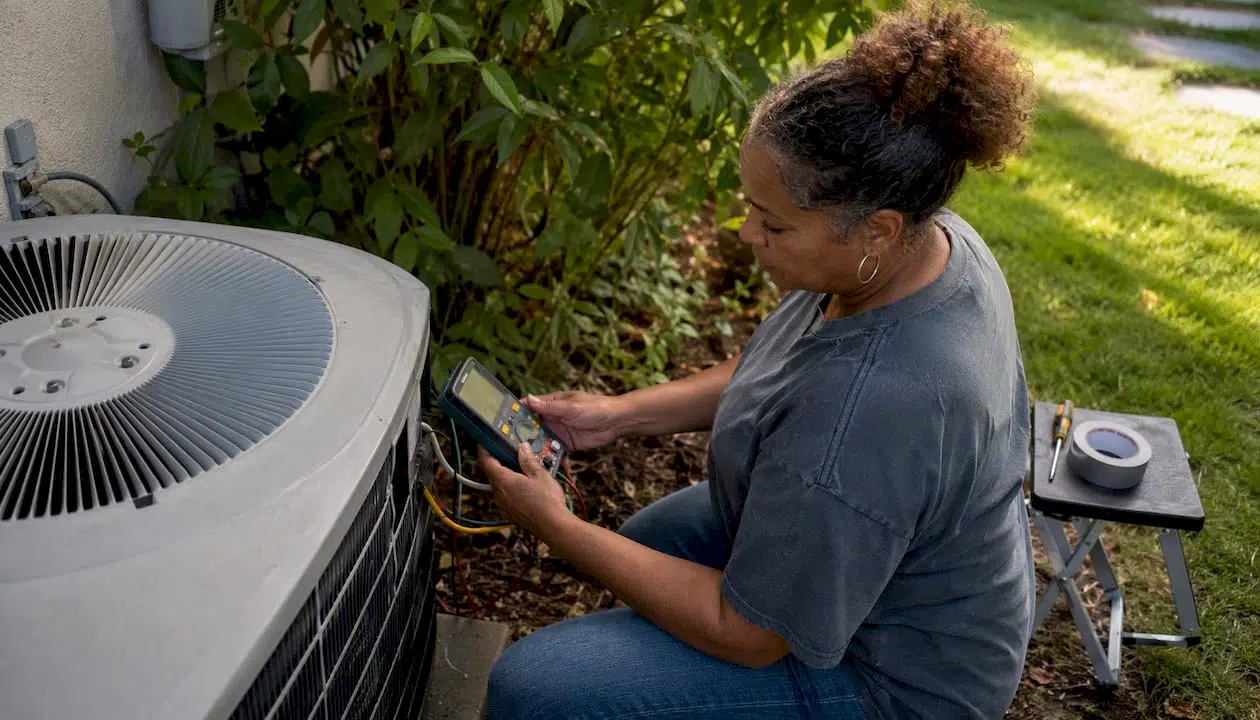
Your immediate next step: do a quick safety check (smell for gas, listen for grinding or hissing, check the circuit breaker), then call a licensed technician. Appliancesrepairmdtech serves Orange County and Los Angeles County homeowners who need that call answered fast.
Table of Contents
- What are the most common HVAC repairs?
- What do HVAC repairs typically cost and how long do they take?
- Should you repair or replace your HVAC system?
- How do you pick a trustworthy HVAC contractor?
- How can you pay for HVAC repairs without breaking the budget?
- What should you expect during a professional HVAC repair visit?
- Simple maintenance steps that prevent most emergency calls
- What warranties and guarantees cover HVAC repairs?
- What does emergency HVAC repair actually look like?
- Key Takeaways
- The case for honest diagnostics over fast replacements
- Appliancesrepairmdtech: book a repair or get a written estimate
- Authoritative sources for further reading
What are the most common HVAC repairs?
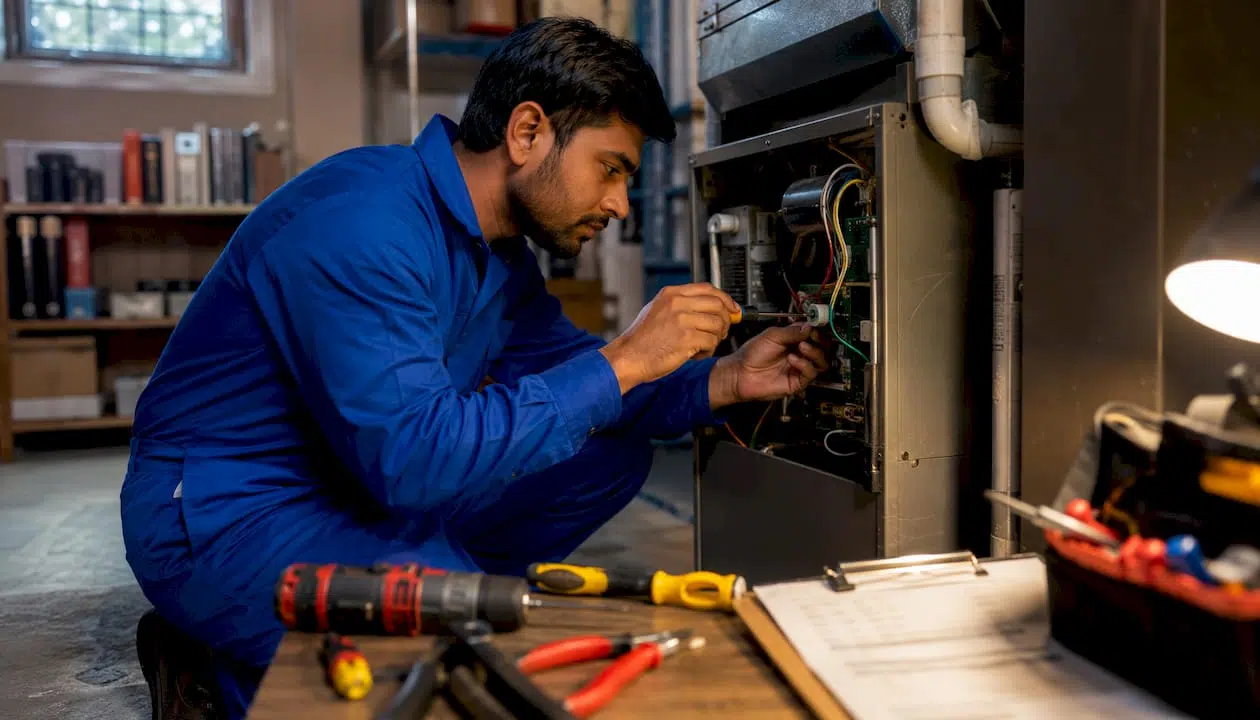
Most HVAC failures trace back to a short list of components. Here is what breaks, why it happens, and what you can safely check yourself before the tech arrives.
| Repair Type | Common Symptom | Safe Homeowner Check | Typical Cost Range |
|---|---|---|---|
| Clogged filter | Weak airflow, system overheating | Inspect and replace filter | $10–$30 DIY |
| Thermostat fault | Wrong temp reading, no response | Replace batteries, check settings | $150–$500 |
| Blown fuse / tripped breaker | System won’t start | Reset breaker once; don’t repeat | $75–$150 |
| Refrigerant leak / recharge | Warm air, ice on lines, hissing | Visual check only; call a pro | $200–$600 |
| Dirty coils | Reduced cooling, higher bills | Rinse condenser fins gently | $100–$400 cleaning |
| Blower motor failure | No airflow, humming noise | Check filter; leave motor to a pro | $400–$1,500 |
| Capacitor / contactor failure | Won’t start, clicking sounds | None; high-voltage component | $150–$450 |
| Ignition / flame sensor issue | Furnace won’t light, short cycles | Check filter; leave igniter to a pro | $150–$400 |
| Compressor failure | No cooling at all | None; call immediately | — |
| Control board replacement | Erratic behavior, error codes | Note error code for the tech | — |
Safety rule: Refrigerant handling requires EPA Section 608 certification; gas and high-voltage electrical repairs require a licensed professional. Attempting these yourself voids most manufacturer warranties and creates real safety risk.
Pro Tip: Before assuming a major failure, check the filter and the breaker. Technicians routinely find that inexpensive parts like capacitors and contactors are the actual culprit on “no-cool” or “no-heat” calls. A diagnostic visit often costs far less than the replacement you feared.
You can learn more about specific failure patterns in this guide to common HVAC problems every homeowner should recognize.
What do HVAC repairs typically cost and how long do they take?
Service call fees typically cover the visit and diagnostic; simple fixes cost less, while major component replacements can be significantly more expensive.
| Repair | Typical Cost | Typical Time |
|---|---|---|
| Capacitor or contactor | $150–$450 | ~1 hour |
| Thermostat replacement | $150–$500 | 1–2 hours |
| Refrigerant recharge | $200–$600 | 1–2 hours |
| Drain cleaning | $75–$150 | 30–90 minutes |
| Igniter / flame sensor | $150–$400 | 1–2 hours |
| Blower motor | $400–$1,500 | 2–4 hours |
| Evaporator / condenser coil | — | 3–5 hours |
| Compressor replacement | — | 4–6 hours |
| Control board | — | 1–3 hours |
A professional diagnostic takes 30–90 minutes for most common repairs. Simple parts swaps finish the same day. Major component work, especially compressors or coils, can run 3–6 hours and sometimes requires a second visit when parts are on backorder.
A few pricing realities to keep in mind:
- Emergency or after-hours service typically adds $50–$150 or more to standard rates.
- Refrigerant costs have risen in recent years due to supply and regulatory shifts, so leak-plus-recharge jobs run higher than they did a few years ago.
- Always ask whether the diagnostic fee is credited toward the repair. Most reputable contractors say yes.
- Get a written estimate before authorizing any work, and confirm the parts warranty in writing.
Should you repair or replace your HVAC system?
The $5,000 rule gives you a fast starting point: multiply your system’s age in years by the estimated repair cost. If the result exceeds $5,000, replacement often makes more financial sense. A 12-year-old system facing a $500 capacitor repair scores $6,000, which nudges toward replacement. That same repair on a 5-year-old system scores $2,500, which clearly favors repair. (The $5,000 rule: system age multiplied by repair cost; if over $5,000, replacement is often recommended.)
The 50% rule adds a second check: if the repair cost approaches 50% of what a new system would cost installed, replacement is usually the smarter financial move. A $1,500 repair on a system where a replacement runs $6,000 is right at that threshold.
The $5,000 rule is a practical starting point, not a verdict. Remaining warranty coverage, how often the system has needed repairs in the past two years, refrigerant type, and efficiency gains from a modern system all belong in the decision. A system still under manufacturer warranty changes the math entirely.
Run through these factors before you decide:
- System age: HVAC system lifespans vary by type, with furnaces typically lasting longer than central AC units or heat pumps; systems beyond their midpoint lifespan warrant closer evaluation.
- R-22 refrigerant: If your system uses R-22 (phased out of production), recharge costs are high and rising. That alone often tips the scale toward replacement.
- Repair frequency: More than one or two service calls per year signals a system in decline.
- Energy bills: Steadily rising bills despite normal usage often mean efficiency loss, not just a single failed part.
- Available incentives: Certain federal tax credits are available for qualifying high-efficiency HVAC upgrades, potentially reducing costs. Homeowners should check current credit eligibility.
For a deeper look at the financial tradeoffs, the repair vs. replacement guide at Appliancesrepairmdtech walks through the math with real examples.
Pro Tip: Ask your technician to provide a written quote for both the repair and an installed replacement cost. Then request an amortized energy-savings estimate for the new system. That three-number comparison, repair cost, replacement cost, and annual savings, gives you a real payback period rather than a gut feeling.
How do you pick a trustworthy HVAC contractor?
Licensing and insurance are the floor, not the ceiling. Here is a numbered checklist to work through before you book anyone:
- Verify the state contractor license. In California, check the Contractors State License Board (CSLB) database. A valid license number takes 30 seconds to confirm.
- Confirm insurance. Ask for a certificate showing general liability and workers’ compensation coverage. If a technician is injured on your property without workers’ comp, you can be liable.
- Check EPA Section 608 certification for any job involving refrigerant. This is a federal requirement, not optional.
- Look for NATE certification or manufacturer credentials. NATE-certified technicians have passed independent competency exams. Manufacturer certifications (Carrier, Trane, Lennox) indicate brand-specific training.
- Read verified reviews. Google, Yelp, and the Better Business Bureau all show patterns. One bad review is noise; a pattern of “bait-and-switch” or “no-show” complaints is a signal.
- Get at least three written estimates. Compare scope of work line by line, not just the bottom number. A lower quote that omits leak detection or refrigerant recovery is not actually cheaper.
Questions to ask on the phone before booking:
- Is your diagnostic fee credited toward the repair if I proceed?
- Do you use OEM or aftermarket parts, and what is the warranty on each?
- How long is your labor warranty?
- Can you provide a written scope of work before starting?
Red flags to walk away from:
- High-pressure sales during a diagnostic visit (“you need a new system right now or it’ll fail tonight”)
- Demand for full payment upfront before any work is done
- Vague verbal estimates with no written breakdown
- Inability or refusal to provide license number or insurance certificate
The HVAC system repair checklist at Appliancesrepairmdtech gives you a printable version of these questions to have ready when the technician arrives.
How can you pay for HVAC repairs without breaking the budget?
Most homeowners do not have $1,500 sitting in a dedicated HVAC fund. Here are the realistic options, with honest notes on each.
Before authorizing any repair, check your manufacturer warranty and home warranty terms. Approved-contractor rules and deductibles can materially change your out-of-pocket cost, and some plans require pre-authorization before work begins. Skipping this step can void coverage entirely.
- Contractor financing: Many HVAC contractors offer promotional 0% APR financing for 12–18 months on larger jobs. Apply before the technician leaves so you have approval in hand. These offers typically require decent credit and expire quickly.
- Credit cards: Fine for smaller repairs under $500. For larger amounts, a card with a 0% intro APR period is worth using if you can pay it off before interest kicks in.
- Personal loans: Fixed-rate personal loans from banks or credit unions work well for $1,000–$5,000 repairs when contractor financing is not available.
- HELOC or home equity loan: Best for full system replacements in the $7,000–$12,000 range. Rates are typically lower than personal loans, but the process takes longer to set up.
- Home warranty plans: These typically cost $400–$700 per year and require a service fee of $75–$125 per visit. Coverage details vary widely, so read the fine print on what components are included.
- Utility rebates and federal credits: Local utilities often offer rebates for high-efficiency equipment. The federal tax credit for qualifying upgrades can reach $3,200 annually. Check eligibility before you replace, not after.
Pro Tip: If your system is more than 12 years old and you are financing a major repair, ask the contractor to quote a full replacement at the same time. The monthly payment difference between a $1,500 repair loan and a $10,000 replacement loan is often smaller than homeowners expect, and the replacement comes with a new warranty.
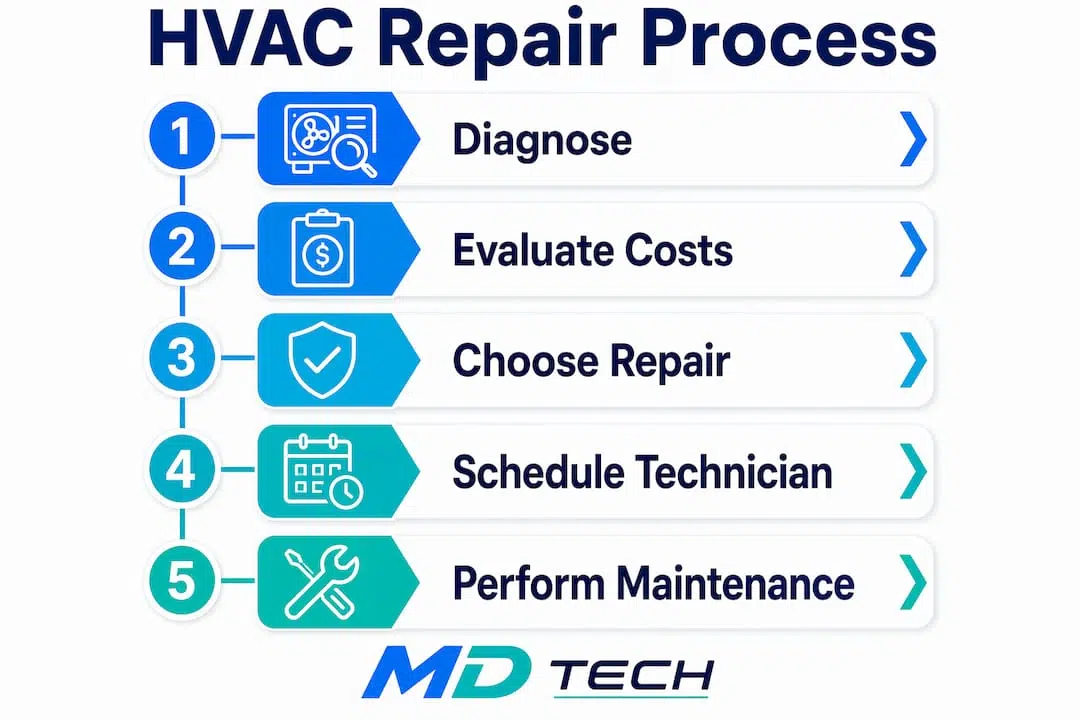
What should you expect during a professional HVAC repair visit?
A well-run service visit follows a predictable sequence. Knowing it helps you spot when something is being skipped.
Have these ready before the tech arrives:
- System make, model number, and approximate installation year
- Any recent error codes displayed on the thermostat or air handler
- A brief history of recent repairs or recurring issues
- Access to the indoor air handler, outdoor unit, and electrical panel
- Your warranty documentation if the system is still covered
The visit flow:
- Arrival and safety assessment: the tech checks for gas smells, visible damage, and electrical hazards before touching anything.
- System power-off and visual inspection of all accessible components.
- Diagnostic testing with gauges, multimeters, and airflow tools to isolate the failure.
- Written estimate presented to you before any repair begins.
- Repair execution after your authorization.
- Post-repair testing: the tech should run the system through a full cycle and verify temperatures, pressures, and airflow before leaving.
- Documentation: you receive an itemized invoice showing parts used (OEM vs. aftermarket), labor, and the warranty terms on both.
After the tech leaves, verify the job yourself:
- Cycle the system off and back on at the thermostat and confirm it responds normally.
- Check airflow at several vents throughout the home.
- Monitor the first full runtime for unusual noises or smells.
- Note the warranty start date and keep the invoice somewhere accessible.
For a detailed walkthrough of what a reputable service visit looks like, the HVAC repair process guide at Appliancesrepairmdtech covers each step.
Simple maintenance steps that prevent most emergency calls
The majority of peak-season emergency calls trace back to deferred maintenance. A few hours of attention per year cuts that risk significantly.
Filter replacement is the single highest-impact action. A MERV 8–11 filter catches most household particulates without starving airflow. Replace every 1–3 months depending on pets, dust, and occupancy. A clogged filter is the leading cause of frozen coils, overheated motors, and nuisance shutdowns.
Condenser unit clearance: Keep at least 2 feet of clearance around the outdoor unit. Trim shrubs, clear debris after storms, and gently rinse the fins each spring before cooling season starts.
Thermostat battery check: Replace batteries every fall when you change your smoke detector batteries. A dead thermostat battery is a surprisingly common cause of “no-heat” calls in November.
Seasonal professional tune-ups: Schedule an AC tune-up in March or April, before cooling season, and a furnace check in September or October, before heating season. July capacitor orders spike dramatically compared to January, and emergency rates follow the same curve. Booking before that peak avoids both the wait and the premium pricing.
Pro Tip: A spring tune-up gives a technician the chance to catch a weakening capacitor or a dirty flame sensor before it fails on the hottest day of the year. That proactive $100–$200 visit routinely prevents a $400–$600 emergency call in July.
The HVAC maintenance checklist at Appliancesrepairmdtech gives you a seasonal schedule you can follow without any technical background.
What warranties and guarantees cover HVAC repairs?
HVAC repairs typically come with two distinct layers of warranty protection, and understanding both changes how you negotiate with a contractor.
Manufacturer parts warranties cover the component itself, usually 1–10 years depending on the part and brand. Compressors often carry 5–10 year warranties; smaller electrical parts like capacitors typically carry 1 year. These warranties are usually voided if the part is installed by an unlicensed technician or if the system has been modified without authorization.
Labor warranties are set by the contractor, not the manufacturer. A reputable contractor offers 30 days to 1 year on labor. Get this in writing on the invoice. A contractor who balks at putting a labor warranty in writing is telling you something.
Home warranty plans add a third layer, but with conditions. Coverage typically applies only to components that fail due to normal wear, not pre-existing conditions or improper installation. The service fee ($75–$125 per visit) applies regardless of whether the repair is covered. Read the exclusions before you assume a repair is covered. The warranty role in appliance repairs page at Appliancesrepairmdtech explains how these layers interact and what to check before authorizing work.
Always ask the technician to note on the invoice whether parts are OEM or aftermarket. Aftermarket parts may not qualify for manufacturer warranty coverage, which matters if the same component fails again within the warranty period.
What does emergency HVAC repair actually look like?
Emergency HVAC service means a technician responds outside normal business hours, typically evenings, weekends, and holidays. Most established HVAC companies in metro areas offer 24/7 emergency availability, though response times and pricing vary.
Typical response windows:
- Same-day emergency (called before noon): 2–6 hours in most metro areas
- After-hours emergency: 1–4 hours for companies with on-call technicians
- Weekend or holiday: 2–8 hours depending on demand and staffing
The after-hours premium is real. Expect to pay $50–$150 above standard rates, sometimes more during peak summer demand. That cost is often worth it when temperatures are dangerous, when there are medical needs in the household, or when a water leak is actively damaging the home.
What qualifies as a genuine emergency:
- No heat when outdoor temperatures are below 40°F and vulnerable occupants are present
- No cooling when indoor temperatures exceed 90°F with elderly, infant, or medically vulnerable occupants
- Gas smell near the furnace (leave the house and call the gas company first, then an HVAC tech)
- Burning smell or visible smoke from any HVAC component
- Active water leak near electrical components
For anything else, a next-business-day appointment at standard rates is the smarter financial call. Appliancesrepairmdtech offers HVAC repair services in Orange County and Los Angeles County, including urgent scheduling for situations that cannot wait.
Key Takeaways
Choosing the right HVAC repair path comes down to three things: accurate diagnosis, a trustworthy contractor, and a clear-eyed cost comparison using the $5,000 rule before you commit to either repair or replacement.
| Point | Details |
|---|---|
| Capacitors fail most often | Run capacitors account for about 31% of AC repair part orders — the single largest failure category. |
| Use the $5,000 rule | Multiply system age by repair cost; results above $5,000 typically favor replacement over repair. |
| Get three written estimates | Compare scope-of-work line items, not just totals, and confirm parts and labor warranties in writing. |
| Verify licensing and insurance | Check the state contractor license, workers’ comp, and EPA Section 608 certification before booking. |
| Appliancesrepairmdtech | Serves Orange County and Los Angeles County homeowners with licensed technicians, on-site diagnostics, and online booking. |
The case for honest diagnostics over fast replacements
The HVAC industry has a replacement-bias problem. When a system stops working, the path of least resistance for some contractors is to recommend a new system, collect a larger ticket, and move on. The data tells a different story: technicians routinely find that a capacitor, a contactor, or a flame sensor is the actual failure, not the compressor or the heat exchanger the homeowner feared.
At Appliancesrepairmdtech, the approach starts with a thorough diagnostic before any recommendation is made. A written estimate, a clear scope of work, and an honest conversation about whether repair or replacement makes sense for your specific system and budget are what a homeowner deserves. That is not a sales pitch; it is what separates a technician from a salesperson. The $5,000 rule is a useful tool, but it works only when the repair cost estimate is accurate and the technician has actually diagnosed the system rather than guessed.
Homeowners in Orange and Los Angeles Counties who want that kind of straight answer can book an inspection online or review the repair process resources at Appliancesrepairmdtech before the tech even arrives.
Appliancesrepairmdtech: book a repair or get a written estimate
Appliancesrepairmdtech provides on-site HVAC diagnostics, repair, and installation for homeowners across Orange County and Los Angeles County. Licensed technicians handle everything from capacitor swaps and refrigerant recharges to blower motor replacements and full system evaluations, with parts and labor warranties provided in writing on every job.
If you are weighing repair against replacement, the repair vs. replacement resource on the site walks through the $5,000 rule with real cost examples. Ready to book? Schedule online at the HVAC repair page and get a written estimate from a licensed, insured technician who will tell you exactly what the system needs before any work begins.
Authoritative sources for further reading
- What Is the $5,000 Rule for HVAC? (CBS News) — The clearest explanation of the repair-vs-replace formula, including when the rule breaks down.
- HVAC Replacement vs. Repair: How to Decide (Money.com) — Covers the 50% rule, home warranty interactions, and financing considerations.
- 2026 HVAC Parts Failure Index (National HVAC Parts) — Parts-failure data by component and season, useful for understanding why capacitors dominate repair calls.
- HVAC Repair Service (Carrier) — Manufacturer-level guidance on repair types, diagnostic timelines, and EPA certification requirements.
- HVAC Repair Cost Guide (Technology.org) — Component-by-component cost ranges and system replacement cost benchmarks.
- HVAC Repair Process for Homeowners (Appliancesrepairmdtech) — Step-by-step walkthrough of what a professional service visit looks like from arrival to invoice.