
Yes, a mechanical permit is required for most AC replacements in the City of Los Angeles. A like-for-like swap of your condenser and air handler usually qualifies for an LADBS Express Permit issued through PermitLA, often the same day. Anything that changes capacity, equipment type, or adds ductwork, mini-splits, or new electrical circuits needs a full mechanical permit and plan review through ePlanLA instead.
TL;DR:
- Like-for-like AC replacements within the same location typically qualify for an LADBS Express Permit, often issued the same day through PermitLA.
- Upgrading equipment type, increasing capacity, adding ductwork, or installing mini-splits require a full mechanical permit and plan review via ePlanLA.
- Electrical or gas line modifications, especially for larger or non-similar systems, trigger separate permits and compliance with Title 24 and HERS testing for rebates.
- Permit costs generally range from a few hundred dollars for simple replacements to higher fees for plans involving capacity, electrical, or structural changes, with quick issuance for Express Permits.
- Licensed contractors handle most permit submissions in Los Angeles, reducing rejection risk and ensuring proper documentation for inspections, rebates, and code compliance.
Table of Contents
- What LADBS Mechanical Permits Actually Cover
- Express Permit or Full Plan Check: How to Tell Which One You Need
- Quick Checklist: Do You Need a Permit for Your AC Job?
- How to Apply: PermitLA for Express, ePlanLA for Plan Check
- Inspections: What Trips Up Most AC Permits
- What Residential AC Permits Cost and How Long They Take
- Title 24, HERS Testing, and Why Rebates Depend on Your Permit
- Who Should Pull the Permit: Vetting a Contractor the Right Way
- Local Experience With Los Angeles Permitting
- The Honest Take: DIY Permits vs. Hiring a Pro
- Let MDTECH Handle the Permit While You Get Cool Air Faster
- Where to Verify These Rules Yourself
- Sources
- FAQ
What LADBS Mechanical Permits Actually Cover
A mechanical permit is the Los Angeles Department of Building and Safety’s paperwork trail for anything that heats, cools, moves air, or handles refrigerant in your home. It’s separate from electrical and plumbing permits, though a single AC job can trigger all three if it touches wiring or gas lines.
Work that typically falls under a mechanical permit includes:
- Replacing an outdoor condenser or indoor air handler/furnace
- Installing or modifying ductwork and ventilation runs
- Adding mini-split systems or ductless heat pumps
- Basic refrigeration equipment tied to comfort cooling
The dividing line that matters most is whether your project is a like-for-like replacement (same capacity, same type, same location) or something that changes the system’s footprint. A straight swap of one 3-ton condenser for another 3-ton unit in the same spot is a different animal, permit-wise, than converting your gas furnace to a heat pump or running new supply lines into a converted garage. If the job also requires a new dedicated electrical circuit or a gas line modification, expect LADBS to require separate electrical or plumbing permits alongside the mechanical one, not as a substitute for it.
Express Permit or Full Plan Check: How to Tell Which One You Need
The LADBS Express Permit document spells out exactly what qualifies, and the thresholds are more specific than most homeowners expect. Here’s how to sort your project:
- Express Permit territory. Like-for-like replacements of comfort heating and cooling equipment under 500,000 BTU/h (roughly 41 tons, far beyond what any house needs) qualify. So do small duct alterations, minor duct additions, and equipment relocations within the same building, as long as the building doesn’t require smoke control systems.
- Full mechanical permit territory. Capacity increases, a change in equipment type (a straight AC swapped for a heat pump, for instance), new ductwork runs, mini-split installations, and any project that adds new electrical circuits all require a full plan check.
- Processing speed differs sharply. Express Permits skip formal plan review entirely and are commonly issued the same day through PermitLA. Full mechanical permits route through ePlanLA, where turnaround times vary.
The practical takeaway: don’t assume your project is “simple” just because it feels routine. Mini-splits are a common trap. Homeowners treat them like a plug-and-play upgrade, but because they involve wall penetrations and new refrigerant lines, LADBS generally routes them into plan check rather than Express eligibility.
Quick Checklist: Do You Need a Permit for Your AC Job?
Run your project against these scenarios before you call a contractor or start pulling parts:
- Same unit, same spot, same capacity (condenser or air handler swap): Express Permit is likely your path.
- Switching equipment type (central AC to heat pump), adding or extending ductwork, installing mini-splits, or upgrading your electrical panel to support the new unit: full mechanical permit required.
- New gas lines, combustion appliance changes, or anything commercial-scale: always routes to full review. Mini-splits typically land here too, thanks to the wall penetration issue.
- Not sure which bucket you’re in? Contact LADBS directly or run your scope through the PermitLA/ePlanLA lookup tools. Never assume your project is exempt just because a past AC swap wasn’t inspected. LADBS enforcement has tightened, and an unpermitted install can surface during a home sale or insurance claim years later.
How to Apply: PermitLA for Express, ePlanLA for Plan Check
Getting the permit itself is a fairly mechanical process (no pun intended) once you know the sequence.
- Set up an Angeleno account. This is the LADBS login gateway for all digital permitting. Choose PermitLA if your project meets Express eligibility, or ePlanLA if you’re headed for a full plan-check submittal.
- Gather your documents before you start the application. You’ll want equipment spec sheets for the new unit, site photos or a basic site plan, a written scope of work, Manual J or Manual S load calculations when the reviewer requires them, Title 24 energy compliance forms if applicable, and your contractor’s license and bond information.
- Confirm who’s pulling the permit. LADBS allows the property owner, an authorized agent, or the contractor to submit, but the system automatically cross-checks license and bond data. A mismatched or lapsed contractor license number is one of the most common reasons digital applications stall before they even reach a reviewer.
- Submit, pay the fee, and track status. Once submitted, you can monitor the application inside your Angeleno account and request inspections once the equipment is physically installed and ready to be seen, not before.
Pro Tip: Upload clear, well-lit photos of the installation site and legible equipment spec sheets, and double-check your contractor’s license number against the CSLB lookup tool before you hit submit. A single typo in a license number is enough to trigger an automatic rejection.
Inspections: What Trips Up Most AC Permits
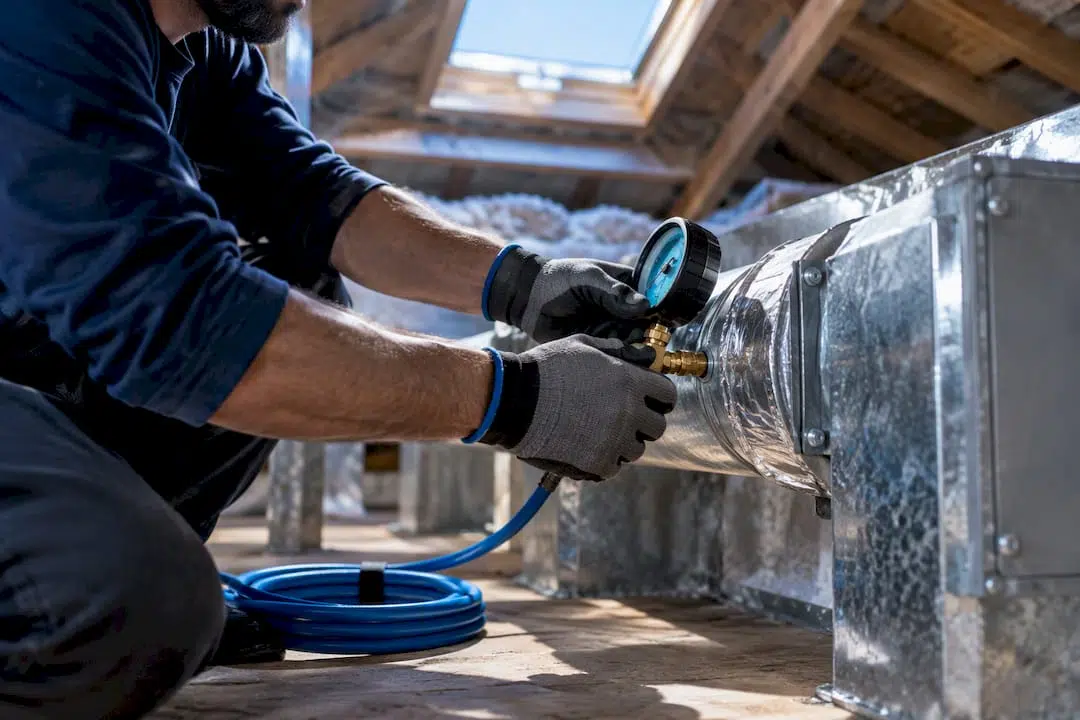
Timing matters here. Schedule your inspection request before any ductwork or wiring gets buried behind drywall or insulation. Express Permits generally require just one post-installation inspection, but that single visit catches a surprising number of installs off guard.
The most common reasons inspections fail include:
- Missing or improperly located electrical disconnect near the outdoor unit
- Incorrect refrigerant charge or sloppy line set installation
- Missing combustion air supply or venting on gas-fired equipment
- No seismic strapping or anchoring on the outdoor condenser
- Poorly sealed ductwork joints (a big one on efficiency-focused inspections)
- Missing HERS verification paperwork when the project requires it
Before the inspector arrives, walk the install yourself: confirm the disconnect is accessible, check that strapping is secured, and photograph anything you might need to reference if a re-inspection gets scheduled. Documentation saves you a second trip in most cases.
Pro Tip: If your project requires HERS verification, confirm with your HERS rater ahead of time that CF3R forms are ready to submit. Permits with an outstanding HERS requirement sit in limbo until that paperwork clears, even if the physical install passed inspection.
What Residential AC Permits Cost and How Long They Take
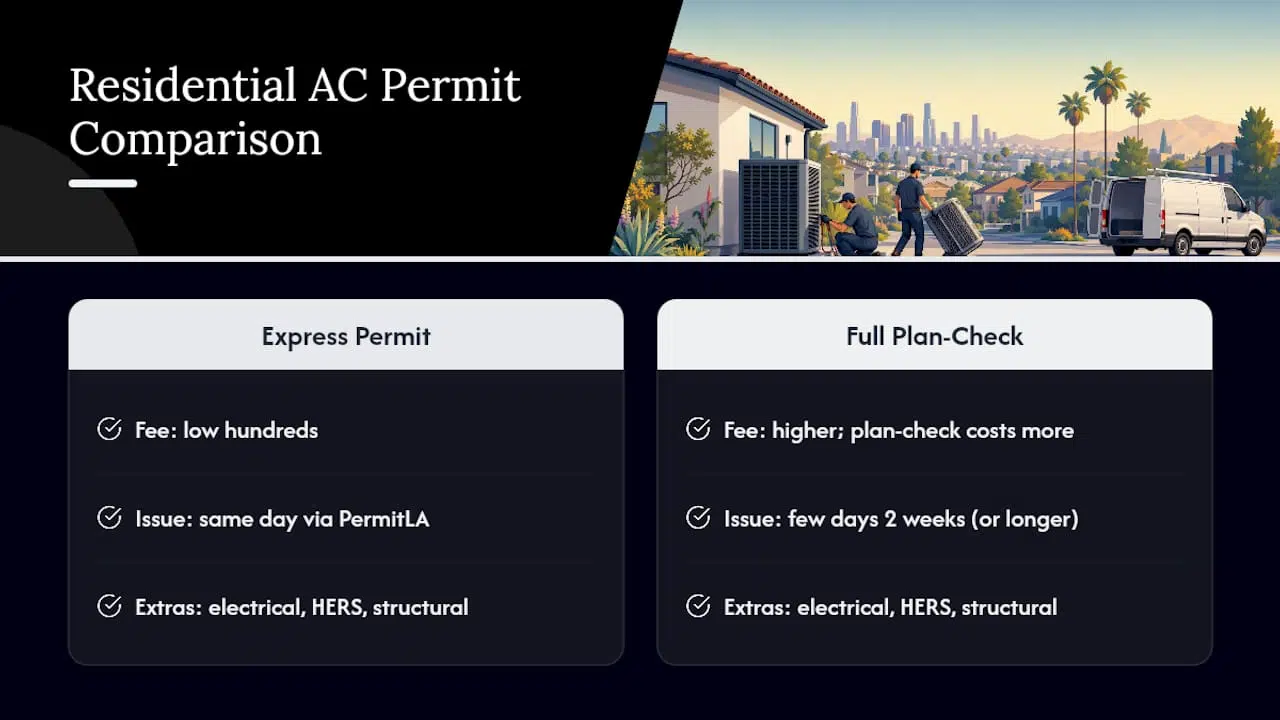
Fees scale with project complexity, not just square footage. According to local permit guides covering Los Angeles, Express Permit fees for a like-for-like residential replacement generally run in the low hundreds of dollars, with full mechanical plan checks costing more depending on project complexity. Additional costs for electrical permits, HERS testing, load calculations, or structural work may apply. Total permitting and verification costs vary based on the project scope.
Timeline-wise, Express Permits can be issued the same day you submit through PermitLA. Full plan-check submissions through ePlanLA typically take a few days to two weeks, and that window stretches if the reviewer sends back corrections.
Title 24, HERS Testing, and Why Rebates Depend on Your Permit
California’s Title 24 energy code sets efficiency standards for HVAC installations, and certain upgrades require formal documentation or HERS (Home Energy Rating System) testing to demonstrate compliance.
Here’s where permits and rebates intersect directly:
- HERS testing verifies duct leakage rates and refrigerant charge accuracy on qualifying installations, and the results get submitted as CF3R forms to the state registry.
- Many mechanical permits for equipment-type changes or capacity upgrades won’t close out until that HERS documentation is filed.
- State programs like the California Advanced Homes Program generally require permitted work with proper HERS documentation as a condition of rebate eligibility.
Skip the permit, and you’re not just risking a fine if the work gets flagged later. You’re likely cutting yourself out of rebate money outright, since most programs won’t reimburse unpermitted installs regardless of how well the equipment performs. If you’re weighing a heat pump upgrade specifically, it’s worth reading up on energy-efficient HVAC standards before you commit to equipment, since some models qualify for larger incentives than others.
Who Should Pull the Permit: Vetting a Contractor the Right Way
Licensed C-20 HVAC contractors handle the vast majority of mechanical permits in Los Angeles, and there’s a good reason for that beyond convenience. Homeowners can legally pull their own permits as an owner-builder, but doing so puts the burden of Manual J calculations, Title 24 forms, and HERS coordination squarely on you, with no professional buffer if something gets rejected.
Before hiring anyone, run through this:
- Verify their license directly through the CSLB license lookup, and confirm it’s active, not expired or suspended.
- Confirm insurance and bonding are current, and ask whether they’re registered to submit through Angeleno if the job requires digital plan-check submission.
- Ask directly how they handle Title 24 documentation, Manual J load calculations, HERS rater coordination, and inspection scheduling. A contractor who can’t answer this cleanly hasn’t done many of these recently.
Local Experience With Los Angeles Permitting
AC installations and HVAC repairs across Los Angeles and Orange counties often include permit coordination as part of the work. Handling PermitLA submissions and ePlanLA plan-check documentation for equipment upgrades is part of the process for licensed HVAC crews operating in this market.
That local footprint matters because LADBS review standards and inspection habits vary by field office, and knowing what a given inspector tends to flag saves a homeowner a second trip. Coordinating with HERS raters on duct testing and refrigerant verification, scheduling inspections at the right point in the install, and preparing the final documentation homeowners need to close out a permit (and qualify for rebates) is standard practice for a contractor who does this work regularly in the LA market.
The Honest Take: DIY Permits vs. Hiring a Pro
Owner-pulled permits work fine for a genuinely simple like-for-like swap where you’re comfortable navigating PermitLA yourself. Where DIY gets risky is anything touching Title 24 compliance, HERS coordination, or digital license verification, since a single paperwork gap can stall the whole submission.
Hiring a licensed contractor generally cuts rejection rates and speeds up rebate processing, because they’ve submitted the same forms dozens of times before. If your project touches electrical work, gas lines, or new ductwork, lean toward a licensed pro. The complexity isn’t worth the learning curve on your first attempt.
**
Let MDTECH Handle the Permit While You Get Cool Air Faster
Licensed HVAC technicians can manage mechanical permit submission, coordinate HERS testing, and prepare installations to pass inspections on the first visit, helping avoid complex Title 24 paperwork.
We serve homeowners and property managers across Los Angeles and Orange counties, and permit coordination is built into every AC installation we handle, not sold as an add-on. If your current system is on its way out, get a quote through our appliance and HVAC repair services page and we’ll walk you through what your specific replacement needs before a single wall gets touched.
Where to Verify These Rules Yourself
Rules and thresholds shift, so confirm specifics before you submit anything:
- LADBS Mechanical HVAC Permits page for current permit requirements
- LADBS Express Permit eligibility PDF for the exact qualifying scope
When in doubt on a project-specific detail, LADBS is the final word, not a contractor’s guess or a guide like this one.
Sources
- Mechanical HVAC Permits | LADBS
- Express Permits (LADBS) — eligibility and examples (PDF)
- Complete Guide to HVAC Permits in Los Angeles, CA (DoINeedAPermit)
FAQ
Do You Need a Permit to Replace an AC Unit in California?
Yes, in Los Angeles a mechanical permit is required for most AC replacements. Like-for-like swaps usually qualify for the faster LADBS Express Permit process, while upgrades or capacity changes need a full plan-check permit.
What Is the $5,000 Rule for Air Conditioners?
There is no specific statewide dollar-amount rule for air conditioners under LADBS or Title 24 that applies to standard residential permit requirements. If you’ve seen this figure referenced elsewhere, it likely relates to a different program’s rebate threshold rather than a permitting rule, so verify any dollar-based rule directly with LADBS or the specific program citing it.
Can I Legally Install My Own HVAC?
Homeowners can pull an owner-builder permit and self-install HVAC equipment in many cases, but Title 24 compliance, Manual J calculations, and HERS coordination fall entirely on you. Most homeowners find it faster and less risky to hire a licensed C-20 contractor who handles these submittals regularly.
What Are the New AC Laws in California?
California’s Title 24 energy code continues to tighten efficiency requirements for HVAC installations, and permitted work with proper HERS documentation is increasingly tied to rebate eligibility through programs like the California Advanced Homes Program. There’s no blanket ban on standard AC systems, but equipment-type changes and capacity upgrades face more documentation requirements than a simple like-for-like swap.
How Much Does an AC Replacement Permit Cost in Los Angeles?
Express Permit fees for a like-for-like residential replacement generally run in the low hundreds of dollars, according to local permit cost guides. Full mechanical plan-check permits cost more, and total permitting and verification costs vary based on project scope.