
Most washers that won’t spin are stopping because of an unbalanced load or a drainage problem. Before you call anyone, try these three things right now:
- Redistribute the load. Open the lid or door, pull items apart, and spread them evenly around the drum. A single heavy towel or comforter bunched to one side is enough to trigger a mid-spin stop.
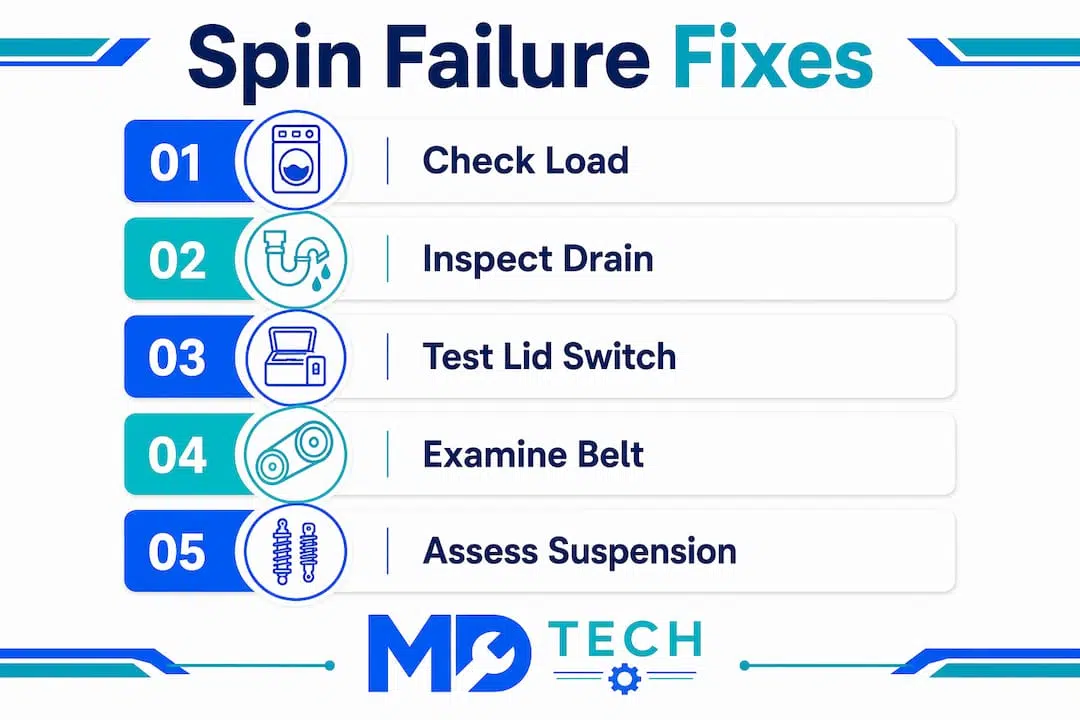
- Run a drain-and-spin cycle. Most machines have a dedicated “Spin Only” or “Drain & Spin” setting. Select it and watch what happens. If the drum spins cleanly, the problem was load balance.
- Check for standing water. Peer into the tub. If water is still sitting there, you have a drain issue, not a spin issue. The washer is protecting itself by refusing to ramp up to high speed with a full tub.
According to Whirlpool, an unbalanced load is the single most common cause of a washer failing to spin, and redistributing the load resolves the majority of these cases without any tools.
Pro Tip: Always unplug the machine before opening any access panels, reaching into the pump filter area, or inspecting the drain hose connections. Water and live electricity are a dangerous combination.
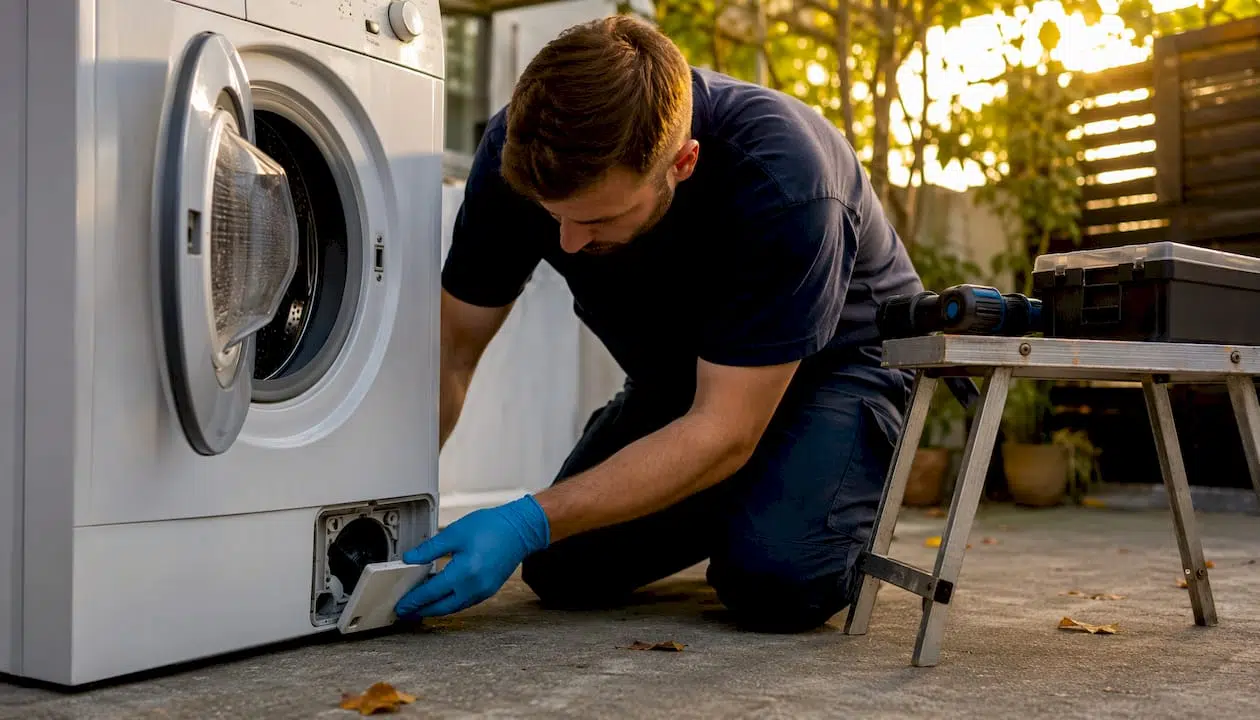
Table of Contents
- How do you know if your washer truly isn’t spinning?
- What’s causing the spin failure? A cause-by-cause checklist
- A safe, step-by-step checklist you can run right now
- When should you call a professional technician?
- How to prevent spin problems from coming back
- Key Takeaways
- A note from MDTECH on what we actually see
- Appliancesrepairmdtech: book a washer repair this week
- Sources and further reading
How do you know if your washer truly isn’t spinning?
Not every wet load means the spin cycle failed completely. Sometimes the machine spun slowly, or reduced speed because of a load imbalance. Knowing exactly what you’re seeing helps you run the right check next.
Water still in the tub after the cycle ends. This is a drain failure first. The washer likely never attempted high-speed spin because the control detected water still present. Look for a drain-related error code on the display (Whirlpool uses F9 E1; Samsung shows 5C).
Drum not turning at all, but the motor hums. That hum with no drum movement points toward a broken drive belt or failed motor coupling. The motor is running but can’t transfer power to the drum.
Drum turns slowly or stops mid-spin. The machine may be detecting an unbalanced load and intentionally reducing speed. Watch the first few minutes: does the drum rock back and forth trying to redistribute, then give up? That’s a balance issue, not a broken part.
Loud vibration, rocking, or “walking.” An unlevel machine or worn suspension components cause this. The washer’s safety logic cuts spin speed to protect the drum and bearings.
Error codes or flashing lights. Write down the code before you reset anything. It tells a technician exactly which branch to diagnose.
Pro Tip: Run an empty drain-and-spin with nothing in the drum. If the machine spins fine when empty but fails with a load, the issue is almost certainly balance, leveling, or suspension rather than a broken internal component. That one test rules out most hardware failures.
What’s causing the spin failure? A cause-by-cause checklist
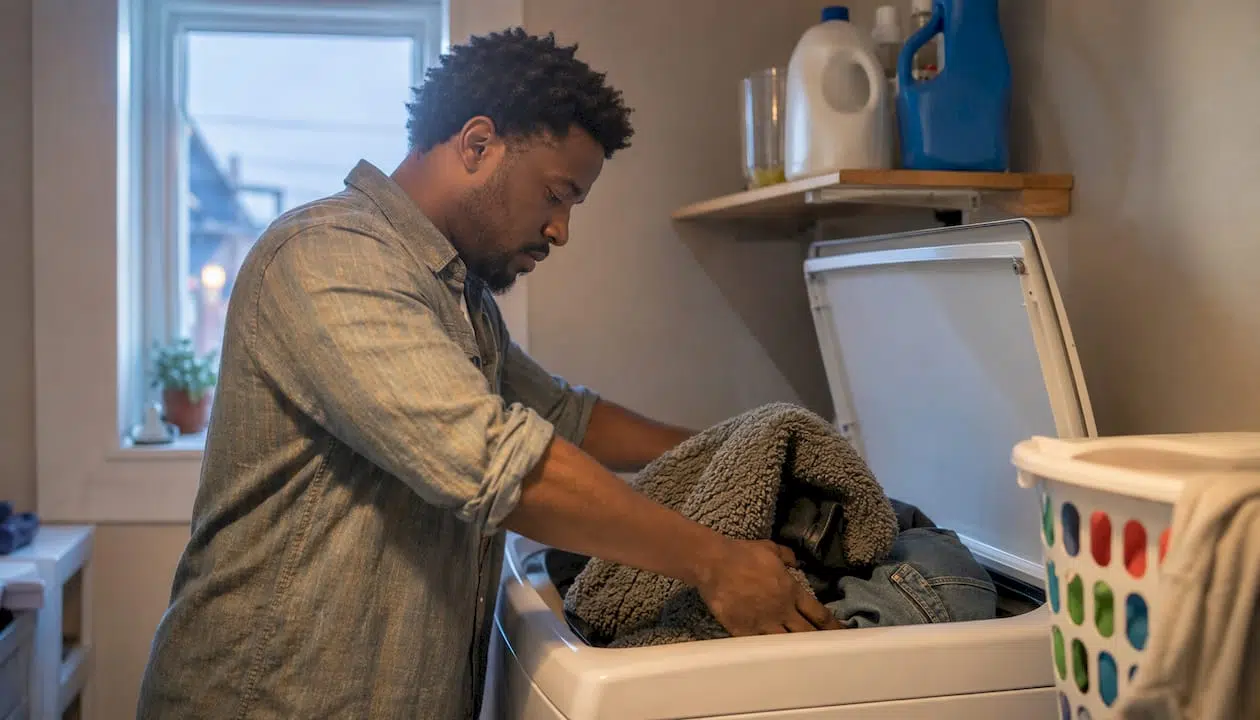
1. Unbalanced load or single bulky item
Unbalanced loads are the most common trigger. A single bath mat, comforter, or pair of jeans can clump to one side and send the machine into a protective stop. Fix: open the lid, separate the items by hand, add a couple of similar-weight pieces if the load is very small, and run a spin-only cycle. Most modern washers will retry automatically once they sense a stable load.
2. Drain-related problems: clogged filter or kinked hose
A washer that can’t drain won’t spin. Front-load models have an accessible pump filter behind a small lower-front panel. Coins, hairpins, and lint collect there and slow drainage enough that spin never completes. Unplug the machine, place towels and a shallow pan under the panel, and twist the filter cap slowly. Expect water. On any model, check the drain hose at the back: a sharp kink or a hose pushed too far into the standpipe causes siphoning. Maytag’s installation guidance specifies a standpipe height of 30 inches minimum and 96 inches maximum for correct pump operation.
3. Lid switch (top-load) or door latch/lock (front-load) failure
The washer will not enter or complete the spin cycle if the control doesn’t receive a confirmed “lid/door closed” signal. On a top-loader, manually depress the lid switch plunger with a pen while the machine is running a spin cycle. If the drum engages, the switch is the culprit. On a front-loader, listen for the door lock clicking into place at the start of a cycle. A lock that clicks repeatedly, never locks, or stays locked after the tub empties needs replacement. Don’t bypass either safety device.
4. Wrong cycle selection or excessive suds
Selecting a delicate or hand-wash cycle caps the spin speed intentionally. Check your cycle setting before assuming something is broken. Equally sneaky: too much detergent. Excess suds can trick the machine’s sensors into reading the tub as still full of water, preventing spin entirely. HE machines require HE-labeled detergent. If you’ve been using regular detergent in a high-efficiency washer, run two rinse-only cycles to clear the suds, then switch products.
Technician insight: Excessive suds are a hidden spin barrier that homeowners rarely suspect. Soft-water areas need even less detergent than the label recommends, because soft water activates surfactants more aggressively. If your clothes smell clean but the machine keeps stopping mid-spin, cut your detergent dose in half and see what happens.
5. Worn drive belt, motor coupling, or failed motor
When the motor hums but the drum stays still, the drive system has likely failed. On belt-drive machines, the rubber belt wears, cracks, or snaps over time. On direct-drive Whirlpool-platform top-loaders, a plastic motor coupling is designed to break under overload as a sacrificial part. Technicians often spot this immediately: black plastic debris inside the cabinet is a telltale sign of a failed coupling. A burning rubber smell during spin means the belt is slipping against the drum or has already broken. Stop the machine immediately. These are not homeowner repairs.
Pro Tip: If you smell burning rubber or plastic while the machine is running, cut power at the outlet right away. Running the motor against a broken belt or seized drum can burn out the motor entirely, turning a $50 coupling repair into a $300+ motor replacement.
6. Suspension or shock absorber wear
Front-loaders use shock absorbers; top-loaders use suspension rods or springs. When these wear out, the drum moves excessively during spin, triggering the machine’s vibration sensors to cut speed or stop the cycle entirely. You’ll notice the machine rocking violently or “walking” across the floor even with a balanced load. Frequent balance errors with normal loads on an otherwise well-leveled machine point here. Suspension replacement is a technician job.
7. Overloaded or unlevel washer
Overfilling stresses every component and often prevents the drum from reaching spin speed. A good rule: the drum should be about three-quarters full, with room to push your hand flat across the top of the load. Separately, an unlevel machine triggers balance errors even with a perfectly distributed load. Check all four feet: each should contact the floor firmly. Adjust the threaded leveling feet until a bubble level placed on top of the machine reads center, then lock the feet in place with the jam nuts.
A safe, step-by-step checklist you can run right now
This sequence takes 15–25 minutes total and covers the fixes that solve most spin failures.
-
Safety first (2 minutes). Unplug the machine from the wall outlet. Clear the floor around the machine and lay down towels in front of it. If the drum is locked with water inside, do not force the door or lid.
-
Run an empty drain-and-spin (5–10 minutes). Plug back in, select “Drain & Spin” or “Spin Only” with nothing in the drum. Watch and listen: does the pump run first? Does the drum accelerate smoothly? If it spins fine empty, the problem is load-related. If it still won’t spin empty, you have a hardware issue.
-
Redistribute the load and run spin-only (3–8 minutes). If the machine failed with laundry inside, open the lid or door, separate the items evenly, and run spin-only again. Feel for smooth acceleration. Listen for grinding or a hum with no drum movement.
-
Check for standing water and inspect the drain path (5 minutes). If water remains in the tub, unplug again. On a front-loader, open the lower access panel and clean the pump filter. On any model, pull the machine slightly away from the wall and check the drain hose: no sharp kinks, not inserted more than a few inches into the standpipe, not taped airtight. Reposition if needed. For a full step-by-step walkthrough, the washer repair guide covers each check in detail.
Stop and call a professional if you detect any of these:
- Motor hums with a burning rubber or electrical smell
- The machine trips the circuit breaker when you start a cycle
- Visible water near the electrical outlet or control panel
- The drum scrapes or grinds during any movement
- The door or lid won’t unlock after the machine’s normal reset routine
When should you call a professional technician?
Some spin problems are genuinely beyond safe homeowner repair. Knowing when to stop saves time and prevents a small fix from becoming an expensive one.
Call a technician when you see:
- A burning smell during operation (belt, coupling, or motor)
- The machine trips a breaker
- The drum doesn’t move at all, even on an empty spin
- The door lock won’t release or won’t engage
- Persistent standing water after you’ve cleared the filter and hose
- Loud grinding, scraping, or metal-on-metal sounds
A licensed technician will check electrical continuity on the lid or door switch, inspect the belt and coupling condition visually, test motor and control board behavior with a multimeter, run the drain pump through a diagnostic cycle, and pull any stored error codes. Most service visits take 45–90 minutes for diagnosis and a straightforward repair.
On repair costs: Prices vary by brand, model, and region. Repair costs depend on your specific situation and may differ widely. Always get a written quote before authorizing work.
| Repair Type | Typical U.S. Cost Range | Estimated Time on Site |
|---|---|---|
| Pump filter cleaning / drain hose reposition | Typical service call charge | Moderate time required |
| Drain pump replacement | Repair charges can vary | Repair duration depends on technician |
| Drive belt replacement | Costs vary by model and service provider | Estimated time varies |
| Motor coupling replacement | Price depends on parts and labor | Time required varies |
| Door latch / lid switch replacement | Costs differ by brand and technician | Duration varies |
| Motor or control board replacement | Typically higher-cost repair | Time needed is variable |
If the repair estimate approaches or exceeds half the cost of a new machine, it’s worth reviewing your options. The repair vs. replacement guide walks through that decision clearly. Ask your technician whether parts carry a warranty; reputable services back both parts and labor.
How to prevent spin problems from coming back
A few consistent habits eliminate most of the causes covered above.
- Use the right detergent in the right amount. HE machines require HE detergent. Even with HE detergent, soft-water households often need half the recommended dose. More suds is not more clean.
- Size your loads correctly. Fill the drum to about three-quarters capacity. Never wash a single heavy item alone; pair a comforter with a few towels to balance the weight.
- Check the leveling feet every six months. Floors settle, and machines vibrate themselves out of level over time. A two-minute check with a bubble level prevents recurring balance errors.
- Inspect the drain hose annually. Look for kinks, cracks, or a hose that has shifted deeper into the standpipe. Repositioning takes two minutes and prevents drain failures.
- Clean the pump filter on front-loaders every few months. If you wash pet bedding, rugs, or heavily soiled items regularly, clean it monthly.
- Listen during the spin cycle. A new vibration, grinding sound, or change in pitch is worth investigating before it becomes a breakdown.
Pro Tip: Schedule a preventive service check every two to three years if your machine runs daily. A technician can spot worn suspension components, a fraying belt, or a sluggish pump before any of them cause a mid-cycle failure. The cost of a preventive visit is almost always less than an emergency repair.
Key Takeaways
Most washing machine spin failures trace back to a handful of fixable causes, and the fastest first check is always to redistribute the load and run a drain-and-spin cycle before touching any components.
| Point | Details |
|---|---|
| Start with load and drain | Redistribute the load and run a drain-and-spin cycle first — this resolves the majority of spin failures. |
| Check drain path before parts | Inspect the pump filter and drain hose for kinks or clogs before assuming a mechanical failure. |
| Verify cycle and detergent | Confirm the correct spin cycle is selected and that you’re using HE detergent at the right dose for your water type. |
| Know when to stop | Call a technician if you smell burning, the breaker trips, or the drum won’t move even on an empty spin. |
| Appliancesrepairmdtech | Serves Orange County and Los Angeles County homeowners with same-week washer repair, diagnostics, and part replacement. |
A note from MDTECH on what we actually see
The pattern we see most often on service calls is straightforward: the machine stopped mid-spin, the homeowner ran it again, it stopped again, and by the time we arrive the drain filter is packed solid with lint and a small sock. Clean the filter, reposition the hose, done. That accounts for a large share of front-load calls.
The second most common scenario is a worn motor coupling on a Whirlpool-platform top-loader. The coupling is a plastic part designed to sacrifice itself before the motor burns out. When it fails, the motor hums, the drum sits still, and there’s often a small pile of black plastic debris at the bottom of the cabinet. It’s an inexpensive part and a straightforward replacement for a technician who knows the platform.
What takes longer to diagnose is a control board or hall sensor issue, because the symptoms overlap with simpler problems. That’s why the diagnostic sequence matters: drain first, then balance, then lock signal, then drive system. Skipping steps leads to replaced parts that didn’t need replacing.
When we arrive for a washer service call in Orange County or Los Angeles County, we bring the model-specific diagnostic tools and common replacement parts for the brands we see most. Most visits wrap up in under 90 minutes. If a part needs to be ordered, we tell you upfront and schedule a return visit rather than leaving the machine open.
Appliancesrepairmdtech: book a washer repair this week
When the step-by-step checks don’t resolve the problem, or you’d rather have a licensed technician handle it from the start, Appliancesrepairmdtech covers Orange County and Los Angeles County with same-week washer repair appointments. A technician arrives with diagnostic tools, inspects the full spin and drain system, and carries the most common replacement parts on the van so most repairs are completed in a single visit.
The service includes on-site diagnostics, part replacement where needed, and a warranty on parts and labor. There’s no guesswork about which part to order. Book your washing machine service appointment online and get a confirmed arrival window. If you’re weighing whether repair makes financial sense for your machine’s age and condition, the repair vs. replacement guide gives you a clear framework before you commit.
Sources and further reading
Manufacturer troubleshooting pages:
- Whirlpool: Washing Machine Not Spinning — brand-specific causes, error codes, and load-balance guidance
- Maytag: Washing Machine Not Spinning — detergent dosing, drain hose installation, and cycle selection
- Maytag Product Help: Washer Not Draining or Spinning — standpipe height requirements and drain hose routing
Repair industry guides:
- ServiceMag: Washing Machine Not Spinning — Complete Diagnostic Guide — lid switch testing, belt and coupling diagnosis
- EskiTips: Washing Machine Not Draining or Won’t Spin — pump filter access, burning smell warnings
Appliancesrepairmdtech guides:
- Why Washers Won’t Spin: Troubleshooting Tips — overview of common causes for Orange County and LA homeowners
- How to Unclog a Washing Machine: Step-by-Step Guide — detailed pump filter and drain-hose cleaning instructions
- Washer Repair Warning Signs Every Homeowner Should Know — when to stop DIY and book service
For model-specific error codes and user manuals, check your manufacturer’s support site using your model number (found on the door frame or back panel label).