
TL;DR:
- Preventive maintenance saves homeowners 3 to 5 times more than reactive repairs.
- Coastal and sunny conditions in Orange County and LA accelerate appliance wear, requiring extra care.
- Regular upkeep reduces energy bills, extends appliance lifespan, and prevents costly breakdowns.
Most homeowners in Orange County and Los Angeles County treat appliance maintenance the same way they treat flossing: they know they should do it, but they keep putting it off. The problem is that skipping small checkups doesn’t just risk a breakdown. It quietly inflates your long-term costs in ways that are hard to see until you’re staring at a $1,200 repair bill. Preventive maintenance reduces repair costs by stopping minor issues before they become major failures. This guide breaks down exactly how preventive routines save money, why local conditions in Orange County and LA make this even more urgent, and what you can do starting today.
Table of Contents
- Understanding preventive maintenance and its true costs
- The financial advantages: How preventive maintenance saves you money
- Special considerations for Orange County and LA homes
- Expert strategies: What works (and what to avoid) for homeowners
- Our perspective: The real payoff most homeowners overlook
- How we can help you save money for years to come
- Frequently asked questions
Key Takeaways
| Point | Details |
|---|---|
| Lower lifetime costs | Preventive maintenance regularly saves homeowners 3-5x compared to reactive repairs. |
| Boosted energy efficiency | Simple upkeep like cleaning coils can reduce your utility bills by up to 30%. |
| Appliance longevity | Regular care extends the usable life of major appliances, reducing expensive replacements. |
| Local weather matters | Orange County and LA homes face extra wear from salt air and sun, making maintenance even more vital. |
Understanding preventive maintenance and its true costs
Preventive maintenance means taking planned, scheduled actions to keep your appliances running well before anything breaks. Think of it like changing the oil in your car. You don’t wait for the engine to seize. You follow a schedule because you know the cost of ignoring it is far worse than the cost of the oil change itself.
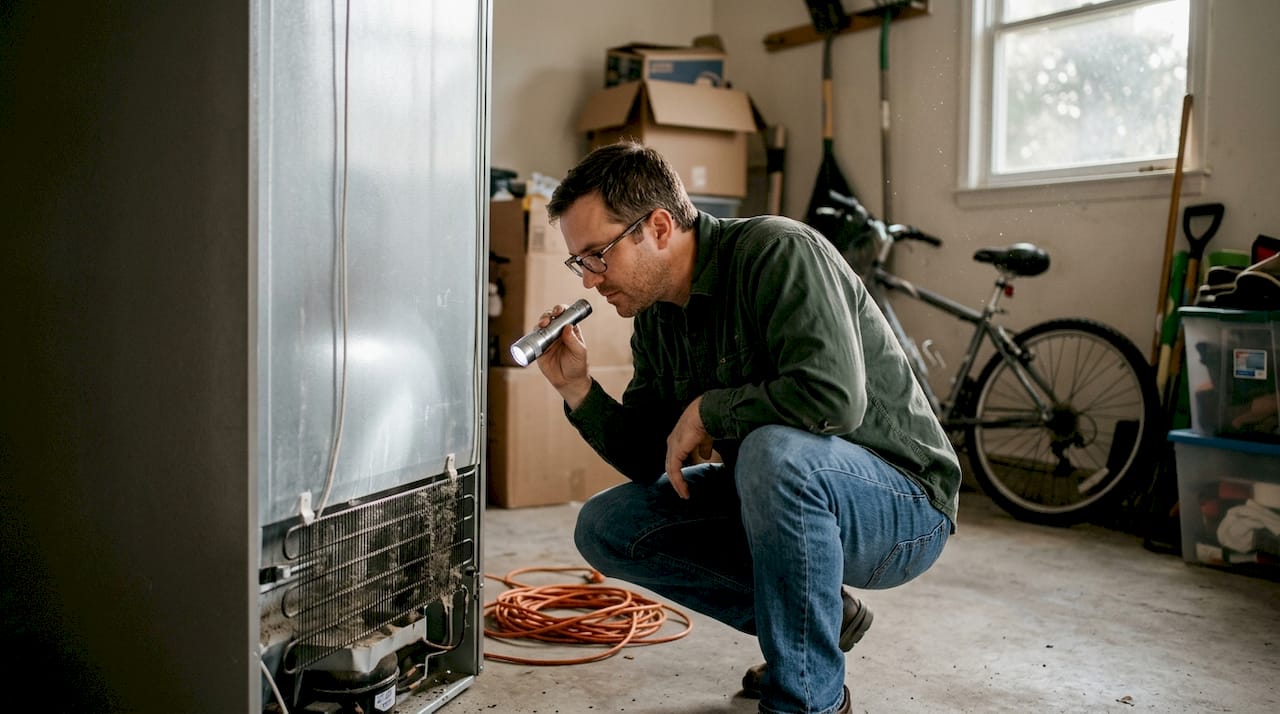
For home appliances, preventive maintenance includes tasks like cleaning refrigerator coils, inspecting washing machine hoses, clearing dryer vents, and checking oven door seals. These aren’t complicated jobs. Most take under 30 minutes and cost little to nothing in materials. The alternative is reactive maintenance, which means you wait for something to break and then pay to fix it.
Here’s the part that surprises most homeowners: reactive maintenance costs 3 to 5 times more than planned preventive care. That’s not a small gap. That’s the difference between a $50 coil cleaning and a $250 compressor repair.
| Approach | Average cost per incident | Appliance lifespan impact |
|---|---|---|
| Reactive (wait for breakdown) | $300 to $800 | Shortened by 3 to 5 years |
| Preventive (scheduled care) | $50 to $150 | Extended by 3 to 7 years |
“Skipping scheduled maintenance doesn’t eliminate the cost. It just delays it and multiplies it.”
You can get started with scheduling maintenance before a problem shows up, which is always cheaper than reacting to one. If you’re not sure where to begin, reviewing appliance maintenance importance can help you prioritize.
Here are the most common preventive tasks for home appliances:
- Refrigerator: Clean condenser coils every 6 months, check door gaskets for air leaks
- Washer: Inspect hoses annually, clean the drum and filter monthly
- Dryer: Clear lint trap after every load, clean the vent duct once a year
- Oven/range: Wipe burners and check igniters every few months
- Dishwasher: Clean the filter monthly, inspect spray arms for clogs
None of these tasks require a technician. But having a pro verify your work once a year catches what you might miss.
The financial advantages: How preventive maintenance saves you money
Let’s talk real numbers. Preventive maintenance doesn’t just prevent breakdowns. It actively reduces what you spend on energy, repairs, and replacements over time.
On the energy side, dirty refrigerator coils increase energy use by 15 to 30%. A well-maintained appliance fleet can cut your utility bills by 10 to 30% annually. In Southern California, where electricity rates are among the highest in the country, that adds up fast.
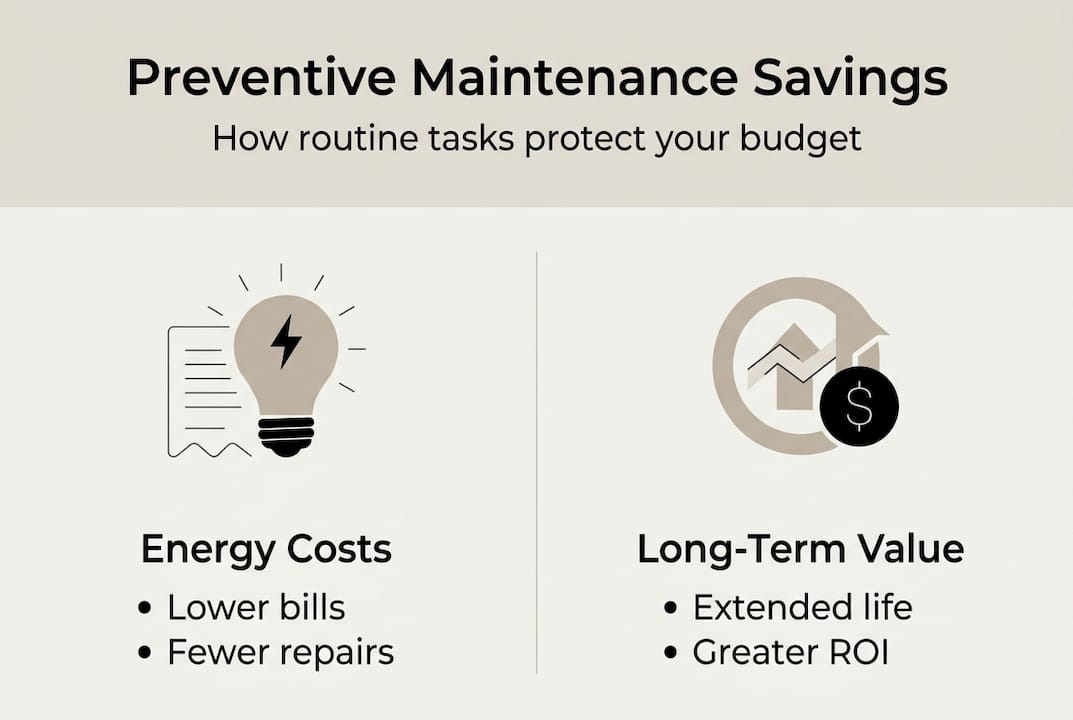
On the repair and replacement side, the math is even more compelling. Preventive programs deliver a 545% ROI over 25 years, with a 12 to 18% reduction in overall maintenance costs. Even a modest routine for a single household produces measurable savings within the first year.
| Maintenance scenario | Annual cost | 10-year savings vs. reactive |
|---|---|---|
| No maintenance (reactive only) | $900 to $1,500 | Baseline |
| Basic DIY preventive care | $150 to $300 | $5,000 to $8,000 |
| DIY plus annual pro check | $300 to $500 | $6,000 to $10,000 |
Pro Tip: Focus your first preventive efforts on your refrigerator and HVAC system. These two appliances consume the most energy and carry the highest replacement costs. A single annual cleaning of refrigerator coils can recover $100 to $200 in electricity costs per year.
You can find a full list of essential maintenance tips to build your routine, and checking the expected appliance lifespan for each unit helps you decide where to invest your time first.
The financial case is clear. Every dollar spent on preventive care returns several dollars in avoided repairs, lower energy bills, and longer appliance life.
Special considerations for Orange County and LA homes
Preventive maintenance isn’t one-size-fits-all. Orange County and LA homes face unique environmental pressures that accelerate appliance wear faster than the national average.
Coastal salt air is one of the biggest culprits. Salt particles in the air corrode metal components, degrade rubber seals, and attack exterior finishes on appliances stored in garages or utility areas near windows. Combined with intense UV exposure from the California sun, these conditions can cause visible and invisible damage within just a few years.
Coastal salt air and UV exposure accelerate wear enough to create up to 40% higher exterior maintenance needs if preventive steps are skipped. That’s a significant cost penalty for simply living near the coast.
Salt air and California sun require extra diligence in exterior appliance care, particularly for units installed in open or semi-open spaces.
Here are the top risks specific to Orange County and LA homeowners:
- Rust and corrosion on metal parts from salt air, especially in coastal cities like Newport Beach, Santa Monica, and Long Beach
- Fading and cracking of rubber seals and plastic components from prolonged UV exposure
- Clogged vents and filters from dust and particulate matter, which is higher in inland areas
- Hard water mineral buildup in dishwashers and washing machines, common throughout LA County
- HVAC strain from year-round use, which shortens filter life and increases wear on compressors
Pro Tip: For appliances in garages or near exterior walls, apply a light coat of corrosion-resistant spray to exposed metal components twice a year. It takes five minutes and can add years to the unit’s life.
You can build a location-specific routine using seasonal maintenance schedules designed for this region, or follow a step-by-step checklist to make sure nothing gets missed.
Expert strategies: What works (and what to avoid) for homeowners
With local risks in mind, here are proven strategies and common mistakes to avoid when caring for your home’s appliances.
- Clean first, repair second. Most appliance issues start with dirt and debris. Cleaning coils, filters, vents, and seals eliminates the root cause of 60% of common failures before they start.
- Follow manufacturer intervals, not guesswork. Every appliance has a recommended maintenance schedule. Use it. Ignoring it voids warranties and shortens lifespan.
- Inspect hoses and connections annually. A cracked washer hose can cause thousands in water damage. Catching it early costs nothing.
- Book an annual professional inspection. Yale Appliance data from 33,000 service calls shows most issues stem from installation and maintenance problems, not product defects. A pro catches what you can’t see.
- Track your appliances’ age and condition. Once an appliance hits 80% of its expected lifespan, increase inspection frequency.
A common mistake is thinking more maintenance is always better. Over-maintaining or using incorrect cleaning products can damage components. Simple DIY routines plus annual pro checks are optimal for most homeowners. You don’t need to do more. You need to do the right things consistently.
Pro Tip: Prioritize your washer and dryer first if you have a family. These appliances run the most cycles and fail most often. A solid washer maintenance guide can help you build a simple monthly habit that prevents the most common failures.
For a broader view of how these habits connect, reviewing the full appliance care process gives you a system rather than a scattered checklist.
Our perspective: The real payoff most homeowners overlook
After years of working with homeowners across Orange County and LA, we’ve noticed a pattern. The people who spend the least on repairs aren’t the ones who react fastest when something breaks. They’re the ones who never let it get to that point.
The real payoff of preventive maintenance isn’t just financial. It’s the absence of stress. You don’t get the 10 p.m. call that your refrigerator stopped working the night before a dinner party. You don’t face the choice between a $700 repair and a $1,400 replacement when your budget is already stretched.
Most homeowners treat their appliances like they’re invisible until they fail. That mindset is expensive. Every skipped cleaning, every ignored seal, every postponed inspection compounds quietly. By the time a breakdown happens, you’ve already paid for it in energy waste and shortened lifespan.
We’ve seen this play out hundreds of times locally. The homeowner who skips maintenance for three years saves maybe $200 in service fees, then spends $1,000 on a repair that was entirely preventable. That’s not saving money. That’s deferring a larger bill.
Building the habit of regular appliance maintenance is the single most effective way to lower your long-term household costs. It’s not glamorous, but it works every time.
How we can help you save money for years to come
If you’ve made it this far, you already know that preventive maintenance is worth the effort. The next step is making it easy to actually do.
At Appliances Repair MD Tech, we serve homeowners across Orange County and Los Angeles County with practical maintenance support and fast, reliable repairs when you need them. Whether you’re weighing a repair vs replacement decision or need a clear replacement parts guide to handle a fix yourself, we have resources built for local homeowners. Our appliance repair experts are ready to help you build a maintenance routine that fits your home, your budget, and your local conditions. Book a visit or browse our guides today.
Frequently asked questions
How does preventive maintenance lower energy bills?
Routine tasks like cleaning coils and checking door seals make appliances run more efficiently, cutting utility bills by 10 to 30% annually. In high-rate markets like Southern California, those savings add up quickly.
What’s the average return on investment (ROI) for home preventive maintenance?
Preventive programs typically yield a 12 to 18% reduction in maintenance costs and can deliver a 545% ROI over 25 years, making it one of the highest-return habits a homeowner can build.
Do weather and local conditions impact maintenance needs?
Yes. Salt air and UV exposure in Orange County and LA speed up appliance wear significantly, making regular preventive steps more important here than in most other regions.
Should every appliance get the same preventive routine?
No. High-use and high-value appliances like refrigerators, washers, and HVAC units need more frequent attention. For very low-use items, a lighter routine may be enough, but most appliances benefit from at least annual checks.
How often should I have professional maintenance checks?
Annual professional inspections combined with simple DIY care throughout the year are optimal for most homeowners. This balance catches what you miss while keeping costs reasonable.