
Choose gas if you already have a gas line and plan to stay put for years, since it costs less to run and dries faster. Choose standard electric if upfront cost or installation simplicity matters more, especially in a rental. If lowest energy use is the goal and you can live with longer cycles, a heat-pump electric dryer beats both.
TL;DR:
- Gas dryers are faster and cheaper to operate per load but require a gas line, venting, and higher installation costs that may take years to recoup.
- Electric dryers need a dedicated 240V outlet and are easier and cheaper to install, making them better suited for renters or short-term homeowners.
- Heat-pump electric dryers are the most energy-efficient but have longer cycle times and higher upfront costs, suitable for those prioritizing efficiency over speed.
- Proper venting, professional installation, and safety checks are essential for gas dryers to prevent leaks and hazards, with online DIY fixes risking safety and warranty voidance.
- Over 300 loads annually, gas and electric operate costs diverge significantly, but the decision depends heavily on existing hookups and how long you plan to stay in your home.
Table of Contents
- Gas vs Electric Dryer: A Quick Side-by-Side
- What Does Each Dryer Actually Cost Over Time?
- Installation, Hookups, and What They’ll Actually Cost You
- How Much Faster Does a Gas Dryer Actually Dry Clothes?
- Safety and Maintenance Rules You Shouldn’t Skip
- Decision Checklist: 7 Steps to Choose the Right Dryer
- What We See on Installation and Conversion Calls
- Most homeowners overthink this decision. If you have a gas line and are not moving soon, gas often makes sense. If you’re renting or unsure about your stay, standard electric is usually the lower-risk, lower-cost option. Heat-pump electric is worth considering if efficiency is a priority over cycle speed.
- How MDTECH Handles Installation, Venting, and Safety Checks
- Sources
Gas vs Electric Dryer: A Quick Side-by-Side
Here’s how the two main types stack up against the efficient electric alternative before you dig into the cost math:
- Purchase price: Standard electric and gas dryers run similarly, typically $600 to $1,200; heat-pump electric models usually cost more.
- Cost per load: Gas tends to run cheapest at the burner, standard electric costs a bit more, and heat-pump electric costs least overall once you factor in efficiency.
- Installation complexity: Electric needs a dedicated 240V outlet; gas needs a gas line plus a 120V outlet and proper venting.
- Drying speed: Gas dries fastest, standard electric is close behind, heat-pump electric takes noticeably longer.
- Venting: Gas and standard electric both vent outside; heat-pump electric dryers are ventless.
- Best for: Gas suits long-term homeowners with existing hookups; standard electric suits renters and short-term owners; heat-pump electric suits anyone prioritizing efficiency over cycle time.
Heat-pump electric dryers generally cost more to buy but are more energy-efficient per load, which changes the math if you run several loads a week; learn more about how new interior doors improve energy efficiency in older homes here.
What Does Each Dryer Actually Cost Over Time?
The sticker price only tells part of the story. What you pay per load, and how many loads you run, decides whether gas or electric saves you money over the life of the machine.
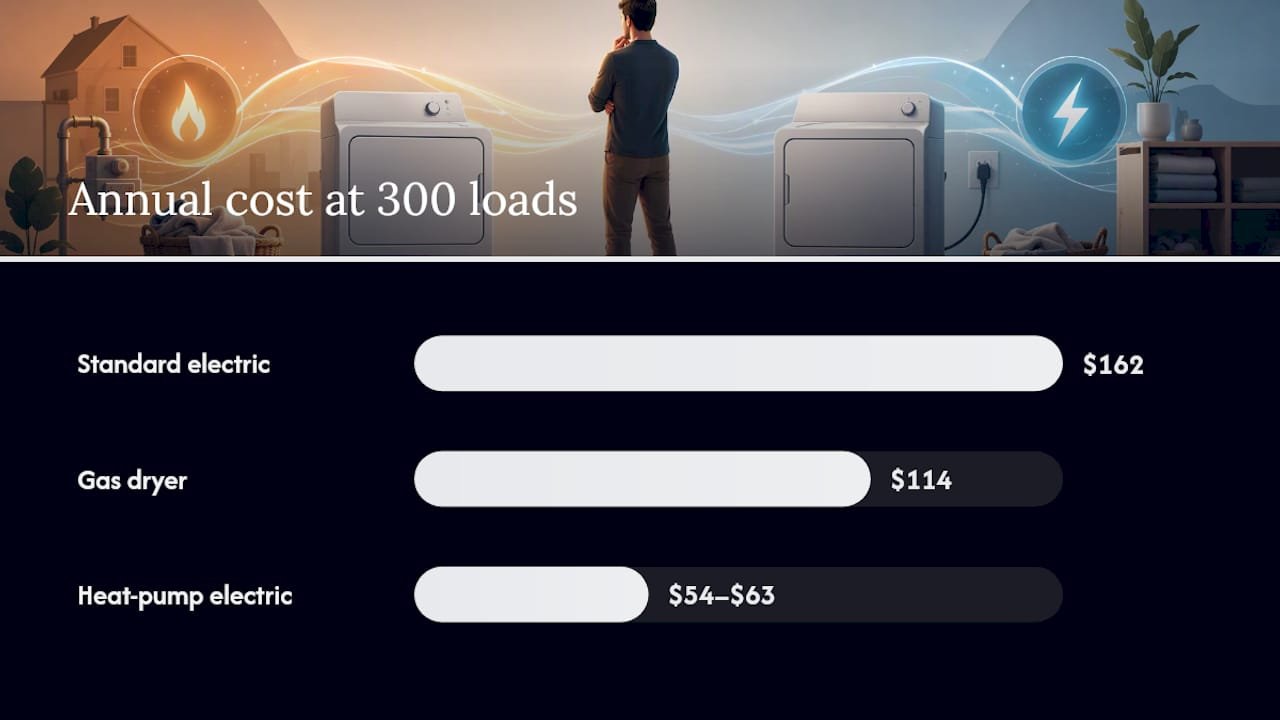
A standard electric dryer draws about 3 kWh per load. At $0.18 per kWh, that works out to roughly $0.54 per load. A gas dryer, by comparison, burns around 0.25 therms plus a small amount of electricity for the drum motor and controls, landing closer to $0.38 per load at $1.50 per therm. A heat-pump electric dryer uses only about 1 kWh per load, which puts it around $0.18 per load, and its annual cost lands near $63 a year for a household running 350 loads.
Run the numbers over a year and the gap widens. At roughly 300 loads annually, standard electric costs about $162, gas costs about $114, and heat-pump electric costs closer to $54 to $63. That’s real money, but it only tells half the story if you don’t already have a gas hookup.
Pro Tip: Don’t just compare per-load cost. If installing a gas line costs $800 and you save $48 a year over electric, it takes over a decade to break even. Run that math before you commit.
Industry pros generally agree that gas dryers save on operating cost, but that installation expense only pays off if you’re staying in the home for several years. If you’re renting or planning to move within two or three years, standard electric usually wins on total cost, even with its higher per-load price.
Installation, Hookups, and What They’ll Actually Cost You
Every dryer needs electricity, but how much and what else depends on the fuel type. Electric dryers require a dedicated 240V outlet on its own circuit. Gas dryers need a gas supply line, a standard 120V outlet for the controls and drum motor, and a dedicated vent, according to Whirlpool’s breakdown of the two systems. Heat-pump electric dryers only need power. No vent, no gas, since they condense moisture internally and drain it away.
- Adding a 240V circuit for an electric dryer typically runs $150 to $450, depending on panel capacity and distance from the box.
- Running a new gas line typically costs $500 to $1,500, more if the appliance sits far from the meter or the wall needs to be opened.
- Permits and inspections often apply to new gas lines and dedicated circuits, depending on your city’s building code.
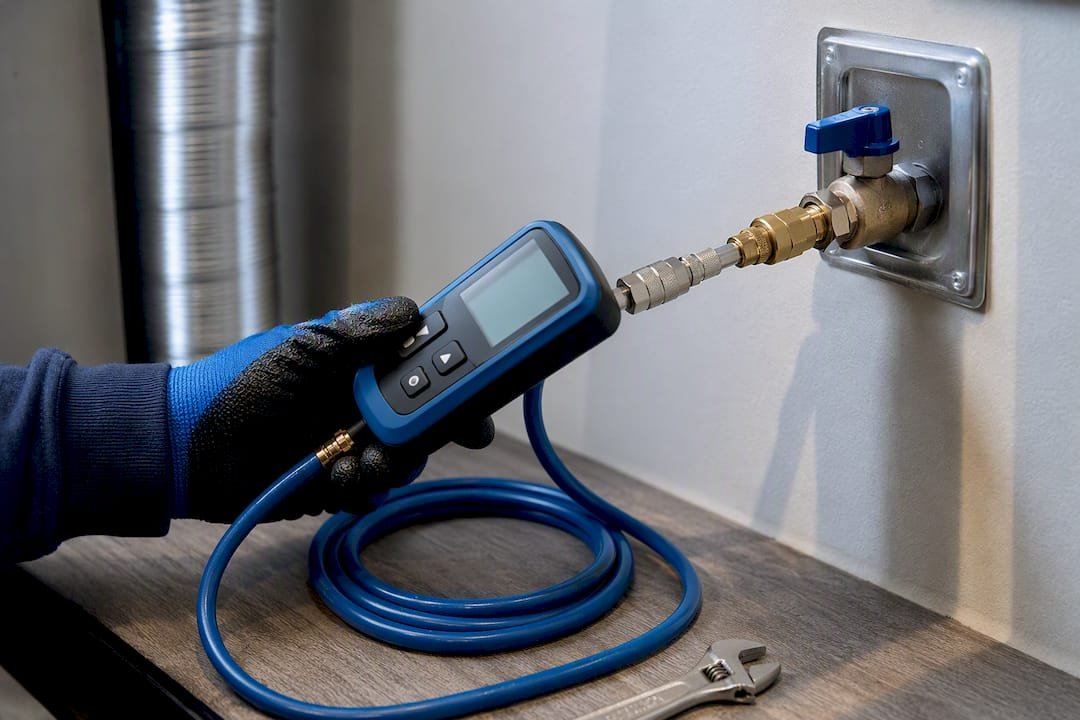
Pro Tip: Never DIY a gas hookup. A loose fitting or improperly vented connection is a carbon monoxide risk, not just an inconvenience. Licensed technicians pressure-test the line and confirm the shutoff valve is placed correctly before they walk away.
Gas pressure testing and correct shutoff placement aren’t optional steps you can skip to save time. They’re what stands between a working dryer and a gas leak.
How Much Faster Does a Gas Dryer Actually Dry Clothes?
Cycle time is where the two fuel types diverge the most in daily use. A gas dryer typically finishes a load in 45 to 75 minutes because burners heat up faster and hold a more consistent temperature. Standard electric dryers usually take 60 to 90 minutes for the same load. Heat-pump electric dryers run the longest, often 90 to 240 minutes, since they dry at lower temperatures to protect fabric and squeeze more efficiency out of every watt.
- Moisture sensors cut cycles short once clothes are actually dry, narrowing the time gap between fuel types.
- Steam cycles and improved airflow design help newer electric models close in on gas performance.
- A half-empty load dries faster regardless of fuel type, while an overstuffed drum slows every dryer down.
- A partially clogged vent silently adds time to every single cycle, no matter what powers the machine.
Samsung’s buying guide notes that gas generally wins on raw speed, but the practical difference shrinks once you factor in sensor-based drying and proper vent maintenance. If your dryer’s taking longer than it used to, the fuel type is rarely the culprit. Check the vent first.
Safety and Maintenance Rules You Shouldn’t Skip
Gas and electric dryers carry different risks, and both demand consistent upkeep to stay safe and efficient.
- Vent gas dryers with rigid or semirigid metal ducting only, never plastic or foil, and have a technician check for leaks at every fitting.
- Install a carbon monoxide detector near any gas dryer, especially if it’s in a closet or utility room with limited airflow.
- Wire electric dryers to a dedicated 240V circuit. Never run one off an extension cord or a shared circuit.
- Clean the lint trap before every single load. It’s the single highest-return maintenance habit you can build.
- Schedule duct cleaning periodically, since a clogged vent increases cycle time by 30 percent or more and raises fire risk.
Pro Tip: If your energy bill jumps or your clothes come out damp after a full cycle, check the vent before assuming something’s wrong with the dryer itself. A blocked duct mimics a mechanical fault.
Decision Checklist: 7 Steps to Choose the Right Dryer
Work through these steps in order and you’ll land on the right choice without second-guessing yourself later.
- Confirm what hookups already exist in your laundry space: gas line, 240V outlet, or neither.
- Estimate your weekly load count. Heavy laundry households feel the operating-cost gap fastest.
- Check your local electricity and natural gas rates, since the cost gap between fuel types varies by region.
- Inspect existing venting for length, material, and condition before assuming it’s reusable.
- Decide how long you’re staying in the home. Under three years usually favors electric; longer favors gas or heat-pump.
- Get two or three installation quotes before buying, since hookup costs vary more than the appliance price does.
- Schedule a professional safety inspection for any gas installation before first use.
Don’t add a gas line just to chase a few dollars a month in savings, and never attempt a DIY gas connection to cut installation cost. Both mistakes cost more than they save.
What We See on Installation and Conversion Calls
Service calls frequently reveal improperly vented gas dryers, undersized electrical wiring for new 240V circuits, and loose gas fittings left by rushed installs. These aren’t rare exceptions. They’re the most common issues we find on service calls across Orange County and Los Angeles County.
Converting an existing dryer from gas to electric, or the reverse, is rarely worth attempting. It usually voids the manufacturer warranty and requires the same licensed installation work as buying new. If your current unit won’t start or heat properly, our dryer troubleshooting guide and vent installation resources cover the details.
Most homeowners overthink this decision. If you have a gas line and are not moving soon, gas often makes sense. If you’re renting or unsure about your stay, standard electric is usually the lower-risk, lower-cost option. Heat-pump electric is worth considering if efficiency is a priority over cycle speed.
Whatever you choose, have a licensed technician handle the hookup, obtain permits if required, and schedule a safety check before using the dryer. This step prevents many common problems.
How MDTECH Handles Installation, Venting, and Safety Checks
Once you’ve picked a dryer, the install is where most costly mistakes happen, not the shopping. MDTECH is the practical alternative to guessing your way through a gas hookup or a new 240V circuit yourself: our licensed technicians handle the pressure testing, wiring, and venting so the appliance runs safely from day one.
Here’s what a typical service call covers:
- Dryer installation for gas or electric units, including hookup and initial testing
- Gas-line connection with pressure testing and shutoff verification
- Vent installation or duct cleaning to restore proper airflow and cut fire risk
- Full safety inspection for existing gas dryers, including carbon monoxide checks
If you’re weighing repair against buying new, our repair vs. replacement guide breaks down when it’s worth fixing an old unit versus starting fresh. When you’re ready to install a new dryer or need a safety inspection on your current setup, book a service appointment and we’ll schedule a technician for your area.
Sources
- Gas vs Electric Dryer Cost: Which Is Cheaper to Run? (2026 Guide)
- Gas vs. electric dryers: what’s the difference? | Whirlpool
- Gas vs. Electric Dryer: Which is Better? | Samsung US
- Are gas dryers a carbon monoxide risk? What you should know | AppliancePartsPros